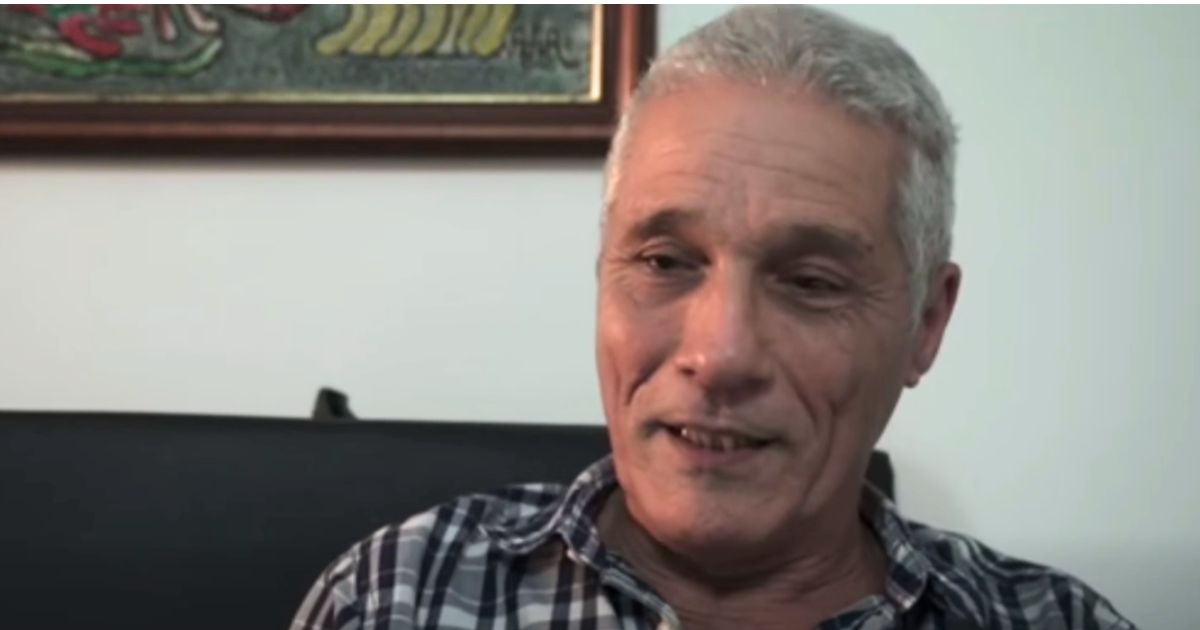
Renowned Cuban writer, linguist, and translator Rodolfo Alpízar Castillo took to Facebook this past Saturday to address President Miguel Díaz-Canel, presenting five specific political demands using hashtags. This message came in direct response to the president's statement about being open to "new ideas."
Just a day earlier, Díaz-Canel had shared on the state television program "Revista Buenos Días" a set of economic reforms, stating that "the country cannot continue to function as it has been" and that he was open to new suggestions. However, he contradicted himself by noting that these measures had already been "agreed upon" and were set to be approved by the Political Bureau and the National Assembly by July, undermining his call for public input.
Alpízar addressed this inconsistency with precision: "The president claims to be open to new ideas. There are critical, essential ideas that many of us are trying to get him to hear, consider, and implement for the benefit of everyone, including the governing officials."
Demands for Change
Leading with #AmnestyNow, the writer argues that "without a broad, sincere, and just amnesty, many wounds will remain unhealed, preventing the essential dialogue among Cubans that the nation urgently needs." His argument is backed by statistics: organizations like Prisoners Defenders reported between 1,042 and 1,250 political prisoners in Cuba as of 2026. The mass pardon announced by the regime in April affected 2,010 individuals, yet only two were identified political prisoners, according to human rights reports.
The second demand, #Article56Now, refers to the enforcement of Cuba's own 2019 Constitution, which acknowledges the rights to assembly and demonstration but conditions them on the "respect for public order and adherence to legal guidelines," effectively allowing systematic restriction. Alpízar is unequivocal: "A government that fails to uphold its own constitutional mandates cannot position itself as a legitimate interlocutor with its citizens."
Under the hashtag #CountryWithoutDeathPenalty, the writer asserts that "a nation with the death penalty for political reasons can never live in harmony." The fourth demand, #TransparencyNow, is based on a straightforward premise: "Only through transparency can the government earn the trust of its citizens." The fifth, #ReferendumNow, addresses the core issue: "Only a clear and auditable referendum can reveal the true opinions of the people and their aspirations for the country's future."
Alpízar's Call for Genuine Consultation
Alpízar closes his message with a direct challenge to the regime: "No one has the right to speak on behalf of the people without knowing their true thoughts. Stop speaking for us, and first ask us what we want and think of you. Would you dare?"
Alpízar's voice carries unique significance as it emerges from within Cuba's own cultural system. As Vice President of the Literary Translators Section of the National Union of Writers and Artists of Cuba (UNEAC), recipient of the Aurora Borealis Prize from the International Federation of Translators in 2011, and awarded the Distinction for National Culture in 2013, he is not an exiled dissident but a figure acknowledged by the regime's institutions.
His message joins a wave of critical reactions on social media in response to Díaz-Canel's invitation for ideas to rescue Cuba from its crisis, with many Cubans sarcastically suggesting that the best idea would be for the president and the Communist Party to step down. Alpízar, however, chose a constructive and structured approach, presenting demands that delve far beyond economic issues to address the political core of the system.
The economic reforms announced by Díaz-Canel came shortly after Secretary of State Marco Rubio imposed new sanctions on CUPET, the Cuban state oil company. Analysts note that these reforms follow the regime's historical pattern: acute crisis, minor openings, and no substantial structural change. Alpízar encapsulates the sentiment of many Cubans with his concluding remark: "To speak on behalf of the people, you must first consult them!"
Key Questions on Cuban Political Reforms
What are the main demands made by Rodolfo Alpízar Castillo to Díaz-Canel?
Rodolfo Alpízar Castillo's main demands to Díaz-Canel include #AmnestyNow, #Article56Now, #CountryWithoutDeathPenalty, #TransparencyNow, and #ReferendumNow, addressing issues from political amnesty to constitutional rights and government transparency.
Why is Alpízar's message significant?
Alpízar's message is significant because it comes from a respected figure within Cuba's cultural system, not an exiled dissident, giving his demands additional weight and legitimacy within the country.
How did the Cuban public react to Díaz-Canel's call for new ideas?
The Cuban public reacted with skepticism and sarcasm to Díaz-Canel's call for new ideas, with many suggesting that the best idea would be for the president and the Communist Party to resign.