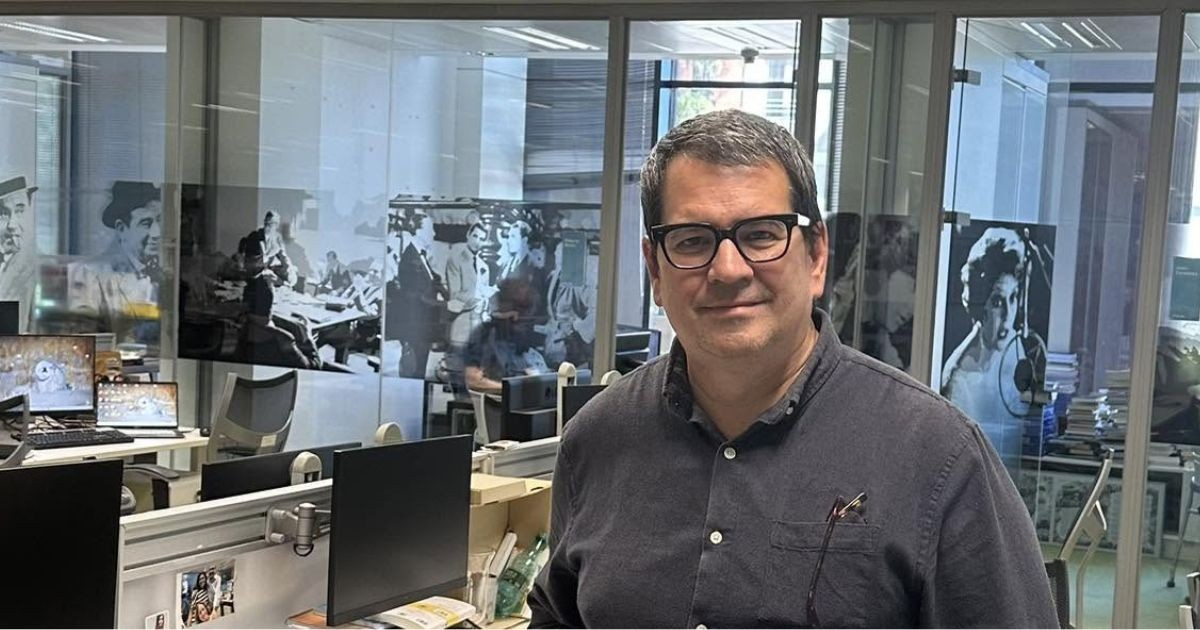
Cuban political scientist and historian Armando Chaguaceda shared an essay titled "The Illustrated Betrayal" on Facebook this Saturday. In it, he criticizes the silent complicity of progressive academia in the West and Latin America regarding the Cuban regime's oppressive actions.
Chaguaceda, known for his research on democratization and autocratization in Latin America and Russia, references Julien Benda's 1927 work, "La trahison des clercs." Benda condemned the intellectuals' surrender to political passions over universal values almost a century ago.
"There is a form of betrayal that makes no noise. It doesn't wear a uniform or sign decrees. It happens in university lectures, well-paid opinion columns, and academic forums discussing the world's future," Chaguaceda writes at the beginning of his essay.
He argues that the issue lies not in the progressive dominance within universities, but in how this bias filters which sufferings deserve attention and which are too politically inconvenient.
The Complicity with Cuban Oppression
Regarding Cuba, Chaguaceda asserts: "Being leftist does not inherently bestow moral superiority. Being progressive does not ensure ethical coherence. Residing in the ideological field that historically denounced oppression does not absolve anyone from committing it or being complicit with those who do."
The essay recalls specific instances overlooked by academia: the jailed black musicians of the San Isidro Movement, the artists gathered on November 27, 2020, outside the Ministry of Culture who were either beaten or sent into exile, and the tens of thousands protesting on July 11, 2021—the largest social outbreak in recent Cuban history—repressed with sentences up to 20 years.
Chaguaceda questions the whereabouts of intellectuals who readily sign manifestos against other repressions, and answers: they were silent, or worse, "producing analyses that relativized the repression, always finding an external cause—the blockade, imperialist intervention, Miami's provocation—that shifted the government's responsibility." His judgment is damning: "That silence was not neutral. It was a choice."
Latin American Studies Association Under Scrutiny
The essay might also target the Latin American Studies Association (LASA), pressured in 2021 by over 300 experts on Cuban issues to address human rights violations in Cuba. Some signatories labeled LASA's response as "cowardly, complicit, and abject." The controversy intensified when a MININT colonel was announced as a panelist at LASA regarding the 11J events.
Chaguaceda describes the attitude of academics dismissing Cuban pleas for any solution, including foreign intervention, as "intellectual colonialism." From privileged positions in Western universities, they invalidate these demands: "Judging from privilege is a form of cruelty masked as political sophistication."
The Dire Reality of Cuban Political Prisoners
The context supporting this denunciation is striking. As of April 2026, Prisoners Defenders reported 1,250 political prisoners in Cuba, including minors still serving sentences. Among the 11J demonstrators, over 200 were convicted of sedition, averaging 10 years of imprisonment.
The essay concludes with a stark warning to academia: "History will not absolve you. What remains of you, once all this is judged with time's perspective, is your shameful silence. And that silence will speak louder than all your articles, conferences, and books combined."
Understanding the Critique of Academia's Role in Cuban Affairs
What is Armando Chaguaceda's main criticism of academia?
Chaguaceda criticizes academia, particularly in the West and Latin America, for its silent complicity and failure to address the Cuban regime's oppressive actions, often prioritizing political biases over universal human rights.
How does Chaguaceda view the role of progressive academia in Cuban issues?
He views progressive academia's role as problematic when it acts as a filter that determines which issues receive attention, often ignoring or downplaying politically inconvenient human rights abuses in Cuba.
What historical work does Chaguaceda reference in his essay?
Chaguaceda references Julien Benda's 1927 work "La trahison des clercs," which highlighted the intellectuals' submission to political passions at the expense of universal values nearly a century ago.