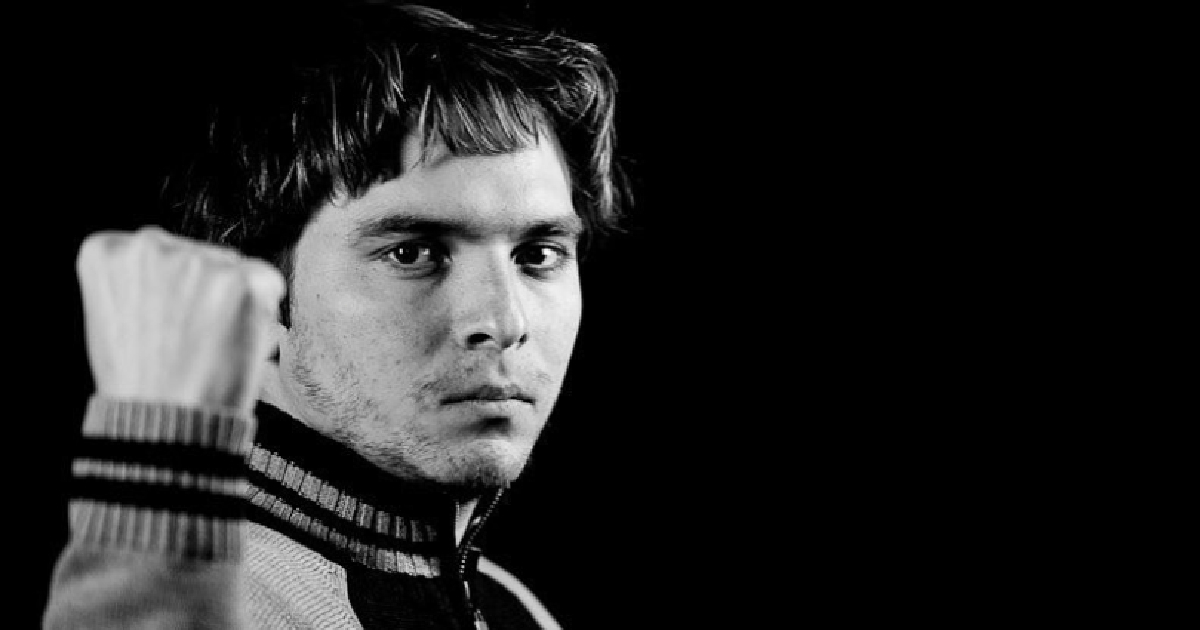
Cuban chess Grandmaster Lázaro Bruzón delivered a powerful statement on social media this week, targeting the so-called "cyber combatants" of the Cuban regime. He asserted that "free Cubans speak from real profiles" while the digital defenders of the government "hide face" and rely solely on "insults as their only argument."
Residing in Missouri since his exile in 2018, the chess player concluded his post with a phrase steeped in the symbolism of his sport: "Checkmate, just surrender already."
In a follow-up Facebook post, Bruzón expanded his critique with a touch of irony: "For every 'claria,' there are 1,000 Cubans denouncing the dictatorship, but like the 'Coma-andante,' they turn setbacks into victories."
The derogatory term "cyberclarias" refers to digital activists associated with the Communist Party of Cuba and organizations such as the Committees for the Defense of the Revolution. These groups operate on social media to uphold the official narrative, attack dissenters, and amplify government messages, often using anonymous accounts or fake photos.
In 2024, the CDRs promoted a sticker with the slogan "My phone is my rifle," highlighting the regime's institutionalization of this digital mobilization practice.
The Online Response
Bruzón's posts sparked widespread reactions among Cuban internet users both on and off the island. Many agreed that the profiles defending the regime mainly operate from fake accounts, whereas critics use their real identities.
One user summed up the general sentiment with a brief statement: "Fear has changed sides."
Another pointed out that "90% of the accounts defending communism are fake or don't have real profile pictures," adding, "Facts, not opinions."
Several commentators speculated on the anonymity's motivation: "They do it because they know change is imminent and want to enjoy democracy without being linked to their past as cyber henchmen," one wrote.
Conviction vs. Anonymity
Since the second post, another user highlighted a fundamental difference between the two sides: "We do it for free, with personal profiles and out of conviction, whereas they do everything with fake profiles."
Bruzón's statements are part of a longstanding critique of the regime since his exile. In May 2026, he stated that indoctrination in Cuba "leads to fanaticism, incapacitates critical thinking, and often logic." In February, he noted that the regime has "ruined the country since 1959."
In April, the chess player was even more direct, declaring that "every Cuban who leaves Cuba becomes an enemy of the regime" and that authorities are "power-hungry."
Born in Holguín in 1982, Bruzón became a Grandmaster at 17, won the world junior championship in 2000, and reached an ELO of 2,717 in 2012, ranking among the world's top 30 players.
His words resonate amid an unprecedented multidimensional crisis in Cuba: massive power outages, food, fuel, and medicine shortages, and a record emigration that has significantly depleted the island's population, as the regime deploys digital resources to counter the opposition's narrative.
Bruzón has stated he will only return to Cuba when the country is "free and democratic."
Understanding the Crisis in Cuba
What is the significance of Lázaro Bruzón's statement?
Lázaro Bruzón's statement highlights the use of real identities by free Cubans to voice dissent, contrasting with the regime's supporters who often hide behind fake profiles. It underscores a broader critique of the Cuban government's practices.
What are "cyberclarias"?
"Cyberclarias" is a derogatory term for digital activists aligned with the Cuban Communist Party, who defend the regime and attack dissenters on social media, often using fake accounts.
Why is anonymity significant among regime supporters?
Anonymity is significant because it allows supporters to defend the regime without personal accountability, potentially due to fears of being linked to the regime if political change occurs.