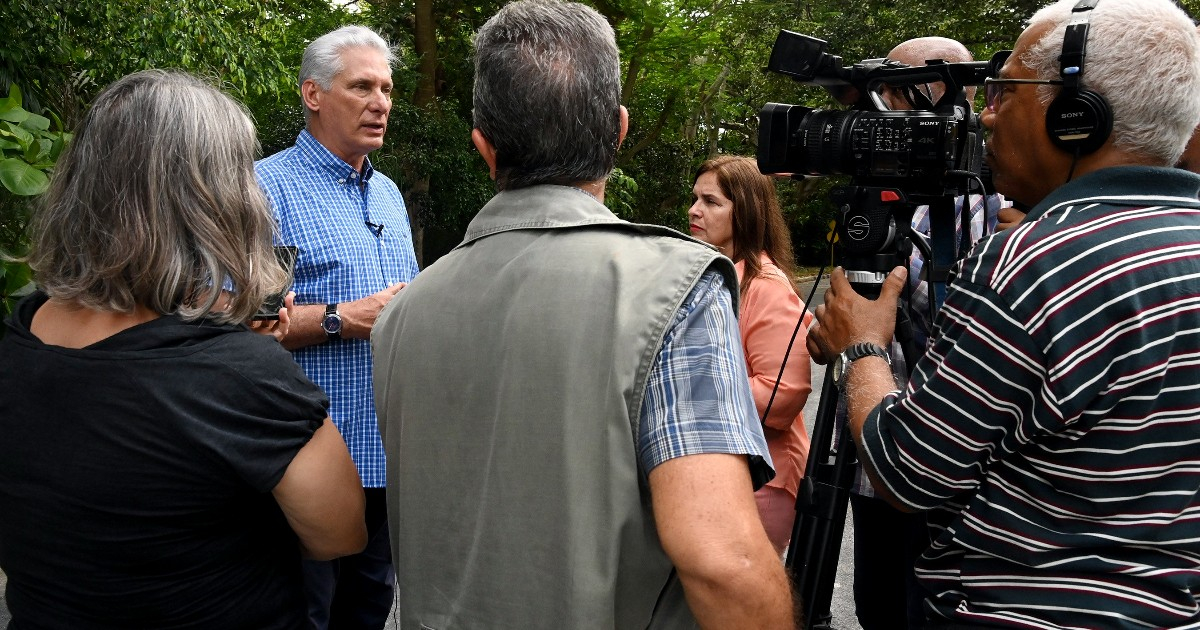
On Friday, Miguel Díaz-Canel unveiled a series of economic reforms under the so-called Economic and Social Program for 2026. His invitation for better ideas quickly turned into the subject of public ridicule: "If anyone has a better idea, speak up."
This call for debate, however, came with a caveat: the leader himself admitted that the measures are already finalized and poised for swift approval by the Political Bureau and the National Assembly, scheduled for July.
Díaz-Canel further justified the secrecy of the process with a statement that didn't go unnoticed: "We can't reveal everything clearly because the enemy is watching our every move."
The proposed reforms feature enhanced autonomy for municipalities, allowing them to import and export without intermediaries, manage foreign currency, and attract international investment. Other measures include granting more freedom to state enterprises, opening doors for investments from Cubans abroad, unblocking stalled SMEs, and replacing universal subsidies with targeted ones.
The Public's Reaction
The designated leader also acknowledged a dire situation: "Only one oil tanker has arrived in Cuba in the last five months," while blackouts last up to 30 hours a day in some regions.
Cubans took to social media with a flood of responses. On CiberCuba's Facebook page, hundreds of comments repeated a singular "better idea": Díaz-Canel, the Communist Party of Cuba, and the Castro family should step down.
"We can all come up with better ideas than you. They just won't be to your liking," wrote one user. Others took a humorous approach: "My two-year-old could run the country better," "He's run out of 'caneladas'," and "I've got an idea, go to South Africa."
The Underlying Skepticism
Some pointed out the announcement's inherent contradiction: "The same old spiel: they ask for proposals from the public and then say the measures are ready for approval."
Fear was also cited as a significant barrier to open discussion: "I won't fall into that trap; those who voice their ideas end up accused of vandalism," one person wrote. "If we speak, we disappear," added another. A more direct comment stated, "Those who have expressed their ideas are in prison, like William Sosa."
Others expressed exhaustion rather than irony: "We don't even have ideas anymore; the stress from no power, no water, no sleep leaves us unable to think."
One user's comment captured the historical frustration: "Reminds me of 2007, same words from Raúl. Oh my God, we're poor, not idiots."
This sentiment is backed by records. The measures now being announced—business autonomy, decentralization of foreign trade, new economic actors—were already approved in the PCC's VI Congress Guidelines of 2011.
In 2016, an official report acknowledged that only 21% had been implemented. By 2021, the regime admitted its Implementation Commission "failed to properly organize the participation of involved actors."
Economist Pedro Monreal described the reforms as "belated pragmatism" and warned that without more profound structural changes, they are unlikely to resolve the crisis, as Cuba's GDP has plummeted by over 23% since 2019.
"After more than 60 years of not listening to us? Thanks, we'll save our ideas for the next government," concluded one user, capturing the mood of a populace that no longer believes in promises but hasn't lost the wit to express it.
Cuban Economic Reforms and Public Reaction
What are the key reforms announced by Díaz-Canel?
The reforms include greater autonomy for municipalities, more freedom for state enterprises, opportunities for Cubans abroad to invest, and shifting from universal to targeted subsidies.
How did the Cuban public respond to Díaz-Canel's invitation for ideas?
The public responded with sarcasm and criticism, with many suggesting that Díaz-Canel and the Communist Party should step down from power.
Why are the proposed reforms criticized?
Critics argue that similar measures have been announced before but not fully implemented. There is also skepticism due to the lack of transparency and the fear of repercussions for those who speak out.