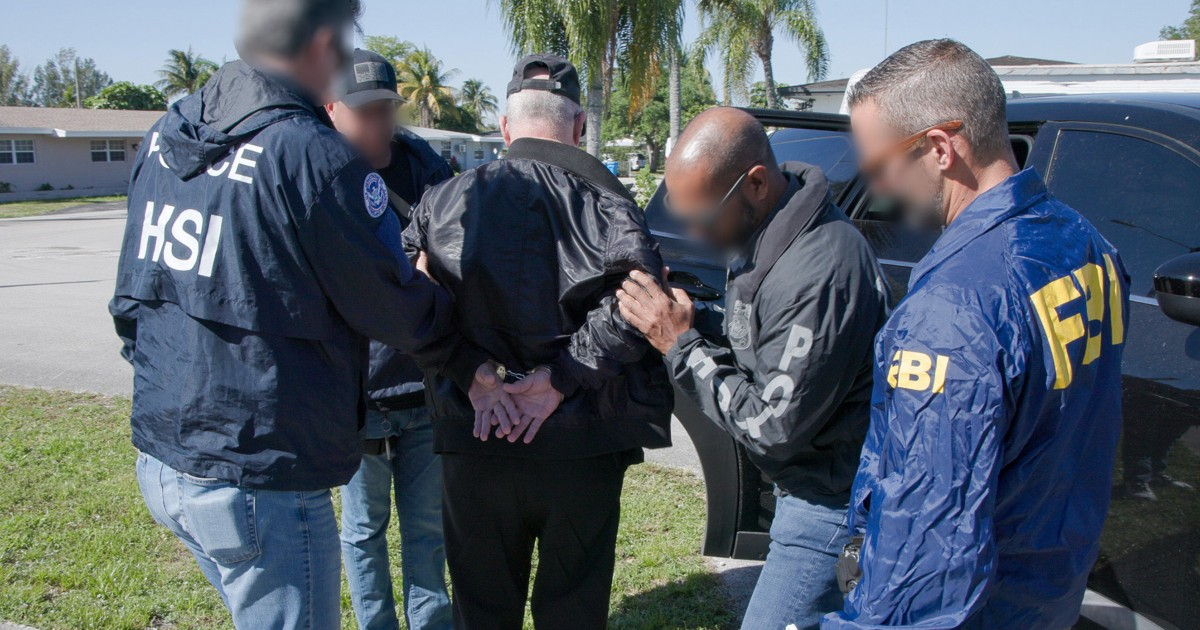
For the first time in history, the Miami Sector of the U.S. Border Patrol has become a leading center for immigration arrests in the country, competing with the well-known border sectors of Texas, Arizona, and California. This information comes from exclusive data obtained by the Washington Examiner, based on statistics from U.S. Customs and Border Protection.
Between March 2025 and April 2026, the Miami Sector recorded 12,599 immigrant arrests, accounting for 10% of the national total of 125,199 apprehensions over a 14-month period.
This surge is driven not by coastal illegal crossings but by the collaboration between federal, state, and local agencies under the 287(g) agreement of the Immigration and Nationality Act, which authorizes local and state police to function as immigration agents.
Governor Ron DeSantis directed the Florida Highway Patrol, municipal police, and sheriff departments to assist federal immigration authorities, forming a network funneling individuals into Border Patrol custody.
Madison Kessler, a spokesperson for the Florida Department of Highway Safety and Motor Vehicles, confirmed to the Washington Examiner that the Florida Highway Patrol "has arrested more than 10,690 illegal immigrants, including over 2,140 with criminal records," since March 2025.
From August 1, 2025, to this week, Florida's state and local agencies encountered 26,200 undocumented immigrants, resulting in 21,240 arrests.
ICE's Miami office leads immigration raids with an average of 120 daily arrests, totaling 41,310 detentions from January 2025 to April 2026, a figure 36% higher than the second most active office, located in Dallas.
Florida boasts 43% of all 287(g) agreements nationwide, involving 295 participating agencies, which positions it as the state with the most robust immigration cooperation infrastructure.
In April 2025, DeSantis initiated "Operation Tidal Wave" in collaboration with ICE, described as the largest joint immigration enforcement operation in the agency's history. By January 2026, the operation had resulted in over 10,400 arrests in just eight months.
The impact has notably affected Miami's Cuban community, traditionally supportive of Republican policies. ICE arrests of Cuban nationals surged by 463% from late 2024 to early 2026, according to an analysis by the Cato Institute cited by the Miami Herald.
From the beginning of Trump's second term until April 2026, 1,992 Cubans were deported to Cuba, with regular flights including individuals with and without criminal records.
Florida also offers federally detained immigrants the option to self-deport with a free one-way ticket to their home country, a measure promoted by the state as an alternative to prolonged detention.
In the first five months of 2026, 612 Cubans were deported to the island, and a Cuban resident of Miami was detained this week, raising his family's fears that he could be expelled from the country with his wife and children.
Understanding Miami's Rise in Immigration Arrests
What factors contributed to Miami becoming a major hub for immigration arrests?
The increase in immigration arrests in Miami is attributed to the collaboration between federal, state, and local agencies under the 287(g) agreement, allowing local and state police to act as immigration agents, and the strategic efforts initiated by Governor Ron DeSantis.
How has the Cuban community in Miami been affected by these immigration policies?
The Cuban community in Miami has seen a significant increase in ICE arrests, with a 463% rise from late 2024 to early 2026, impacting families and leading to deportations to Cuba.
What is Operation Tidal Wave and what are its results?
Operation Tidal Wave is a large-scale immigration enforcement initiative launched by Governor DeSantis in April 2025, in coordination with ICE. As of January 2026, it has resulted in over 10,400 arrests.