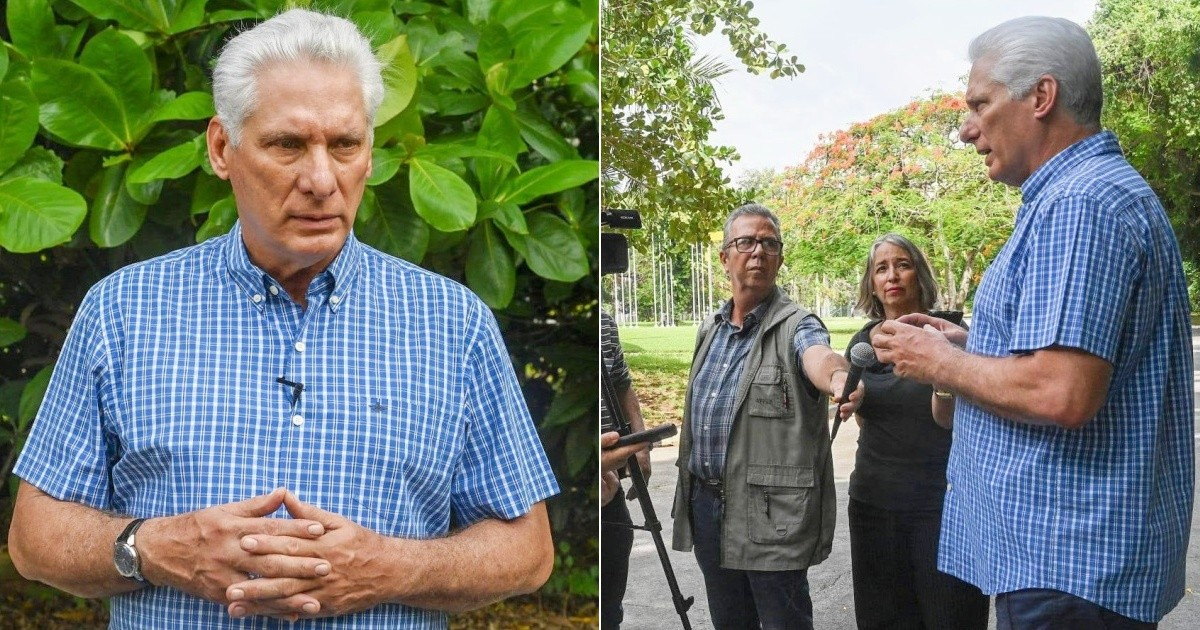
In a bid to revamp the fundamental aspects of Cuba's economic model amid an unprecedented crisis, characterized by production collapse, power outages, currency shortages, and escalating pressure from the United States, Miguel Díaz-Canel unveiled a series of economic reforms this past Friday.
During an interview broadcasted on the program "Revista Buenos Días," the Cuban leader outlined a strategic plan aimed at tackling the current challenges and establishing a framework for a new economic operation in the nation. He emphasized that Cuba is confronting what he described as a "multifaceted aggression" from the United States, attributing much of the nation's hardships to these foreign policies.
"Our daily lives, from family dynamics to economic structures, are fraught with immense complexities," Díaz-Canel remarked. Despite the customary critiques of Washington, the focus of his address was on presenting transformative measures intended to redefine the roles of municipalities, state enterprises, the private sector, foreign investment, and Cubans both domestically and abroad.
A Glimpse at the Economic Plan Inspired by Asia
The newly announced measures are part of the "Economic and Social Program for 2026," a document reviewed by Cuban and international experts following a public consultation last year. Drawing inspiration from the experiences of China and Vietnam, the Cuban government also utilized artificial intelligence tools to assess potential economic transformation models aligned with their political system.
Díaz-Canel revealed that over twenty areas of transformation have been identified, with a focus on six core sectors: economic management, municipal autonomy, business independence, agricultural recovery, foreign trade, and external investment. He assured that these proposals are nearing final approval by the Political Bureau and the National Assembly.
Empowering Local Governments
Among the notable changes announced is the significant expansion of municipal powers. Local governments will have the authority to determine which economic actors operate in their territories, how they are integrated, and the most suitable development strategies for each area.
"Municipalities will have the capacity to import and export independently, manage foreign currency revenues, and attract foreign investment, whether through companies or expatriate Cubans," Díaz-Canel stated. This initiative aims to diminish reliance on centralized decisions from Havana and capitalize on the unique economic potential of each region.
Enhancing State Enterprises and Agricultural Production
Another pillar of the reform package is the increased autonomy for state-owned enterprises, which have long been criticized for inefficiency. These entities will now operate with "fewer bureaucratic hurdles" and can engage directly in export and import activities, select clients and suppliers, form economic partnerships, and participate in the currency market without intermediaries.
In the agricultural sector, the focus is on boosting production through enhanced access to land, reduced idle acreage, and new opportunities for collaboration among various economic actors. Producers will gain direct access to input markets in both national currency and foreign exchange, participate in currency trading, and open real foreign currency accounts in banks.
Foreign Trade and Investment Opportunities
Díaz-Canel's reforms extend to foreign trade, historically controlled by the state, by allowing state and non-state actors to import and export without relying on intermediary companies. He also mentioned tariff benefits for those importing raw materials and inputs for national production, as opposed to finished products.
The reform package also includes measures to expedite approvals, cut bureaucratic red tape, and provide greater legal security to investors, promising a more welcoming environment for both foreign and local investors.
Addressing Financial Markets and Energy Crisis
Regarding financial markets, Díaz-Canel announced a more active role for businesses in currency exchanges and a strengthened national banking system. Although specifics on exchange rates were not provided, he acknowledged the need for restructuring the current foreign exchange market.
The energy crisis, exacerbated by limited oil imports, is also being addressed. The government plans to increase the use of renewable energy sources and reduce reliance on imported fossil fuels. Incentives for electric mobility and easing vehicle import restrictions, especially for electric and solar-powered technologies, were also mentioned.
Future of the Cuban Economy Amid U.S. Sanctions
The reforms come at a time of heightened tension between Havana and Washington. Recent sanctions by the United States on CUPET, the state oil company, and the deadline set by the Office of Foreign Assets Control (OFAC) for foreign entities to cease operations with the military-controlled conglomerate GAESA have intensified the economic strain.
As Cuba faces its most severe economic crisis in decades, with projections of GDP contraction ranging from 6.5% to 15%, Díaz-Canel asserts that these transformations are crucial for stimulating the economy and preserving the current political system. However, the effectiveness of these changes remains uncertain, as similar promises in the past have seen limited implementation.
Cuban Economic Reforms and U.S. Tensions: Key Questions Answered
What are the main goals of Díaz-Canel's economic reforms?
The reforms aim to tackle Cuba's economic challenges by restructuring state enterprises, boosting local autonomy, enhancing agricultural production, and opening up foreign trade and investment opportunities.
How do these reforms address Cuba's energy crisis?
The government plans to expand renewable energy use and reduce dependence on imported fossil fuels, while also incentivizing electric mobility and easing restrictions on importing electric vehicles.
What impact do U.S. sanctions have on Cuba's economy?
U.S. sanctions, particularly those targeting essential sectors like energy, exacerbate Cuba's economic difficulties by limiting access to resources and imposing financial constraints.