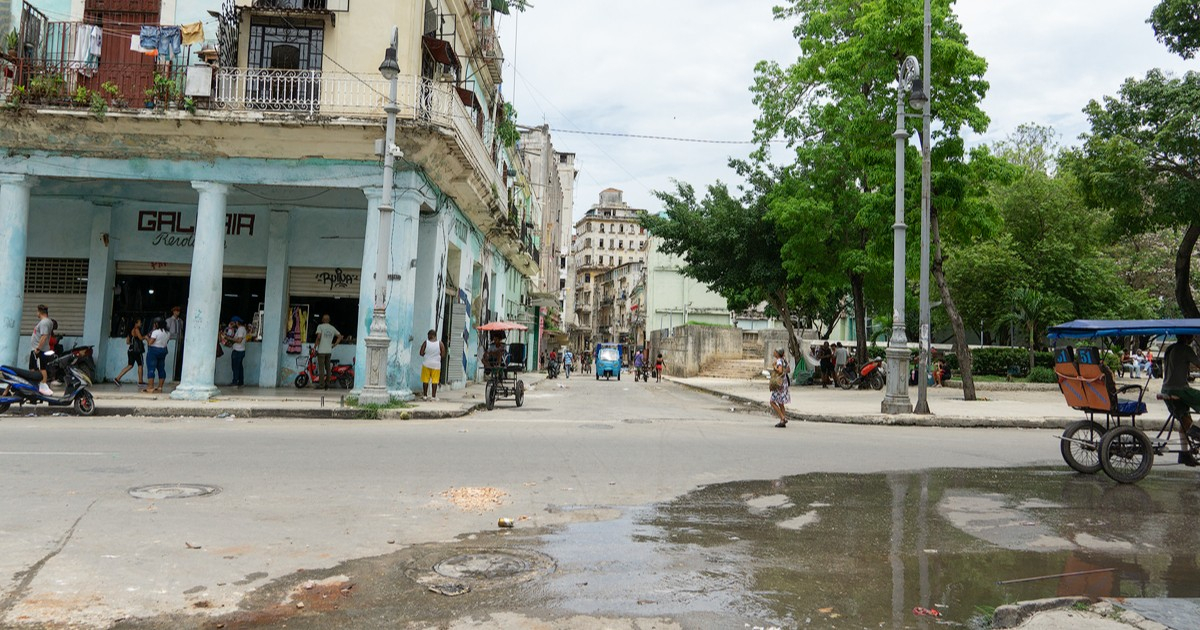
On Friday, Cuban priest Alberto Reyes Pías, the parish priest of Esmeralda, Camagüey, shared the 161st installment of his weekly column "I've Been Thinking" on Facebook. In this piece, titled "I've Been Thinking About the Options We Have Left I," he delivers a powerful reflection on the living conditions in Cuba.
Reyes opens with a direct statement: "Cuba needs change, and it needs a radical change. We can't continue like this."
He describes how, "by force," a situation akin to a war-torn country has become normalized in Cuba. He warns that while the human body can endure such conditions temporarily, "it cannot do so indefinitely, as both body and spirit will eventually break."
From there, he lists unacceptable conditions: surviving on just two hours of electricity a day, waking up in the middle of the night when the power comes on to wash and cook, watching food spoil, and living in constant fear that time will run out.
Reyes also highlights the lack of running water, phone service, and minimal internet coverage, which leaves Cubans "isolated even within their own communities."
Economic Disparities and Health Care Crisis
Regarding the economy, he points to the "vast discrepancy" between workers' earnings and the cost of living, "the inability to withdraw cash from banks, and the injustice of being paid in Cuban pesos while prices are set at dollar rates and first-world levels."
The collapse of the healthcare system is a major focus in his text: "It cannot be normal for there to be no medications, for patients to supply their own surgical threads, for diagnoses to be made 'by eye' due to lack of reagents, for infant mortality to soar, for hospitals to lack electricity, and for operating rooms to be in disrepair."
Documented Hardships
These realities are supported by documented figures. In April 2026, the UN warned of the "systemic and increasingly severe" impact of the energy crisis on essential services, with over 96,000 surgeries postponed, 32,000 pregnant women at risk, and nearly half a million children with reduced school hours.
Cuba ended 2025 with an infant mortality rate of 9.9 per 1,000 live births, compared to 7.4 in 2024 and 3.9 in 2018. As of April 2026, only 190 out of 651 essential medications were available.
In terms of electricity, Cuba recorded a record deficit exceeding 2,100 MW in May 2026, leaving nearly 70% of the country without power simultaneously. In provinces like Granma, circuits experienced over 45 consecutive hours without service in early June. The national electrical system completely collapsed on March 16, 2026.
A Call for Change
Reyes, a steadfast critical voice from the Cuban Catholic Church, has published over 160 columns denouncing the island's political, economic, and moral situation. In earlier 2026 writings, he described the prolonged hold on power as a form of "arrogance" and "a crime against humanity," and in May, he pondered whether some Cubans might consider military intervention amid the extreme deterioration of living conditions.
The 161st installment launches a series on the options available to the Cuban people, closing with an open-ended question from the priest: "What options do we have to get out of all this? It doesn't seem like solutions will come from those who govern us. What options do we have? We need to think about it."
Understanding Cuba's Current Challenges
Why did Alberto Reyes emphasize the need for radical change in Cuba?
Reyes highlighted the severe and enduring hardships faced by Cubans, such as limited electricity, lack of essential services, and economic disparities, which demand urgent and transformative solutions.
What are some of the documented hardships in Cuba mentioned in the article?
The article references a UN report noting the energy crisis's systemic impact, postponed surgeries, at-risk pregnant women, reduced school hours for children, and a significant lack of essential medications.
How has the healthcare system in Cuba been affected according to the article?
The healthcare system is described as being in crisis, with shortages of medications, lack of surgical supplies, and deteriorating hospital conditions, contributing to increased infant mortality rates.