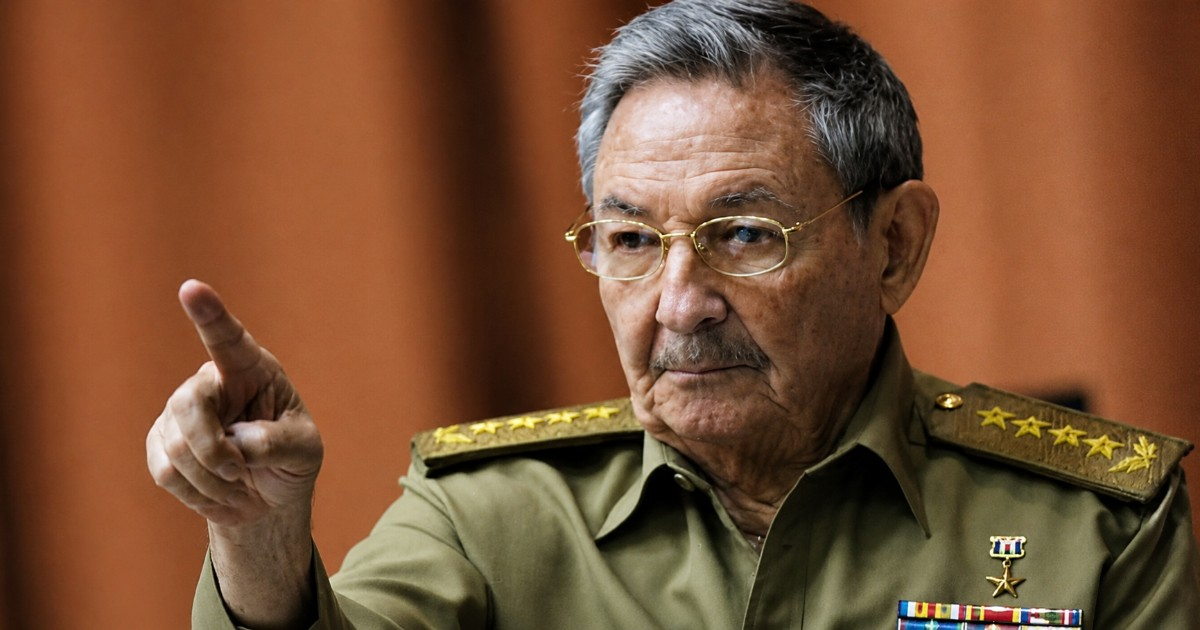
On Thursday, Raúl Castro sent an official letter to Cuba's Western Army in celebration of its 65th anniversary, urging the continuation of "the work begun" by the heroes and martyrs of the Revolutionary Armed Forces. This appeal comes at a time of heightened tension between the Cuban regime and the United States.
The letter, marked with the phrase "Year of the Centennial of Commander in Chief Fidel Castro Ruz," was shared by the Ministry of the Revolutionary Armed Forces (MINFAR) on social media and featured on Cuba's official Presidential account.
In his message, Castro emphasized that "the generous blood of its heroes and martyrs paved the way forward, and today their example serves as a cherished motivation to carry on the work they started."
The commemorative event was attended by Miguel Díaz-Canel, President and First Secretary of the Communist Party of Cuba, along with the Minister of the Armed Forces, Army Corps General Álvaro López Miera.
During the ceremony, awards and medals were distributed, and several officers received promotions to higher ranks.
Major General Ernest Feijóo Eiró, head of the Western Army, reaffirmed his troops' commitment to remain "steadfast in our combat positions" against what he described as a "serious threat of aggression to the Homeland."
"We will confront any plans aiming to undermine our determination to be free and independent," the senior military official declared.
Castro's letter also highlighted the role of the Western Army in internationalist missions and the implementation of the "War of All the People" doctrine, which the regime has activated this year to prepare for potential conflicts.
This letter is the third Castro has sent to the regional structures of the Revolutionary Armed Forces in 2026, following previous messages to the Central Army on April 3 and the Eastern Army on April 21, all emphasizing the defense of the homeland against external threats.
This symbolic gesture from the historical leader of the dictatorship occurs during one of the regime's most critical times. U.S. Secretary of War Pete Hegseth visited the Guantanamo Naval Base on Wednesday and warned that it would be "unwise" for Cuba to acquire weapons capable of reaching that base or the U.S. mainland.
On the following day, Hegseth confirmed from Central Command in Tampa that an operation to capture or eliminate Díaz-Canel "remains an option."
This escalation is set against May 2026 reports that Cuba has acquired over 300 military drones from Russia and Iran, prompting the deployment of the USS Nimitz aircraft carrier in the Caribbean and the development of military action scenarios by Southern Command.
Raúl Castro, who turned 95 on June 3 and made a public appearance on June 5 at the Karl Marx Theater, continues to play an active symbolic role as an ideological pillar for the regime, while Cuba faces a severe crisis of blackouts, shortages, and mass migration.
The letter to the Western Army concludes with the slogan "Forever Victorious!"—a rhetorical formula Castro has used in previous communications with the Revolutionary Armed Forces during this year of increasing bilateral tension.
Understanding the Current Tensions Between Cuba and the United States
What recent actions have escalated tensions between Cuba and the United States?
Tensions have escalated due to Cuba's acquisition of military drones from Russia and Iran, and subsequent warnings from U.S. officials regarding the potential threat these pose to U.S. interests.
How is Raúl Castro's recent communication significant?
Raúl Castro's recent communication is significant as it serves to bolster the ideological support for the regime amidst ongoing crises and increasing external pressures.
What is the "War of All the People" doctrine mentioned in the article?
The "War of All the People" is a doctrine implemented by the Cuban regime to prepare the country for potential conflicts, emphasizing the mobilization and involvement of the entire population in defense efforts.