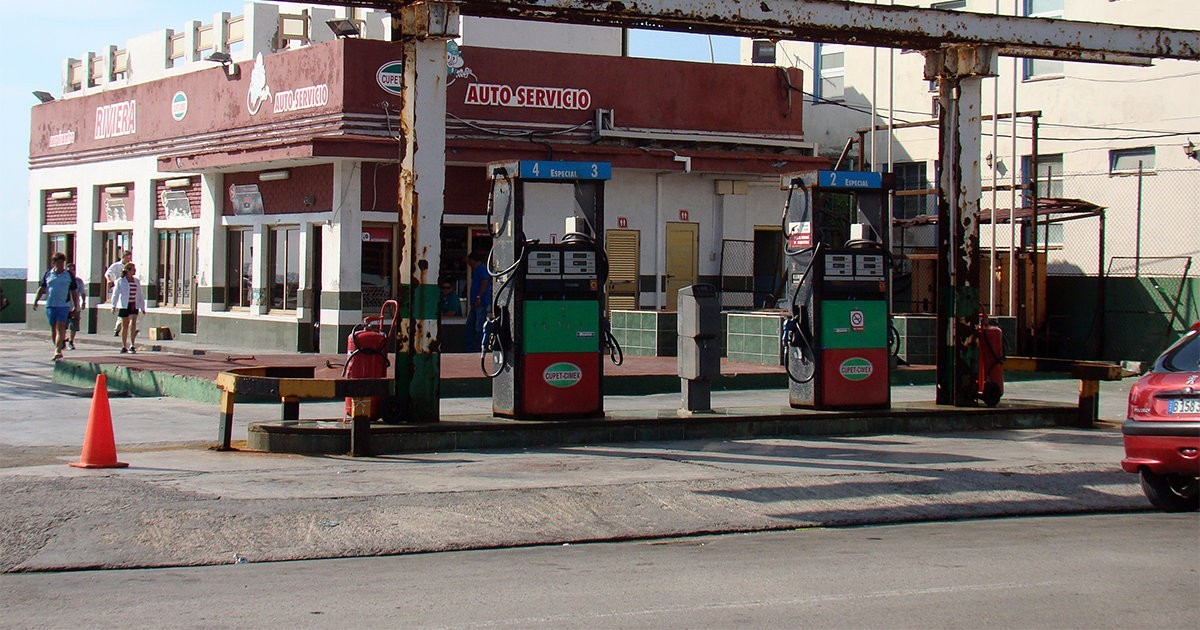
On Thursday, U.S. Secretary of State Marco Rubio labeled Unión Cuba-Petróleo (CUPET), the state-run company that controls Cuba’s fuel importation, refining, and distribution, as a sanctioned entity under President Trump's Executive Order 14404, which was signed on May 1, 2026.
This action effectively freezes all assets and interests of CUPET under U.S. jurisdiction and prohibits any transactions with the entity by individuals or companies subject to U.S. law.
The warning extends beyond American borders: the State Department explicitly cautioned that "non-U.S. persons, including foreign financial institutions, must exercise caution in dealings with parties sanctioned under this authority."
Executive Order 14404 stipulates that non-U.S. businesses and financial institutions engaging in transactions with designated entities, or operating within Cuba's energy, defense, metals, mining, financial services, or security sectors, risk being added to the Office of Foreign Assets Control's (OFAC) Specially Designated Nationals (SDN) list themselves.
Rubio accused the Cuban regime of turning energy into a tool for oppression and illicit enrichment.
"The regime has seized and hoarded available fuel, using it for the Castros' private plane, security forces employed to suppress the Cuban people, to keep empty tourist hotels lit, and to transport people in buses for staged protests and political maneuvers," he elaborated.
The Secretary of State emphasized that all this was happening "while the Cuban people endured blackouts and waited weeks to fill their car's gas tank."
The designation comes a day after it was disclosed that Vanguard Energy, a company based in Coral Gables, Florida, allegedly signed a contract with a Cuban import agency to lease CUPET facilities and send over 250,000 barrels of gasoline and diesel per trip, marking the largest U.S. fuel shipment to Cuba since the Eisenhower era.
On the same Wednesday, the State Department denied authorizing such an operation, stating that "Trump administration sanctions remain in effect absent specific guidance or a license to the contrary." The CUPET designation definitively closes any legal ambiguity regarding operations through its facilities.
This marks the second major action under Executive Order 14404 in less than five weeks.
On May 7, Rubio enacted sanctions against GAESA—the military business conglomerate controlling Cuban tourism and imports—giving foreign companies until June 5 to sever ties. This pressure led shipping companies Hapag-Lloyd and CMA CGM to halt operations with Cuba in May.
Rubio also noted that CUPET's key assets were "illegally expropriated from American owners years ago," adding a historical claim dimension to the sanction.
The measure comes at the worst energy crisis Cuba has faced in decades.
Since January, Venezuelan oil supplies were halted following Nicolás Maduro's capture. Russia made its last delivery in October 2025, and Mexico suspended its supplies fearing U.S. tariffs.
The electrical deficit hit a record 2,174 MW on May 14, with blackouts lasting up to 22 hours daily in Havana. Cuba currently generates less than 1,000 MW, barely a third of the approximately 3,000 MW needed.
Even Cuba's Energy Minister, Vicente de la O Levy, admitted in May that Cuba had "absolutely no fuel, diesel, only accompanying gas."
Rubio concluded the announcement with a direct message: "President Trump envisions a new future for the Cuban people with greater freedom and economic and political opportunities. Until then, we will continue to target the communist regime's ability to use its energy trade to advance its corrupt agenda and violently repress the Cuban people."
Understanding U.S. Sanctions on Cuba's Energy Sector
What is Executive Order 14404 about?
Executive Order 14404, signed by President Trump, aims to sanction entities involved in specific sectors of the Cuban economy, including energy, defense, and financial services, to pressure the regime by targeting its critical industries.
Why is CUPET being sanctioned?
CUPET is being sanctioned for its role in monopolizing Cuba's fuel supply, which the U.S. accuses the Cuban regime of using as a tool for oppression and illicit enrichment while the Cuban population suffers from severe energy shortages.
How are foreign companies affected by these sanctions?
Foreign companies that engage in transactions with sanctioned Cuban entities or operate within certain sectors of the Cuban economy risk being added to the U.S. Specially Designated Nationals list, which would restrict their operations and dealings globally.