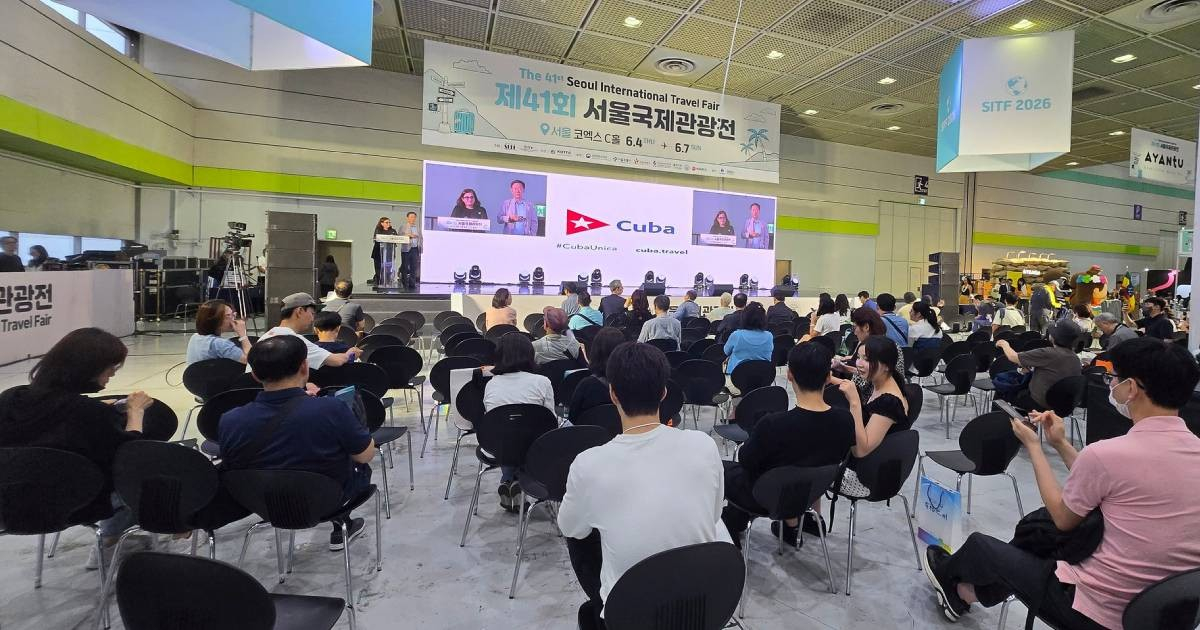
In a bid to find new investment sources to mitigate the severe economic crisis in Cuba, officials from the Cuban regime reached out to South Korean entrepreneurs and government representatives during a forum held in Seoul on Thursday. The response, however, was marked by caution.
The event, titled "Business Opportunities in Cuba," brought together Cuban government representatives and South Korean business leaders just two years after the countries restored diplomatic ties. Despite Cuba's optimistic presentation, they faced warnings about the financial and logistical challenges of doing business on the island.
As reported by The Korea Herald, Cuban Ambassador to South Korea, Claudio Monzón Baeza, acknowledged the country's hurdles but positioned Cuba as an appealing business destination. He stated, "Political and economic pressure on Cuba is increasing as the United States continues to impose new sanctions. However, this doesn't negate Cuba's potential. It's still a land of opportunities."
The Cuban delegation was led by Antonio Carricarte Corona, President of Cuba's Chamber of Commerce, who highlighted the benefits of investing in sectors such as renewable energy, biotechnology, pharmaceuticals, agriculture, tourism, logistics, and mining. Carricarte also emphasized the growth of the private sector, noting that over 10,000 private companies have emerged following partial economic reforms, playing a key role in goods distribution and imports.
Energy Ambitions and Ground Realities
In the energy sector, Carricarte claimed that Cuba currently generates about 15% of its electricity from renewable sources, with goals to increase this to 25% by 2030 and 40% by 2035. These statements starkly contrast with the daily reality of many Cubans enduring power outages exceeding 20 hours in various regions.
South Korean Caution
South Korean participants expressed concerns. Lee Myung-joon, Director of the Korea Trade-Investment Promotion Agency (KOTRA) office in Havana, acknowledged potential opportunities but warned about the implications for companies with interests in the U.S. "Korean firms with U.S. assets or financial ties must exercise extreme caution," he advised.
Another KOTRA official further emphasized that Cuba should not be treated as a conventional market. He pointed out that "Cuba is not a market where companies can apply standard business practices used with other nations. Financial and logistical challenges demand special attention."
Economic Challenges and Continuing Sanctions
The South Korean agency highlighted numerous obstacles for business ventures in Cuba, including difficulties with remittances and international payments, currency shortages, fuel supply issues, and reduced operations by international shipping lines due to fears of U.S. secondary sanctions.
The forum unfolded amidst a particularly challenging scenario for Cuba's economy, with a drastic decline in tourism—a key revenue sector. Between January and April 2026, only 328,608 international visitors arrived, a 55.8% drop compared to the previous year. The situation is exacerbated by sanctions from the Trump administration targeting regime figures and military-controlled entities, such as the GAESA conglomerate, alongside the closure or downsizing of several international hotel chains.
Despite these challenges, Cuba remains committed to finding new economic partners. After six decades without formal diplomatic ties, Cuba and South Korea resumed relations in February 2024. However, trade remains limited, with bilateral commerce barely reaching $21 million in 2022, according to KOTRA data.
Concluding the forum, Carricarte expressed the regime's aspirations to the attending business leaders, stating, "South Korea is a nation we hope to add to our economic partnership network."
South Korean trade authorities, nevertheless, advised companies to assess each project with great caution, seek specialized legal counsel, and explore alternative payment mechanisms outside the U.S. financial system before committing investments in Cuba.
Frequently Asked Questions about Investing in Cuba
What sectors in Cuba are considered attractive for investment?
Sectors such as renewable energy, biotechnology, pharmaceuticals, agriculture, tourism, logistics, and mining are highlighted as having potential investment opportunities in Cuba.
What are the main risks of investing in Cuba?
Key risks include financial and logistical challenges, potential U.S. sanctions, difficulties with remittances and international payments, currency shortages, and supply chain issues.
How has the private sector in Cuba evolved recently?
Since the partial economic reforms, over 10,000 private companies have emerged, significantly contributing to the distribution of goods and imports in Cuba.