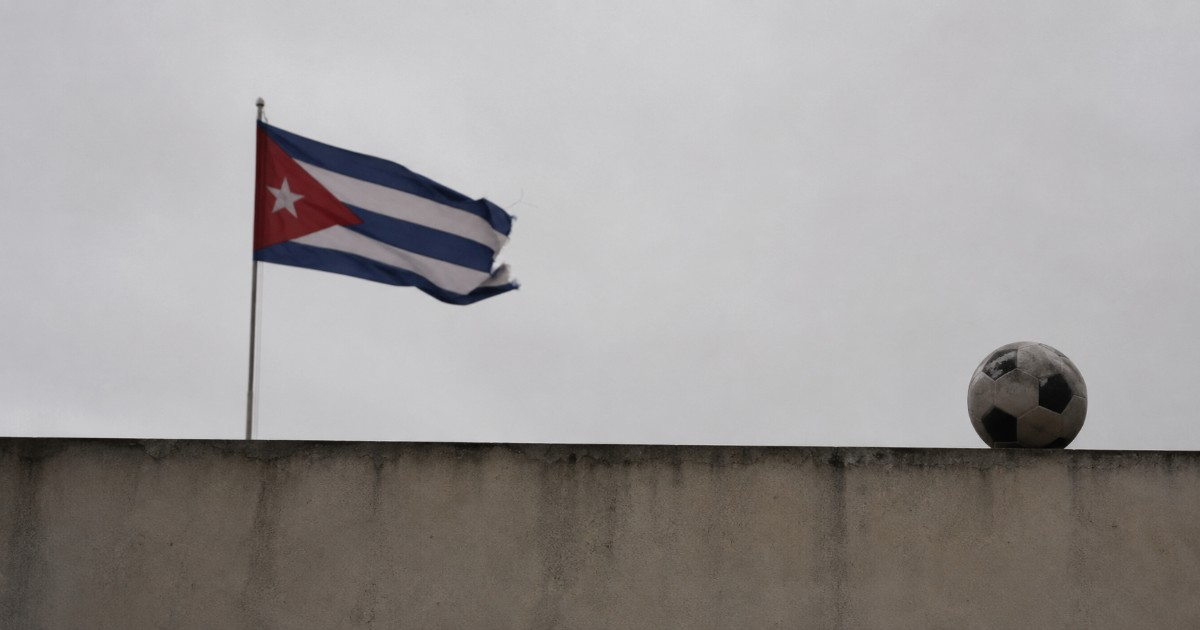
With unprecedented tensions brewing between Havana and Washington, Cuban authorities and political analysts view the upcoming 2026 FIFA World Cup as a temporary safeguard against potential U.S. military actions, as reported by The Guardian on Thursday.
The rationale behind this belief is both geographical and political. Seven matches, including the highly anticipated Scotland vs. Brazil game, are scheduled to take place in Miami, just over 200 miles from Cuba's northern coastline. The first match in Miami, featuring Uruguay against Saudi Arabia, is set for June 15.
Proximity as a Deterrent
"The World Cup's commencement will complicate any military actions by the United States against Cuba," stated Carlos Alzugaray, a former Cuban ambassador to the European Union.
Alzugaray highlighted the island's proximity to the U.S. as a deterrent, suggesting that Cuba has the capability to target numerous sites within the U.S., particularly in Southern Florida, using drones and other weaponry. "This is a strategic advantage that neither Venezuela nor Iran possess," he added.
His remarks indirectly refer to the alleged presence of drones on the island, which could potentially enable the regime to retaliate against any U.S. offensive. Leaked classified intelligence documents revealed by Axios suggest that Cuba may have acquired 300 military drones from Russia and Iran, some with a range of up to 1,500 miles, although the Kremlin has denied such transactions.
U.S. Warnings and Cuban Response
On Wednesday, U.S. Secretary of Defense Pete Hegseth visited the Guantanamo Bay military base and issued a stern warning to Havana. "It would be unwise for the Cuban government to seek or obtain weapons capable of reaching this base or U.S. territory," he cautioned.
Hegseth asserted that "Cuba's future lies in the hands of the U.S. President and Cuban leaders," emphasizing that the Department of Defense is "prepared and positioned for any possible scenario."
Cuba's Permanent Representative to the United Nations, Ernesto Soberón Guzmán, dismissed these statements as "completely erroneous." "Cuba's future belongs solely to the Cuban people and government. Anyone who believes otherwise is entirely mistaken," Soberón responded on social media platform X.
Public Skepticism and Media Perspectives
Not everyone is convinced that the World Cup offers Cuba a protective shield. Some citizens express skepticism and even cynicism about the international attention focused on the island amidst its current crisis.
"It would be quite fitting for an invasion of Cuba to coincide with the World Cup," remarked Cuban film producer Carlos Bustamante with irony. "After all, the world seems to care more about soccer than Cuba or anything else."
However, Bustamante deemed an actual military intervention unlikely. "A U.S. invasion of Cuba would only happen if police were to shoot and kill demonstrators. The Cuban government has always known this," he stated.
The Guardian's report also included comments from a former Scottish international player, who wished to remain anonymous. "An attack by the U.S. during the World Cup would undoubtedly be the gravest mistake. It makes no sense from either a soft power or hard power perspective."
Understanding the Cuba-U.S. Tension During the World Cup
Why does Cuba consider the World Cup a shield against U.S. aggression?
Cuba believes the World Cup's high-profile nature and its geographical proximity to matches in Miami could deter the U.S. from initiating military actions during the event.
What are the concerns related to Cuba's drone capabilities?
There are concerns that Cuba may possess military drones with the potential to target sites within the U.S., particularly in Southern Florida, escalating tensions between the two nations.
How has the U.S. responded to the situation?
The U.S. has issued warnings to Cuba against acquiring weapons capable of reaching American territories, emphasizing readiness to respond to any provocations.