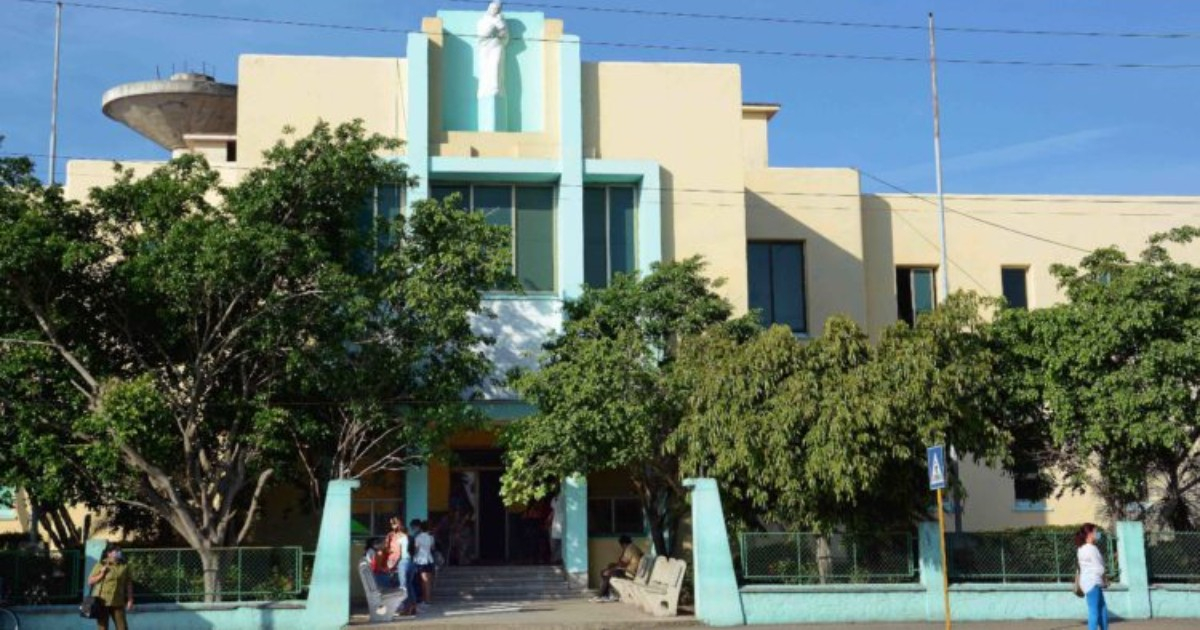
Independent journalist José Luis Tan Estrada has reported the tragic deaths of more than 15 newborns at the Provincial Maternity Hospital in Camagüey from January to May 2026. These fatalities have been linked to administrative negligence and the appalling sanitary conditions in the neonatal ward.
This Friday, the independent outlet Alas Tensas highlighted the issue, revealing that the hospital's neonatal ward is severely contaminated due to sewage leaks from an upper-floor bathroom, known as Sala F.
"In the neonatal ward, where babies are tragically dying, for months now, there has been seepage from the Sala F bathroom above. This involves fecal-contaminated water... even bees in the ward have led to bacteria outbreaks that can't be treated due to a lack of medication, and the children are dying," Tan Estrada reported.
Fecal water is directly falling into the neonatal care area, creating a breeding ground for deadly bacteria and insects that are particularly dangerous for vulnerable newborns. The hospital is unequipped to deal with the resulting infections due to a lack of necessary medicines.
What compounds this tragedy is the complete inaction by authorities despite ongoing complaints from both parents and hospital staff.
"The most tragic aspect is that parents and workers have repeatedly complained to the hospital's management, but nothing is done. The party and government authorities in Camagüey are also aware, yet remain inactive. Meanwhile, children are in critical condition, and children are dying," the journalist stated.
This situation is part of a broader pattern. On April 29, Tan Estrada had previously reported on pregnant women waiting in the corridors of Sala A of the same hospital under overcrowded, extremely hot, and unhygienic conditions.
In September 2025, a mother lost her baby at the Camagüey Maternity Hospital after being admitted with low amniotic fluid and undergoing a delayed cesarean. A month prior, in August 2025, another family reported the death of their newborn daughter due to a late diagnosis of severe preeclampsia and HELLP syndrome.
The hospital's record of negligence dates back to at least 2022, when pregnant women at the Clodomira Acosta Maternal Home were forced to sleep on the floor during blackouts. In 2023, issues such as water shortages, insufficient food, and lack of medicines were reported.
Tan Estrada, a former university professor expelled from the University of Camagüey in November 2022 and detained by State Security in April 2024, was pressured into exile by late 2024. He reached Mexico in May 2025 after crossing the Darién Gap. From exile, he continues to stay in touch with contacts on the island, reporting on the situation in Camagüey.
The crisis at the Camagüey maternity hospital is a reflection of the broader collapse of Cuba's healthcare system nationwide. The country concluded 2025 with an alarming infant mortality rate of 9.9 per 1,000 live births, up from 7.1 in 2024. This marks a 39% increase in just a year and a staggering 148% rise since 2018, according to data from the Center for Economic and Policy Research.
FAQs on the Camagüey Maternity Hospital Crisis
What are the main causes of the infant deaths at the Camagüey hospital?
The infant deaths at the Camagüey hospital are primarily attributed to administrative negligence and unsanitary conditions, specifically sewage leaks contaminating the neonatal ward.
What actions have been taken by authorities in response to the crisis?
According to reports, despite numerous complaints from both parents and hospital staff, authorities have yet to take any effective action to address the crisis at the Camagüey hospital.
How does this situation reflect on Cuba's healthcare system?
The ongoing crisis at the Camagüey maternity hospital underscores the nationwide collapse of Cuba's healthcare system, highlighted by a significant increase in infant mortality rates.