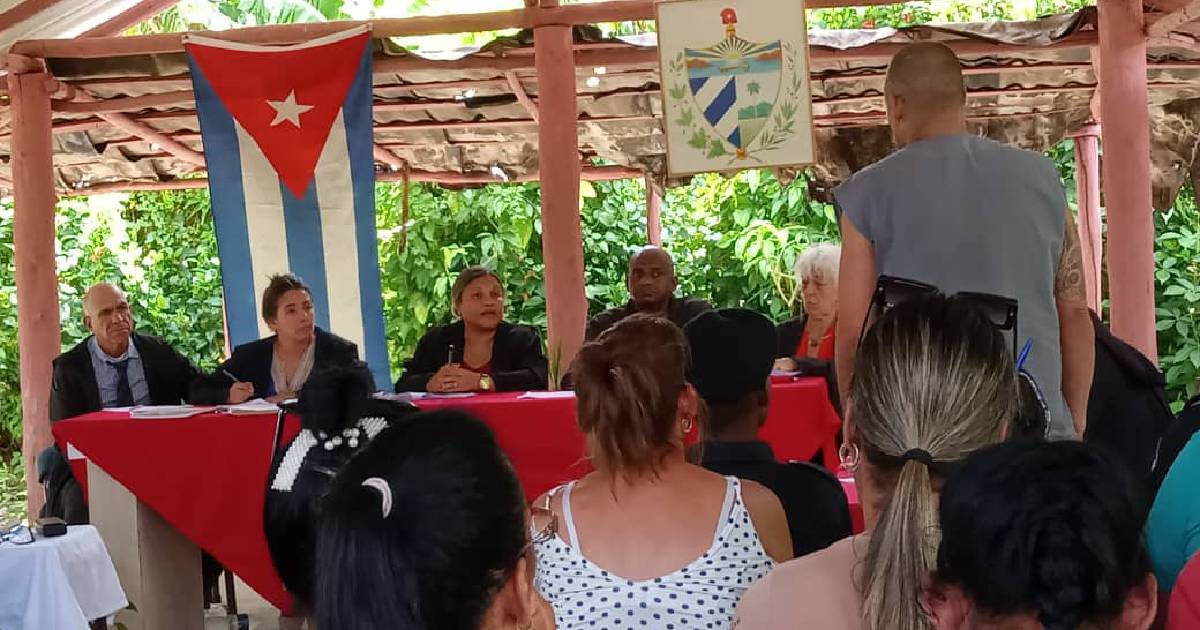
In Artemisa, a highly publicized trial was held by the People's Court regarding Case No. 106, involving a 36-year-old man originally from Isla de la Juventud and now residing in Havana. He was accused of stealing 70 liters of dielectric oil from a transformer located in the Popular Council of Cayajabos, Artemisa municipality, as reported by the official newspaper El artemiseño on Friday.
The theft occurred in February at Circuit 1570, part of a 33 kV to 13 kV substation with a capacity of 6.3 MVA. This act could have resulted in a power outage affecting approximately 4,000 residents, as well as over 20 workplaces, schools, bakeries, a popular campsite, and potable water supply sources.
According to the report, a local resident noticed unusual activity at the substation and alerted the Revolutionary National Police. Officers discovered three 20-liter containers hidden in a sugarcane field, another partially filled container, and oil stains on the suspect's overalls.
Just 24 hours after the incident, on February 13, the suspect participated in a reconstruction of the event with four witnesses present. He demonstrated how he used a rock to remove a plug and a pipe found on-site to extract the oil.
Provincial prosecutor Rafael Ángel Soler López classified the crime as sabotage under Article 125 of Cuba's Penal Code Law No. 151, which carries penalties ranging from seven to 15 years of imprisonment. He stated that the accused acted with full awareness of the consequences, aiming to "destroy, alter, damage, or harm the system."
The court recommended a 12-year prison sentence, along with supplementary measures, including the deprivation of rights and a travel ban from the national territory.
Both parties have ten days to file an appeal before the sentence becomes final.
Ismaray Hinojosa Pérez, the President of the Provincial People's Court of Artemisa, presided over the trial, which was attended by invited neighbors, individuals with police interests, workers from the electrical company, and employees from nearby workplaces.
"This practice helps raise public awareness in protecting these facilities," she remarked.
Edelfín Falcón Guerra, the technical director of the Artemisa Electrical Company, confirmed that this case is not an isolated incident, noting that substations in Guanajay, Caimito, San Antonio de los Baños, Alquízar, and Güira de Melena have faced similar disruptions.
Out of the 83 substations with 100 transformers in the province, only 36 have security services, highlighting the system's vulnerability.
The stolen dielectric oil is resold on the black market as fuel or lubricant for tractors. Each transformer is valued between four and five million dollars on the international market, according to the Electrical Company's own data.
This incident is part of a nationwide wave of thefts that have claimed lives. On April 11, in Songo La Maya, Santiago de Cuba, one man died and another suffered severe burns when a transformer exploded during an attempted dielectric oil theft.
In Las Tunas, the province has already reported 11 cases of dielectric oil and transformer part thefts this year, leaving thousands of residents without power for days.
Additionally, three Cubans were prosecuted for electrical sabotage in Jatibonico, Sancti Spíritus, after being caught trying to steal oil from a transformer.
Between January 2025 and the first quarter of 2026, all individuals tried for sabotaging the electrical system received sentences exceeding 10 years in prison, in accordance with Supreme People's Court Ruling 475, which reaffirmed these acts as sabotage with penalties that can reach life imprisonment in cases of severe consequences.
Understanding Electrical Sabotage Cases in Cuba
What are the consequences of stealing dielectric oil in Cuba?
Stealing dielectric oil is considered a serious offense in Cuba, classified under sabotage. It can result in prison sentences ranging from seven to 15 years, and in severe cases, life imprisonment.
How widespread is the issue of transformer oil theft in Cuba?
The theft of transformer oil is a significant issue in Cuba, with several provinces reporting multiple cases. This has led to power outages affecting thousands of residents and various institutions.
Why is dielectric oil targeted by thieves?
Dielectric oil is targeted because it can be resold on the black market as a fuel or lubricant, making it a valuable commodity for illegal trade.