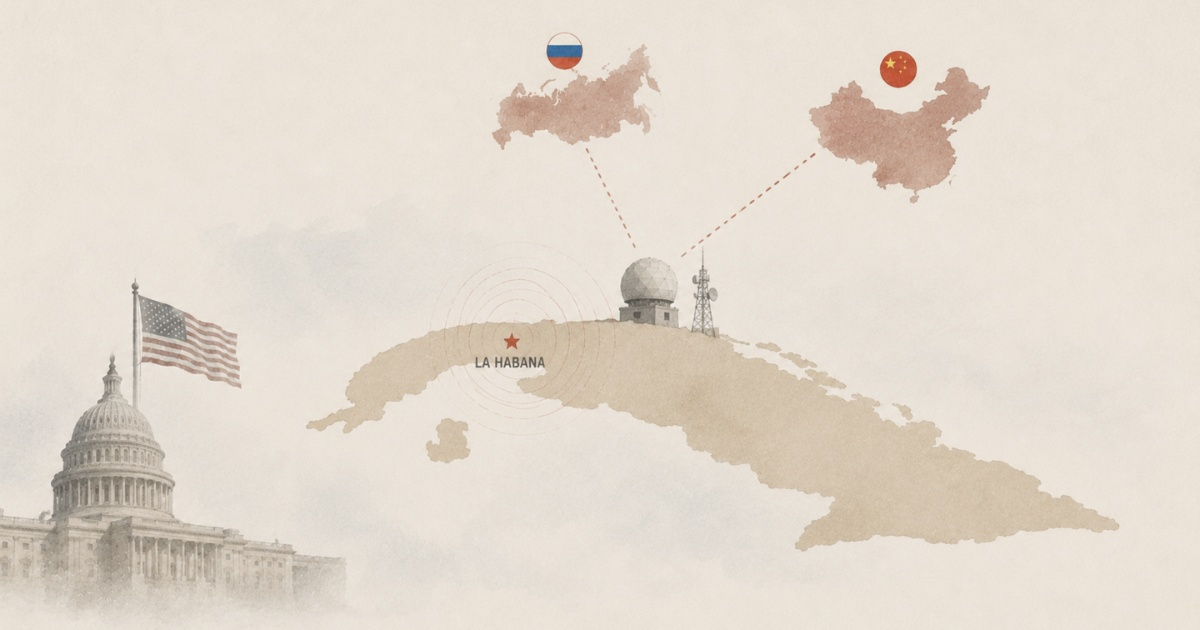
Since 2023, China and Russia have significantly increased their intelligence presence in Cuba, nearly tripling their personnel, and have invested in electronic listening facilities designed to spy on U.S. military bases in Florida. This information comes from officials familiar with classified U.S. intelligence assessments, as reported by the Wall Street Journal on Friday.
These facilities, located just about 100 miles (160 kilometers) from the U.S. coast, are strategically placed to monitor two military headquarters in Florida that oversee operations in the Middle East and Latin America.
The report highlights that both Beijing and Moscow have enhanced their facilities with more advanced equipment, boosting their ability to intercept military communications, maritime traffic, and other intelligence signals from the southeastern United States.
The U.S. government has been aware of China's surveillance presence in Cuba since at least 2019, but new evaluations suggest that the expansion has rapidly progressed. Reports indicate that China might be paying Cuba billions of dollars to host or upgrade these facilities, while the Cuban regime downplays or denies the extent of the collaboration.
Strategic Intelligence Facilities Identified
In December 2024, the Center for Strategic and International Studies (CSIS) identified at least 12 signal intelligence-related facilities linked to China in Cuba, spread across four primary locations: Bejucal, El Wajay, Calabazar, and El Salao. The latter, situated in Santiago de Cuba, is approximately 70 miles from the Guantánamo Naval Base.
The WSJ's report surfaces amid heightened diplomatic tensions. On April 28, Secretary of State Marco Rubio publicly accused Cuba of hosting Chinese and Russian intelligence operations, warning that "Washington will not allow any foreign military, intelligence, or security apparatus to operate with impunity just 90 miles from U.S. shores."
China has dismissed these allegations. The spokesperson for the Ministry of Foreign Affairs, Lin Jian, described their cooperation with Cuba as "legitimate, transparent, and in accordance with international law," while Beijing accused the U.S. of "fabricating excuses and spreading rumors."
Diplomatic Efforts and Rising Tensions
On May 14, CIA Director John Ratcliffe traveled to Havana to meet with Interior Minister Lázaro Álvarez Casas and Cuban intelligence officials. During the visit, Ratcliffe emphasized that the "window of opportunity" would not remain open indefinitely and that "Cuba cannot continue to serve as a platform for adversaries to advance hostile agendas in the hemisphere."
The Cuban Deputy Foreign Minister responded by stating that "Cuba has never threatened the U.S.," a stance the regime has consistently maintained in response to each new accusation.
Tensions further escalated on May 17, when Axios reported that Cuba had acquired over 300 military drones, with discussions on potential uses against U.S. facilities, including the Guantánamo Naval Base, warships, and Key West.
The National Defense Authorization Act, signed in December 2025, mandates that the Pentagon presents Congress with a detailed report on Chinese and Russian intelligence capabilities in Cuba by June 2026, making the new WSJ report a direct endorsement of the maximum pressure campaign the Trump administration maintains on Havana.
Frequently Asked Questions on Intelligence Activities in Cuba
What are the implications of increased Russian and Chinese intelligence in Cuba?
The expansion of Russian and Chinese intelligence activities in Cuba poses a significant security concern for the U.S., as these facilities could intercept sensitive military communications and monitor strategic operations in the region.
How is the U.S. responding to these intelligence threats?
The U.S. has intensified diplomatic efforts and is increasing pressure on Cuba. Additionally, the Pentagon is required to provide a comprehensive report on these activities, which will aid in formulating strategies to counteract these threats.
What role does China play in Cuba's surveillance activities?
China has been operating surveillance facilities in Cuba since at least 2019 and is reportedly investing heavily in expanding and modernizing these sites to bolster their intelligence-gathering capabilities.