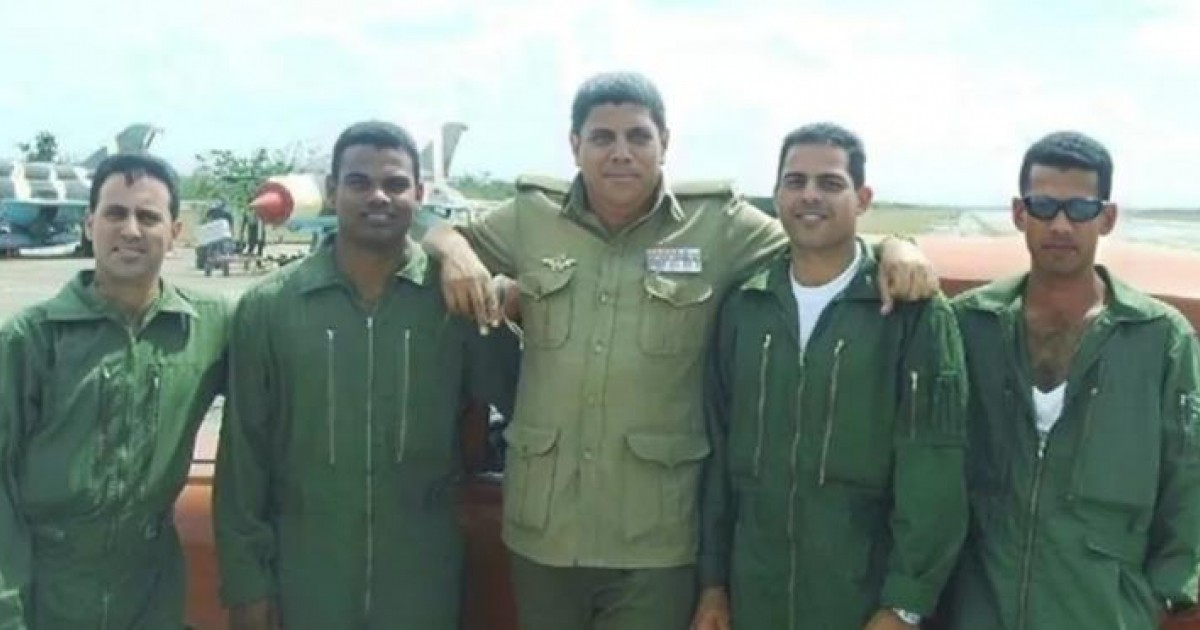
Luis Raúl González-Pardo Rodríguez, an ex-lieutenant colonel of the Cuban Air Force, has been imprisoned in Florida for several months due to immigration fraud. He is now poised to become a crucial witness in the legal proceedings against Raúl Castro concerning the 1996 shootdown of the Brothers to the Rescue planes.
On Wednesday, May 20, the Department of Justice unveiled a formal indictment from a federal grand jury in the Southern District of Florida against the 94-year-old former Cuban leader and five ex-military officials, including González Pardo, for the deaths of four pilots on February 24, 1996.
González Pardo stands as the sole individual among the accused currently in U.S. custody, placing him in a distinct position in relation to the judicial process.
For years, his identity was concealed under the secret code "22" during radio communications related to the operation.
It was private investigator Luis Domínguez, based in South Florida, who pinpointed his identity after scrutinizing recordings from that day and subsequently notified the FBI of his presence in Florida.
"In aviation, we use radio codes to obscure identities, and he was known as code number 22. Although he slipped up a few times, mentioning the pilot's name instead of the call sign, as is typical in Cuba," Domínguez explained.
According to the investigator, González Pardo was part of the second wave of aircraft that took off from San Antonio de los Baños airbase that day. "He knows who was in the control tower, who gave the orders. There's no one else here with that level of information," he stated.
González Pardo permanently entered the U.S. in April 2024 through the humanitarian parole program, having served in the Cuban Revolutionary Air and Air Defense Forces from 1980 to 2009, achieving the rank of lieutenant colonel.
In April 2025, he applied for permanent residency under the Cuban Adjustment Act, falsely denying any military training or service in armed units on his forms.
The FBI arrested him in early November 2025 for fraud and misuse of immigration documents, along with making false statements to a federal agency, charges that could result in up to 15 years in prison.
Attorney General Pamela Bondi emphasized, "This man's lengthy history as a military pilot for Castro's oppressive regime, which has inflicted immeasurable suffering on the Cuban people, should have been prominently noted in his immigration file."
Now, with the expanded indictment, González Pardo faces additional charges of murder and aircraft destruction alongside Raúl Castro and four other ex-military officials: Emilio José Palacio Blanco, José Fidel Gual Barzaga, Raúl Simanca Cárdenas, and Lorenzo Alberto Pérez-Pérez.
The Cuban regime has vehemently rejected the accusations. On the state-run program Mesa Redonda, Deputy Minister Carlos Fernández de Cossío dismissed the indictment as "fraudulent" and lacking any "legal, political, or moral basis," while Foreign Minister Bruno Rodríguez derided it as a "farce" from Havana.
Constitutional lawyer Joseph Malouf warned that time is against the prosecutors: "After 30 years, witnesses relocate, memories fade, and evidence might not have been collected or preserved properly," he told Telemundo 51.
This is precisely why González Pardo, the only accused detained on U.S. soil with direct knowledge of the events, is considered an invaluable asset in bringing to justice the former Minister of the Revolutionary Armed Forces when the shootdown was ordered.
Key Facts About the Legal Case Against Raúl Castro
What role did Luis Raúl González-Pardo Rodríguez play in the 1996 incident?
Luis Raúl González-Pardo Rodríguez was part of the second group of aircraft involved in the 1996 shootdown of the Brothers to the Rescue planes, providing crucial insight into the operation.
Why is González Pardo's testimony significant in the case against Raúl Castro?
González Pardo's testimony is significant because he has firsthand knowledge of the operation and is the only defendant currently detained in the U.S., making his insights critical for the prosecution.
What are the potential legal consequences for González Pardo?
González Pardo faces charges of fraud, misuse of immigration documents, and making false statements, which could lead to a prison sentence of up to 15 years, along with additional charges related to the 1996 incident.