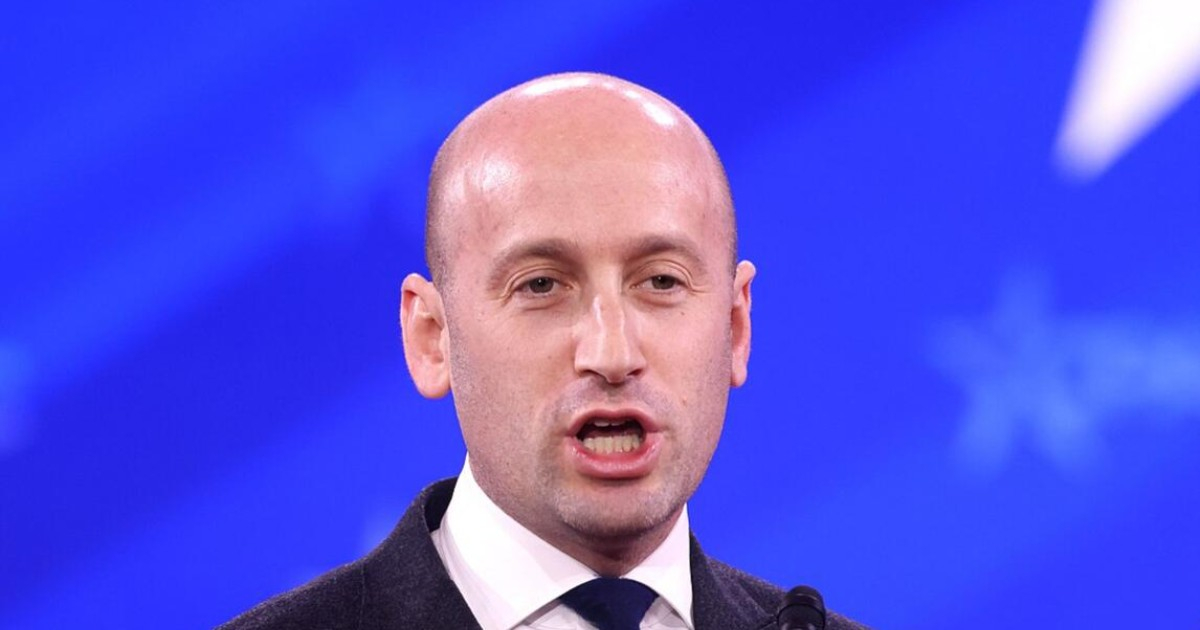
Stephen Miller, former Deputy Chief of Staff at the White House, issued a stern warning on Thursday, stating that the Cuban regime holds the key to its future. The regime must decide whether to reform and build closer ties with the United States amidst the most significant increase in pressure from Washington on Havana in decades.
"They have witnessed the sanctions imposed. They have seen the measures taken by the Administration. Ultimately, it is up to Cuba to choose whether it wants to reform, become a free nation, and befriend the United States, or if it opts for a different path," Miller was quoted as saying by Telemundo.
"In the end, their destiny is in their own hands," he emphasized.
Miller's remarks come in the wake of the U.S. Department of Justice's formal charges against former dictator Raúl Castro for the 1996 downing of two planes belonging to the organization Brothers to the Rescue, which resulted in the deaths of four Americans and a Cuban legal resident in the U.S.
Secretary of State Marco Rubio labeled Castro as a "fugitive from American justice" and expressed skepticism about reaching a negotiated agreement with Havana under the current circumstances.
"The likelihood of that happening... is not high," Rubio stated, although he left diplomatic channels open if the Cuban leadership alters its stance.
Humanitarian Aid and Diplomatic Tensions
Rubio also announced a $100 million humanitarian aid package, contingent upon the regime's agreement to distribute it through religious organizations—primarily the Catholic Church—rather than state or military structures.
"They claim to have accepted it. We will see if that means it will come to fruition," he remarked.
Washington's offensive unfolds on multiple fronts. The Treasury Department has sanctioned Cuban ministers, military leaders, the intelligence agency, and the military conglomerate GAESA.
Since January, secondary sanctions on oil supplies have reduced the island's energy imports by 80% to 90%, leading to power outages of up to 22 hours in Havana and widespread shortages.
Military Maneuvers and International Reactions
Adding to the pressure, the nuclear-powered USS Nimitz aircraft carrier has been deployed in the Caribbean, although President Trump denied on Thursday that it was intended to intimidate the regime.
"Not at all. We are here to help them," stated the president, reaffirming his willingness to engage in dialogue with the government of Miguel Díaz-Canel.
The Cuban dictator warned that a U.S. military intervention would trigger a catastrophe, while the regime distributed civil defense pamphlets among the population.
Internal protests over the crisis continue to be suppressed, with human rights organizations reporting a record 1,250 political prisoners in March.
From Moscow, Russian Foreign Ministry spokeswoman Maria Zakharova reiterated Russia's "full solidarity" with Cuba and accused Washington of preparing a military intervention, although analysts note that this support faces significant material limitations against the accumulated pressure from the Trump administration.
On the same day, the U.S. Supreme Court ruled 8 to 1 in favor of the Havana Docks Corporation, opening the door to lawsuits over properties confiscated by the Cuban regime in 1960, adding another judicial blow to the mounting pressures on Havana.
Key Questions About U.S. Policy on Cuba
What actions has the U.S. taken against the Cuban regime?
The U.S. has imposed sanctions on Cuban ministers, military leaders, and the intelligence agency. Additionally, secondary sanctions on oil supplies have significantly reduced Cuba's energy imports.
How has the Cuban regime responded to U.S. actions?
The Cuban regime has warned of potential catastrophe if the U.S. intervenes militarily, and it has distributed civil defense pamphlets among its citizens. Protests continue to be repressed.
What is the status of U.S.-Cuba diplomatic relations?
Diplomatic relations are strained, with the U.S. expressing skepticism about reaching a negotiated agreement under current circumstances, though dialogue remains a possibility if Cuba's leadership changes its stance.