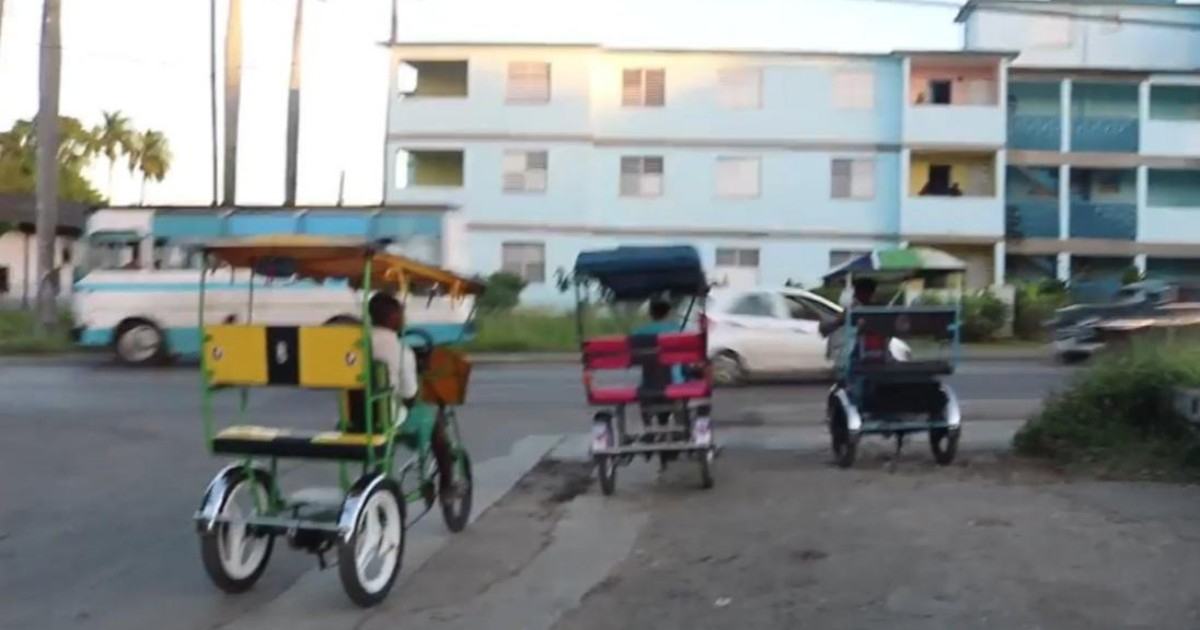
Every afternoon, a 14-year-old boy known as Leandro, a pseudonym for his protection, finishes his school day in eighth grade and takes to the streets of Havana to drive a bicitaxi. His goal is simple yet profound: to provide food for his mother and younger sister, as depicted in a video by CubaNet.
Leandro's daily routine is a mix of innocence and wisdom beyond his years. "With what I earn, I buy rice, chicken, bread for the night, and snacks for school the next day. I help my mom around the house. Times are tough, and I work to support my mom," he shares candidly.
Living in a neighborhood rife with violence and drugs, Leandro remains steadfast in his focus on academics, his job, and sports. "My mom guides me on the right path," he asserts, emphasizing his determination to stay away from the negative influences around him.
His immediate goals are modest yet meaningful: buying flip-flops, clothes, and shoes, and giving his mother a gift for her upcoming birthday. Despite the challenges he faces, Leandro holds onto a cherished dream: becoming a boxer.
"I'm a boxer, training at the Ciudad Deportiva. The daily commute costs me a thousand pesos," he explains, aware that the round trip often consumes most of his daily earnings. Nevertheless, he is resolved to continue, believing that hard work in the sport could lead him out of poverty.
Leandro repeats, "Times are tough," but his spirit remains undeterred. Despite their hardships, he finds happiness in his mother's love. "She gives me affection... I want to help her more, succeed, and pursue a career," he says, holding onto hope that effort can overcome the hurdles imposed by the regime that forced him to grow up too quickly.
Leandro's story is not unique. Recently, other Cuban children like Mario, a 13-year-old who starts mowing lawns at dawn, have emerged. In April, another young boy sold baked goods in a Santiago de Cuba park to support his family, and a 16-year-old collected firewood before school as part of the ongoing crisis.
The Cuban Conflict Observatory documented 71 incidents of child labor and begging in 2025, highlighting the increasing visibility of child labor amid the crisis. The harsh irony is that the Cuban Constitution, Labor Code, and Law 178/2025, enacted earlier this year, prohibit employment of minors under 17. Article 329 of the Penal Code penalizes illegal child employment with imprisonment or fines. Yet, no law can compete with hunger.
Even Miguel Díaz-Canel acknowledged the presence of child labor in April 2025 during a visit to Granma, though he deflected state responsibility: "We have always been proud because the revolution eradicated it, and we must prevent its resurgence in this economic crisis."
The economic downturn driving Leandro to pedal each afternoon is stark: Cuba's GDP plummeted 11% over five years and 5% in 2025 alone. UNICEF reports that 9% of Cuban children suffer from severe food poverty, while the Cuban Human Rights Observatory estimates that 89% of Cuban families live in extreme poverty.
Understanding Child Labor in Cuba
What drives children like Leandro to work in Cuba?
The severe economic crisis and widespread poverty in Cuba force many children to work to support their families. Despite legal prohibitions, hunger and lack of resources make child labor a necessity for survival.
How does the Cuban government address child labor?
Although Cuban law prohibits child labor, enforcement is weak due to the economic crisis. Government officials acknowledge the issue but often avoid taking responsibility, citing past achievements instead.
What impact does child labor have on Cuban children?
Child labor limits educational opportunities, exposes children to dangerous environments, and forces them to mature quickly. It can have long-term effects on their physical and mental health, as well as future prospects.