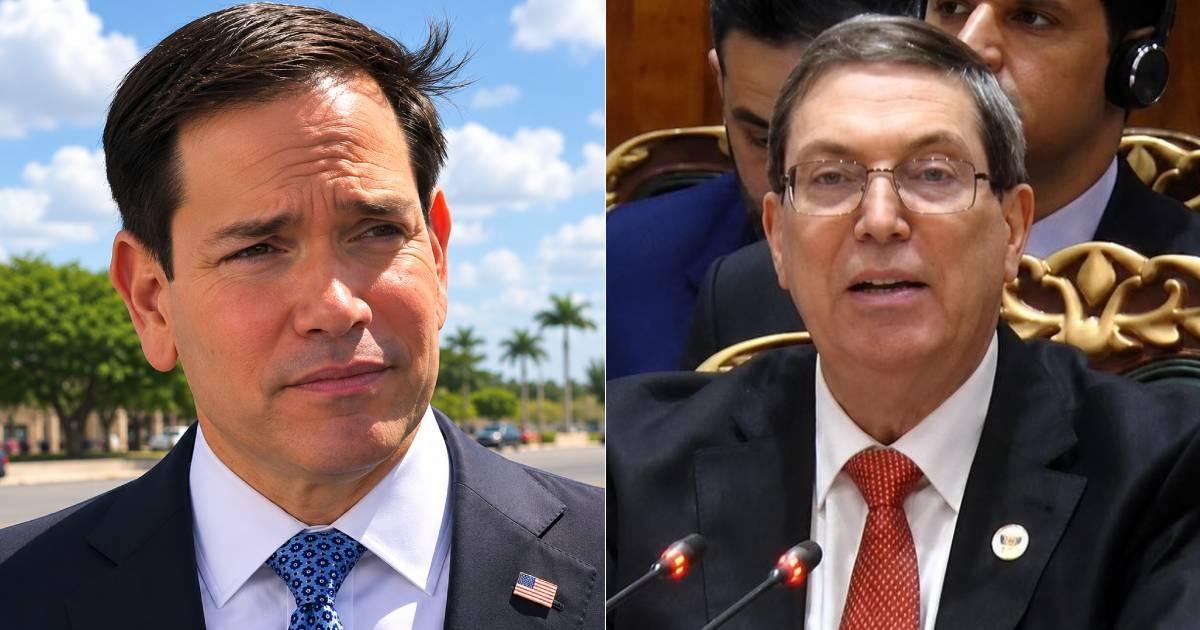
Cuba's Foreign Minister, Bruno Rodríguez Parrilla, has accused U.S. Secretary of State Marco Rubio of fabricating lies to incite a military confrontation with Cuba. Rodríguez warned that such actions could result in significant bloodshed involving both Cubans and Americans.
This statement, shared on the social media platform X, was a direct response to Rubio's remarks to the media. In his comments, the U.S. diplomat labeled Cuba as a "failed state," suggesting that the island poses a threat to U.S. national security and mentioning the possibility of systemic collapse. Rubio also noted the lack of "substantial progress" in talks with the Cuban government.
Rodríguez countered Rubio’s allegations, insisting that Cuba is not a threat to Washington. Instead, he accused the U.S. government of relentlessly attacking the Cuban people, aiming to provoke desperation and economic collapse by hindering fuel imports and intensifying the extraterritorial impact of the embargo.
Dispute Over Terrorism Allegations
The Cuban foreign minister also denounced the designation of Cuba as a state sponsor of terrorism as false. He argued that it is the United States that has historically facilitated and tolerated terrorist activities against Cuba, providing sanctuary to known terrorists.
Rodríguez directly blamed Rubio for exacerbating economic pressures, stating, "The Secretary of State is well aware that the intensified unilateral coercive measures he has championed are the primary barrier to Cuba’s economic development, causing widespread destruction across all sectors, including the private sector."
Escalating Tensions and Legal Actions
This exchange comes amid heightened tensions. On Wednesday, the U.S. Department of Justice declassified a federal grand jury indictment against Raúl Castro for the 1996 downing of two Brothers to the Rescue planes, which resulted in the deaths of four Cuban Americans. Rubio declared Castro a "fugitive from U.S. justice" and vowed to bring him to the United States.
In the same timeframe, the USS Nimitz aircraft carrier arrived in the Caribbean, deployed by the Southern Command. However, former President Trump dismissed claims that the vessel was meant to intimidate Cuba, stating, "Not at all. We're here to help them."
Impact of Sanctions on Cuba
Since January 2026, the Trump administration has imposed over 240 sanctions on Cuba, intercepting at least seven oil tankers and cutting energy imports by 80% to 90%. These actions have led to power outages lasting up to 25 hours daily in more than 55% of Cuban territory.
This is not the first time Rodríguez has issued warnings of this nature. In an earlier interview from Havana on May 8, he spoke of "unimaginable consequences" of an attack, including the loss of Cuban and American lives. On May 13, he reiterated that a U.S. assault would result in a "bloodbath."
Rubio, meanwhile, was firm in his skepticism regarding any potential agreement: "The likelihood of that happening with the current leadership is not high," he acknowledged, though he clarified that Trump's preference remains a "negotiated and peaceful agreement."
Understanding U.S.-Cuba Relations
What did Bruno Rodríguez accuse Marco Rubio of?
Bruno Rodríguez accused Marco Rubio of lying to provoke a military attack against Cuba, which he warned could lead to bloodshed involving both Cubans and Americans.
What measures has the U.S. taken against Cuba since 2026?
Since January 2026, the U.S. has imposed over 240 sanctions against Cuba, intercepted oil shipments, and reduced energy imports significantly, causing widespread power outages across the island.
How has the U.S. characterized Cuba in recent statements?
Marco Rubio described Cuba as a "failed state" and a national security threat to the United States, while also expressing concerns about a potential systemic collapse on the island.