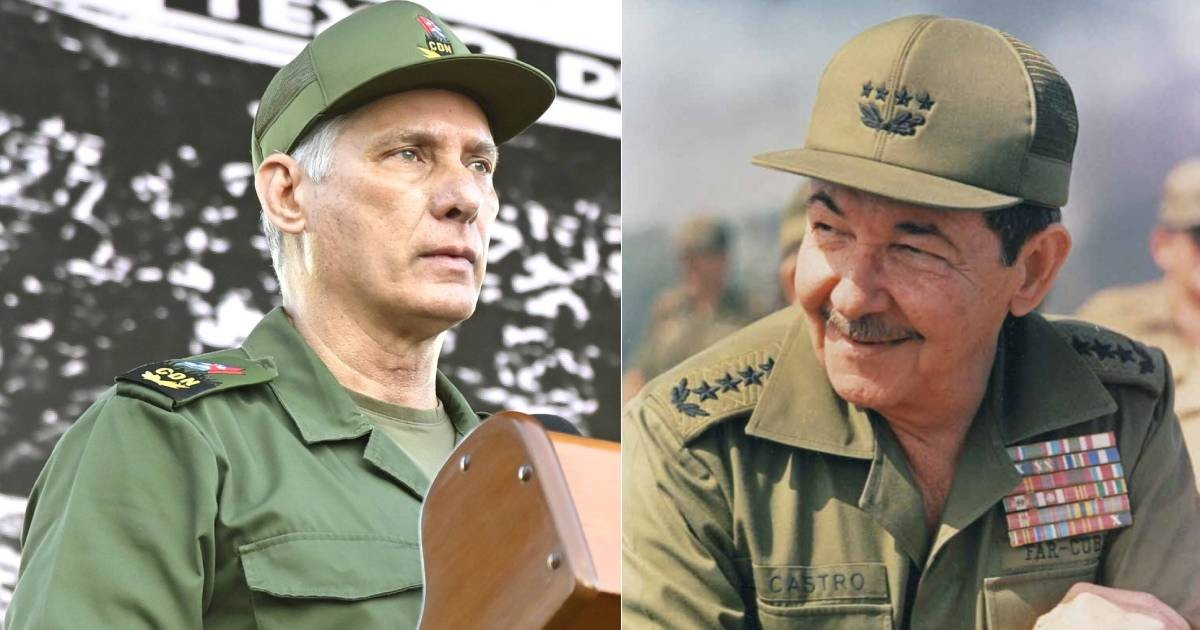
On Thursday, Cuban leader Miguel Díaz-Canel intensified the official rhetoric in response to the United States Department of Justice's criminal charges against Raúl Castro. He took to X, formerly known as Twitter, to assert: "The Army General is Cuba, and Cuba deserves respect."
This message marks a notable escalation from his initial reaction on Wednesday, where he dismissed the charges as a "political maneuver lacking legal foundation" and portrayed them as a pretext for potential military aggression against the island nation.
In his latest tweet, Díaz-Canel tapped into nationalist sentiment, stating, "Our nation's heroes won't be disrespected, and history and traditions will not be insulted without a response. Not in Cuba."
The Cuban leader further attempted to use the charges as a rallying point for national unity, claiming, "This new aggression has strengthened our unity and heightened the honor, dignity, and anti-imperialist spirit of a people already known worldwide for their brave resistance against imperial domination."
Accompanying his message was an official photo from the Presidency of the Republic, showing Raúl Castro in a four-star military uniform, under the campaign hashtag #RaúlEsRaúl.
Díaz-Canel also announced his participation in the José Martí Anti-Imperialist Platform on Friday, where the Communist Youth Union has organized a gathering at 7:30 a.m. in front of the U.S. Embassy on Havana's Malecón to "condemn the despicable and infamous act by the Department of Justice."
The charges that triggered this crisis were filed on Wednesday—Cuba's Independence Day—at Miami's Freedom Tower by Acting Attorney General Todd Blanche, who stated, "For nearly 30 years, the families of four murdered Americans have awaited justice."
The allegations against Raúl Castro involve conspiracy to murder U.S. citizens, four counts of murder, and two counts of aircraft destruction, stemming from the February 24, 1996, downing of two civilian planes belonging to Brothers to the Rescue, which resulted in the deaths of Armando Alejandre Jr., Carlos Costa, Mario Manuel de la Peña, and Pablo Morales. Their bodies were never recovered.
The crux of the charges is a June 1996 audio recording where Castro, then the Minister of the Revolutionary Armed Forces, admits to ordering the attack: "Shoot them down over the sea when they appear; consult no one who has the authority."
Secretary of State Marco Rubio branded Raúl Castro a "fugitive from American justice" and cryptically noted that plans to bring him to trial would not be disclosed prematurely: "If there's an announcement, you'll hear it afterward, not before."
The Cuban regime has threatened "fierce resistance" to any actions stemming from these charges, with Prime Minister Manuel Marrero Cruz dismissing the indictment as a "farce," and Foreign Minister Bruno Rodríguez labeling Rubio a "spokesperson for corrupt and vengeful interests."
Raúl Castro, currently 94, will turn 95 on June 3, 2026. With no extradition treaty between Cuba and the U.S., analysts view the charges as largely symbolic. However, if convicted, Castro could face life imprisonment or even the death penalty.
Understanding the Charges Against Raúl Castro
What charges has Raúl Castro faced in the United States?
Raúl Castro has been charged with conspiracy to murder U.S. citizens, four counts of murder, and two counts of aircraft destruction related to the 1996 downing of two Brothers to the Rescue planes.
How has the Cuban government responded to these charges?
The Cuban government has condemned the charges, calling them a political maneuver and a pretext for military aggression, while threatening fierce resistance to any actions resulting from the indictment.
Is there an extradition treaty between Cuba and the United States?
No, there is no extradition treaty between Cuba and the United States, which complicates any legal actions the U.S. might pursue against Raúl Castro.