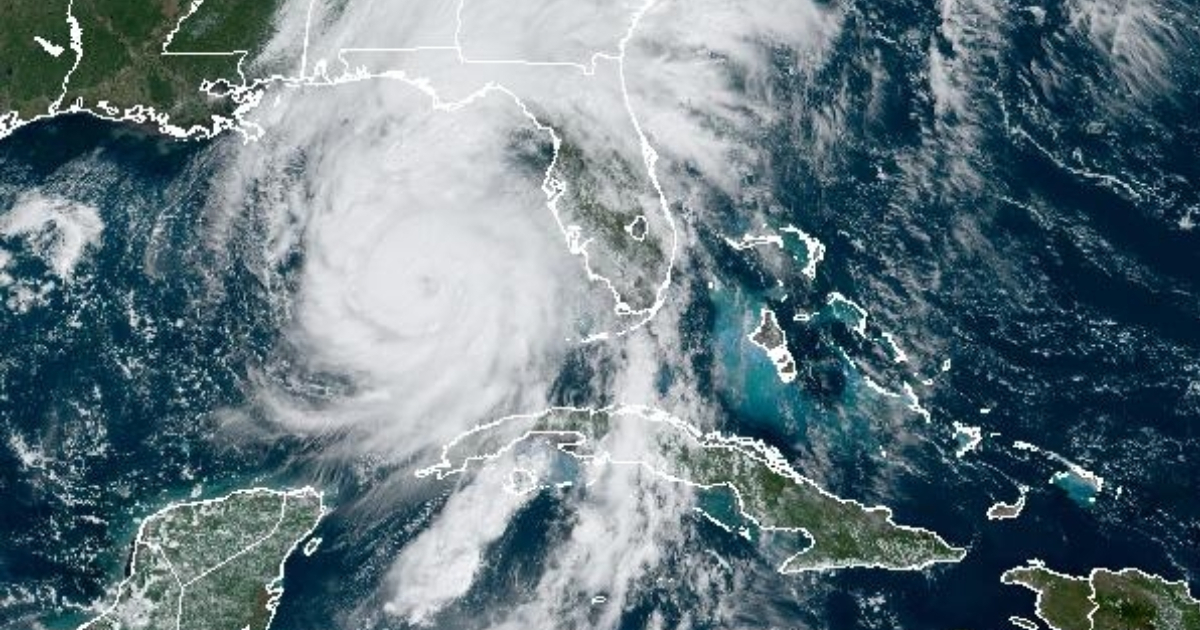
The United States' National Oceanic and Atmospheric Administration (NOAA) released its official forecast for the 2026 Atlantic hurricane season this Thursday. Running from June 1 to November 30, the season is projected to be less active than usual, with a 55% chance of being below average.
NOAA anticipates between eight and 14 named storms, with three to six potentially becoming hurricanes, and one to three escalating to major hurricanes (Category 3, 4, or 5).
The agency expresses 70% confidence in these forecast ranges. Typically, an average season sees 14 named storms, seven hurricanes, and three major hurricanes.
Factors Influencing the 2026 Forecast
The primary reason behind this subdued forecast is the expected development of El Niño, which generally increases vertical wind shear over the tropical Atlantic and the Caribbean, making it more challenging for cyclones to form and gain intensity.
Nonetheless, sea temperatures in the Atlantic are predicted to be slightly above average, coupled with weaker-than-normal trade winds. These conditions could counteract El Niño's effects, adding a layer of uncertainty to the forecast.
"While El Niño can suppress hurricane activity in the Atlantic basin, there's still uncertainty about the season's development," noted Ken Graham, director of NOAA's National Weather Service. "It only takes one storm to make a season disastrous."
Comparisons with Other Forecasts and Past Seasons
NOAA's forecast aligns generally with those from other organizations. In April, Colorado State University predicted 13 named storms, six hurricanes, and two major ones, equating to 75% of an average season.
The Cuban Institute of Meteorology (INSMET) forecasted on May 6 that the entire Atlantic basin would see 11 tropical cyclones, five hurricanes, and two intense storms, estimating a 40% chance of at least one hurricane affecting Cuba, slightly above the historical average of 35%.
This forecast starkly contrasts with the exceptionally active 2025 season, which reached 105% of the historical average with three Category 5 hurricanes: Erin, Humberto, and Melissa.
Hurricane Melissa made landfall in eastern Cuba on October 29, 2025, as a Category 3 storm with sustained winds of 121 mph, marking it as the third most destructive Atlantic hurricane in history.
It caused significant damage to over 116,000 homes across the provinces of Santiago de Cuba, Holguín, Granma, and Guantánamo, impacting more than 3.5 million Cubans, according to United Nations estimates. Cuba is still recovering from this devastation as the new season approaches.
Technological Advancements in Forecasting
For 2026, NOAA is also introducing technological enhancements to its forecasting systems. For the first time, data from small unmanned drones will be integrated into the HAFS hurricane forecast model, potentially improving intensity prediction accuracy by 10%.
NOAA plans to update its forecast in August, ahead of the season's historical peak, which typically occurs from mid-September to October.
Frequently Asked Questions About the 2026 Hurricane Season
What factors are influencing the 2026 hurricane season forecast?
The expected development of El Niño, which increases wind shear over the tropical Atlantic and Caribbean, is a major factor. However, slightly warmer sea temperatures and weaker trade winds could counteract this effect.
How does the 2026 forecast compare to an average hurricane season?
An average season typically has 14 named storms, seven hurricanes, and three major hurricanes. The 2026 forecast predicts eight to 14 named storms, three to six hurricanes, and one to three major hurricanes.
What technological advancements are being implemented in 2026?
NOAA is incorporating data from small unmanned drones into the HAFS hurricane forecast model, which could enhance the accuracy of intensity predictions by 10%.