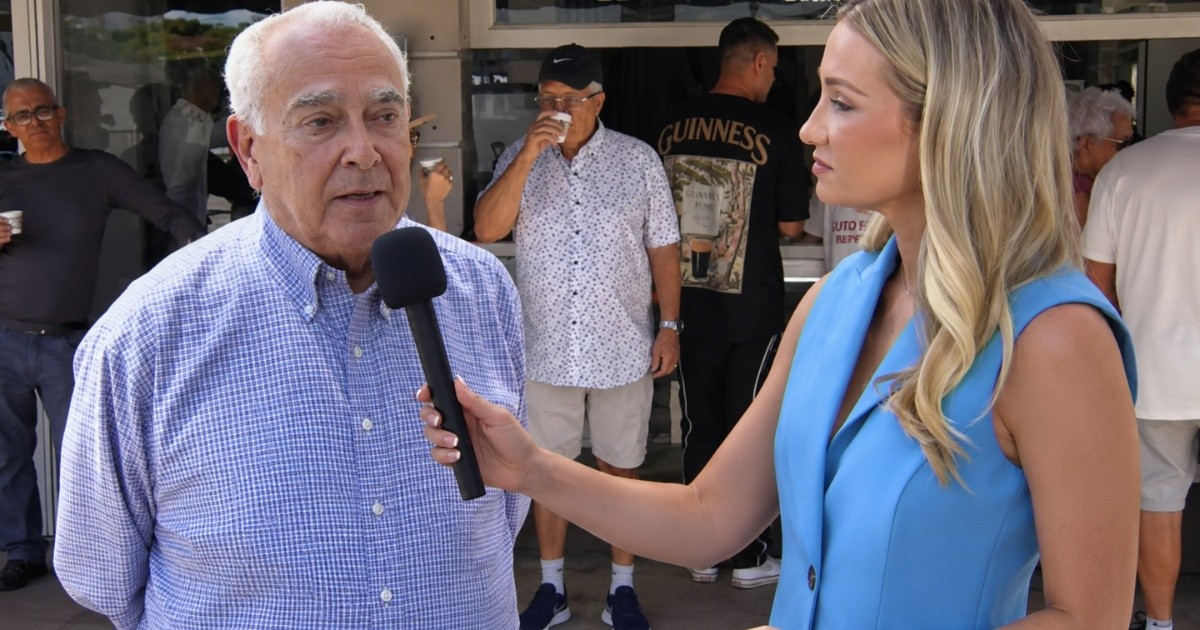
An 80-year-old Cuban exile was moved to tears on Fox News as he reacted to the U.S. Department of Justice's formal indictment against Raúl Castro for the downing of Brothers to the Rescue planes in 1996.
Oscar Fernández, who fled Cuba in 1961 at the age of 15, spoke emotionally about what the news represents for decades of exile: "For 67 years, we've been overlooked by everyone—the United Nations, the Organization of American States, the European Union, everyone."
When asked about his hopes for the future, Fernández was clear: "We hope this marks the beginning of the end for the Castro regime."
With children and grandchildren born in Florida and New York, Fernández also turned his thoughts to the future of Cuba: "We're ready to return and contribute to rebuilding our country with work, with money, with investment, and with the love that has been missing in Cuba for the last six decades."
He praised the current administration's approach compared to past governments: "This administration is the only one trying to open the door for us. We won't let this opportunity slip by."
The indictment against Raúl Castro was announced on Wednesday by Acting Attorney General Todd Blanche at Miami's iconic Freedom Tower, a symbolic venue for Cuban exiles, on May 20th, Cuba's Independence Day.
The federal grand jury had issued the indictment on April 23, and it was declassified the same day. The charges include conspiracy to murder U.S. citizens, destruction of aircraft, and four counts of murder for the deaths of Armando Alejandre Jr., Carlos Costa, Mario de la Peña, and Pablo Morales, who died on February 24, 1996, when Cuban MiG-29 jets shot down two unarmed civilian planes over international waters in the Florida Straits.
Alongside Castro, five co-defendants were charged: Lorenzo Alberto Pérez-Pérez, Emilio José Palacio Blanco, José Fidel Gual Barzaga, Raúl Simanca Cárdenas, and Luis Raúl González-Pardo Rodríguez.
Former President Donald Trump called the day "a great day" and noted that Miami's community appreciates the Attorney General's actions. Florida Republican Congresswoman María Elvira Salazar was more assertive: "Today marks the beginning of the end for the Castro family."
The regime reacted with disdain. Foreign Minister Bruno Rodríguez labeled Marco Rubio as a "spokesperson for corrupt and vengeful interests," the Cuban Embassy in the United States described the proceedings as a "sham," and the government threatened "fierce resistance" to any actions stemming from the case.
The indictment is historically unprecedented: it is the first time in nearly 70 years that a high-ranking Cuban regime leader faces criminal charges in the United States for the death of American citizens.
Raúl Castro, 94, has never traveled to the U.S., and there is no extradition treaty between Cuba and the United States, making it unlikely he will appear in court. However, the political and symbolic weight of the process is immense for the Cuban diaspora.
Key Questions About the Indictment of Raúl Castro
What charges has Raúl Castro been indicted on?
Raúl Castro faces charges of conspiracy to murder U.S. citizens, destruction of aircraft, and four counts of murder for the deaths of individuals killed when Cuban MiG-29 jets shot down civilian planes in 1996.
Why is the indictment of Raúl Castro significant?
The indictment is significant because it marks the first time a high-ranking Cuban regime leader has faced criminal charges in the U.S. for the death of American citizens, symbolizing a potential shift in accountability.
How has the Cuban government responded to the charges?
The Cuban government has dismissed the indictment as a sham and threatened fierce resistance, with officials criticizing U.S. politicians involved in the case.