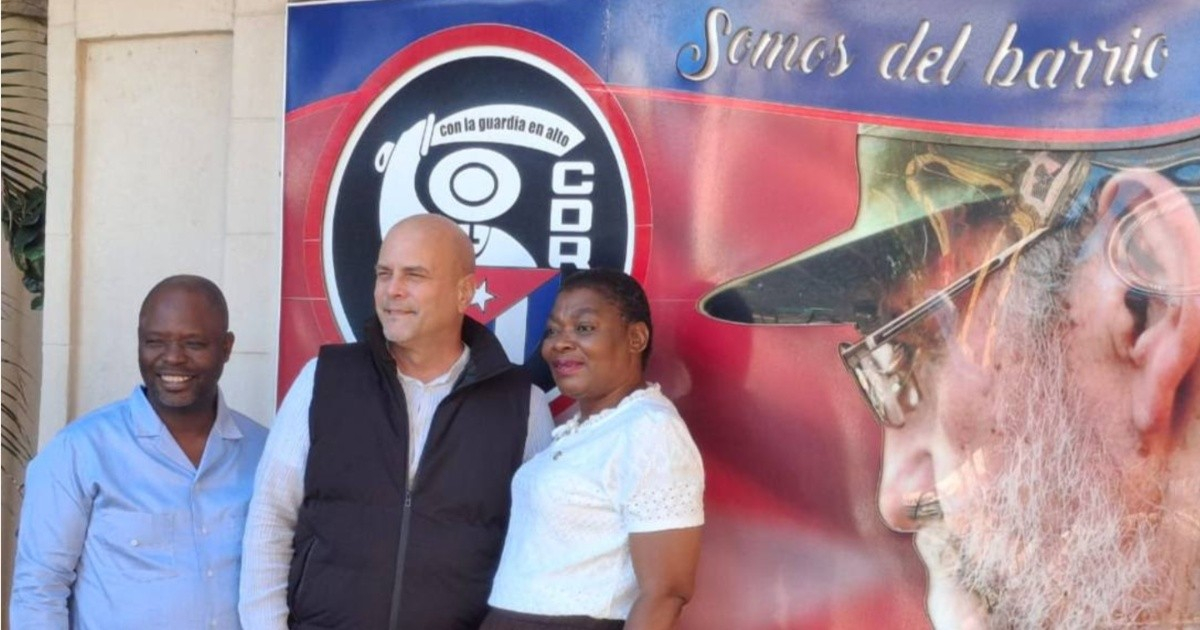
On Wednesday, Gerardo Hernández Nordelo unveiled yet another plan to "revitalize" the Committees for the Defense of the Revolution (CDR) during a meeting with the organization's National Directorate, attended by Miguel Díaz-Canel, as reported by Canal Caribe.
The national coordinator of the CDRs outlined a series of specific actions aimed at enhancing community vigilance against theft, improving the performance of maritime patrol units, boosting food production, addressing issues that hinder blood donations, and expanding "neighborhood debates" to raise awareness about drug consumption.
During the meeting, Díaz-Canel emphasized that "the Committees for the Defense of the Revolution have a rich history and can achieve much more today, but they must understand the current challenges the country faces and leverage the potential within the neighborhoods."
The Cuban leader further stated, "This is our time; and the neighborhood is where we need to coordinate our responses."
This gathering is part of an ongoing effort. Since assuming his role in September 2020, Hernández has persistently called for the revitalization of the organization. At the 10th Congress of the CDRs in September 2023, he was reaffirmed in his position with the clear goal of rejuvenating the organization. On that occasion, he admitted that the CDRs "are not functioning in many parts of the Island."
In September 2025, in celebration of the CDRs' 65th anniversary, Hernández launched a campaign titled "100 Tasks for Fidel Castro's Centennial" as a new revitalization strategy, and in April 2026, he introduced the "My Neighborhood for the Homeland" program, officially presented by the regime as a new community action framework.
In April 2025, during the IV National Plenum, the organization itself acknowledged a "leadership deficit" amid a steady decline marked by the aging of its membership and lack of interest among young people.
At the meeting, Hernández highlighted the achievements of the "Community Youth Network," an initiative by the Union of Young Communists to engage youth in solving social and economic issues within their neighborhoods. "Young people won't invade foreign ground; they will act in their own neighborhood," he asserted.
This meeting is part of a series of discussions Díaz-Canel has been holding since late March with leaders of political and mass organizations, assigning them "specific missions" to help overcome the nation's crisis, according to official media.
This renewed attempt at revitalization occurs in a context of deep economic and social crisis. Hernández's social media posts in the weeks leading up to the meeting sparked widespread backlash: his support for the #MiFirmaPorLaPatria campaign led Cubans to denounce hunger and misery while demanding free elections. Meanwhile, his May 1 post bragging about dancing at the pre-May Day parade gathering was met with widespread mockery.
Established by Fidel Castro on September 28, 1960, as a network for neighborhood surveillance and mobilization, the CDRs have over six decades of history. Yet, according to Hernández, they continue to underperform in much of the country.
Revitalizing Cuba's CDRs: Key Questions Answered
What is the purpose of the Committees for the Defense of the Revolution (CDR)?
The CDRs were established to serve as a network for neighborhood surveillance and community mobilization, aiming to support the Cuban government's goals and initiatives.
Why is there a need to revitalize the CDRs?
Revitalization is deemed necessary due to the CDRs' declining effectiveness in many parts of Cuba, driven by factors such as aging membership and a lack of engagement among younger generations.
How has the public reacted to Gerardo Hernández's revitalization efforts?
Public response has been largely critical, with many Cubans expressing dissatisfaction with the current state of affairs and calling for significant changes, including free elections.
What is the "Community Youth Network" initiative?
The "Community Youth Network" is an initiative by the Union of Young Communists designed to involve young people in addressing social and economic challenges within their own neighborhoods.