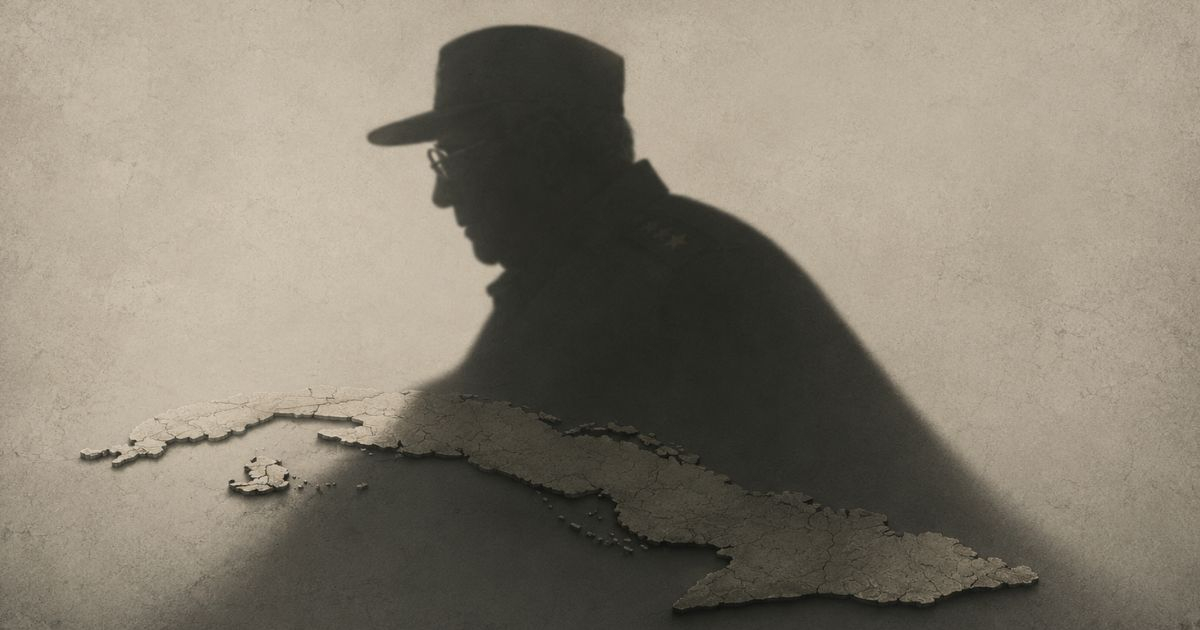
The Cuban Revolutionary Government fervently condemned the federal criminal charges brought by the U.S. Department of Justice against Raúl Castro for the downing of two aircraft operated by the organization Brothers to the Rescue in 1996.
In an official statement published in Granma, the Communist Party of Cuba's official newspaper, the regime labeled the accusation a "disgraceful and vile act of political provocation" and challenged Washington's legitimacy and jurisdiction to act.
"This is a disgraceful and vile act of political provocation, rooted in the dishonest manipulation of the incident that led to the downing of two aircraft over Cuban airspace in February 1996, operated by the terrorist organization Brothers to the Rescue," the official statement asserted.
The regime contends that the shooting down of the two Cessna 337 Skymaster planes on February 24, 1996, was "an act of legitimate defense, supported by the United Nations Charter, the 1944 Chicago Convention on International Civil Aviation, and the principles of air sovereignty and proportionality."
The statement further claims that Cuba lodged over 25 formal complaints with the State Department, the Federal Aviation Administration, and the International Civil Aviation Organization regarding airspace violations by Brothers to the Rescue between 1994 and 1996.
It accuses the U.S. government of ignoring these warnings and being "complicit" in actions it deems terrorist against Cuba.
"It is profoundly cynical for the same government to make this accusation after killing nearly 200 people and destroying 57 vessels in international Caribbean and Pacific waters," the statement concludes.
The communiqué ends with a call for unity around Castro: "The Cuban people reaffirm their unwavering determination to defend the Homeland and its Socialist Revolution, and with utmost strength and resolve, their unconditional and steadfast support for Army General Raúl Castro Ruz."
The charges, announced by Acting Attorney General Todd Blanche at Miami's Freedom Tower, include conspiracy to murder U.S. citizens, destruction of aircraft, and four individual homicide charges for the deaths of Armando Alejandre Jr., Carlos Costa, Mario Manuel de la Peña, and Pablo Morales, whose bodies were never recovered.
The indictment, passed by a federal grand jury on April 23, 2026, and declassified this Wednesday, also names five Cuban military officers: Lorenzo Alberto Pérez-Pérez, Emilio José Palacio Blanco, José Fidel Gual Barzaga, Raúl Simanca Cárdenas, and Luis Raúl González-Pardo Rodríguez.
The case's main evidence is a June 1996 audio recording in which Castro outlines the order he gave, verified for authenticity by specialists and Alcibíades Hidalgo, a former personal secretary to the ex-leader.
The practical impact of the indictment is limited: Castro is 94 years old, has never set foot on U.S. soil, and there is no extradition treaty between the two countries.
Blanche summarized Washington's stance with a stark message: "If you kill Americans, we will pursue you."
Implications of U.S. Charges Against Raúl Castro
What are the charges against Raúl Castro?
Raúl Castro faces charges of conspiracy to murder U.S. citizens, destruction of aircraft, and four counts of homicide related to the 1996 downing of aircraft by Brothers to the Rescue.
How has the Cuban government responded to the charges?
The Cuban government has denounced the charges as a "disgraceful and vile act of political provocation," and challenged the U.S.'s legitimacy and jurisdiction to act.
What evidence supports the U.S. charges?
The primary evidence includes a 1996 audio recording where Castro describes the order to down the aircraft, which has been authenticated by experts and a former personal secretary to Castro.
What is the significance of these charges?
While the charges highlight U.S. condemnation of the incident, their practical impact is limited due to Castro's age, his lack of presence in the U.S., and the absence of an extradition treaty with Cuba.