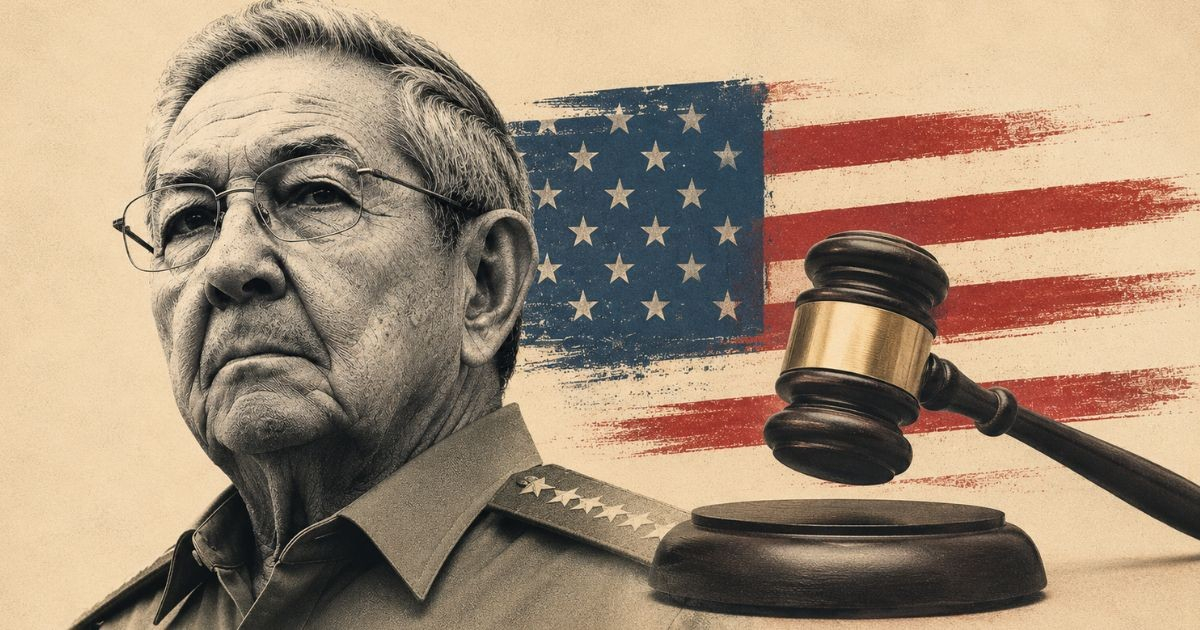
Today, the federal justice system in the United States unveiled an expanded indictment against Raúl Castro and five members of the Revolutionary Air Force, charging them with the downing of two civilian planes belonging to Brothers to the Rescue on February 24, 1996. This tragic event led to the death of four Cuban Americans.
The court document, identified as a "Motion to Unseal Superseding Indictment" in case No. 03-20685-CR-SEITZ(s), was endorsed by federal prosecutor Abbie D. Waxman and submitted under the guidance of prosecutor Jason A. Reding Quiñones. Alongside Raúl Modesto Castro Ruz, the other accused individuals are Lorenzo Alberto Pérez-Pérez, Emilio José Palacio Blanco, José Fidel Gual Bárzaga, Raúl Simanca Cárdenas, and Luis Raúl González-Pardo Rodríguez.
The Role of Lorenzo Alberto Pérez-Pérez
Lorenzo Alberto Pérez-Pérez was the pilot responsible for firing the missiles that destroyed the two planes. Born in 1959 in Las Tunas, he was a seasoned veteran with 74 combat missions under his belt, totaling over 1,000 flying hours, 500 of which were in MiG-29 aircraft. His attack resulted in the immediate deaths of Mario de la Peña, Armando Alejandre Jr., Carlos Costa, and Pablo Morales, whose bodies were never recovered.
Other Involved Pilots and Their Missions
Emilio José Palacio Blanco flew a MiG-23 ML fighter jet that was also part of the operation, known internally as "Operation Scorpion."
José Fidel Gual Bárzaga and Raúl Simanca Cárdenas formed the second pair of fighters that took off from the San Antonio de los Baños base. Their mission was to intercept a third aircraft carrying José Basulto, the founder of Brothers to the Rescue, and Silvia Iriondo from the organization MAR por Cuba. However, they were unable to shoot it down as Basulto evaded them by hiding among the clouds. When the pilots reacquired their target, they were approaching U.S. airspace and were denied permission to continue the pursuit.
Lieutenant Colonel Luis Raúl González-Pardo Rodríguez piloted the MiG-29A 911 in the chase of Basulto's aircraft. He failed to bring it down for similar reasons. His case gained recent attention because he emigrated to the United States in April 2024 using a humanitarian parole visa and was arrested in November 2025 for immigration fraud, having concealed his military background in his permanent residency application. He could face up to 15 years in federal prison for these charges.
Key Evidence and Reactions
The central evidence in the indictment is an audio recording from June 1996 in which Raúl Castro, who was then the Minister of the Armed Forces, describes his directive: "I said try to bring them down over territory, but they would enter Havana and leave... Well, shoot them down over the sea when they appear; and do not consult those who have the faculties."
To date, the only individual convicted in connection with the case was Gerardo Hernández, a member of the Cuban espionage network known as the "Cuban Five." He was sentenced in 2001 for conspiracy to commit murder and released in 2014 as part of a prisoner exchange.
José Basulto, the pilot who managed to escape on that fateful February 24, expressed his emotions upon hearing of the indictment: "I have longed for this for a long time. I have longed for justice, for justice to become a reality."
Frequently Asked Questions About the Indictment of Raúl Castro and Others
What was the reason behind the indictment against Raúl Castro and the military officials?
The indictment charges Raúl Castro and five military officials with the destruction of two civilian planes from Brothers to the Rescue, resulting in the deaths of four Cuban Americans on February 24, 1996.
Who were the victims of the attack on Brothers to the Rescue planes?
The attack led to the deaths of Mario de la Peña, Armando Alejandre Jr., Carlos Costa, and Pablo Morales, all of whom were Cuban Americans.
What is the significance of the audio recording in the indictment?
The audio recording is a key piece of evidence, capturing Raúl Castro giving the order to shoot down the aircraft involved in the incident without consulting higher authorities.