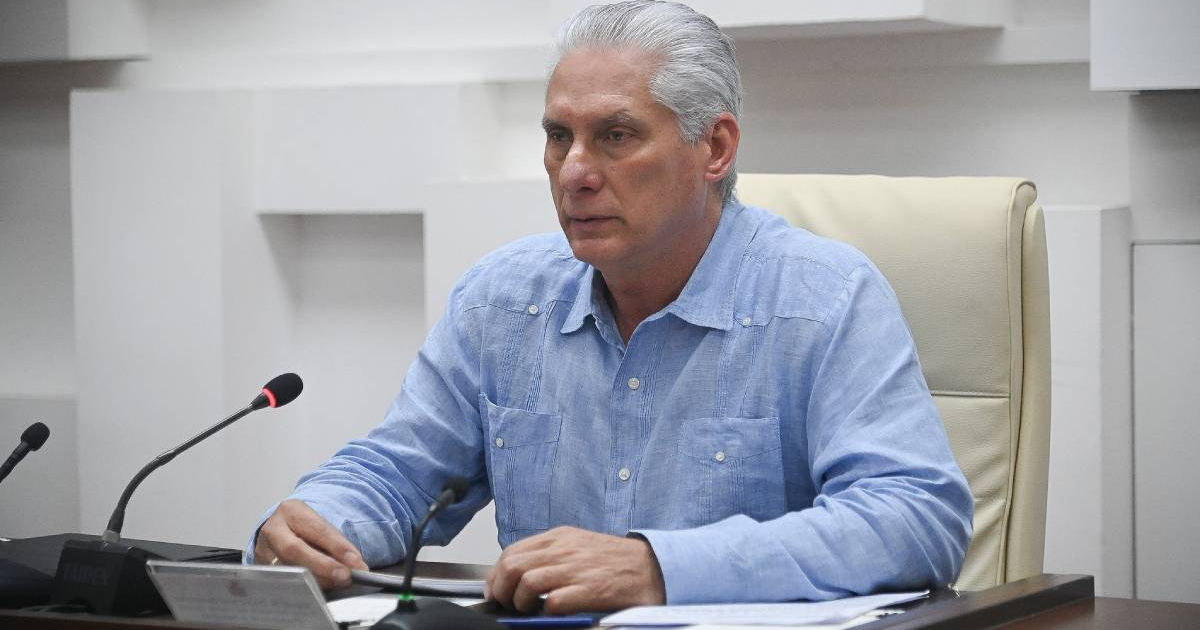
On Wednesday, which marks Cuba's Independence Day, Miguel Díaz-Canel published a message on Facebook directly addressing U.S. Secretary of State Marco Rubio. Rubio had denied the existence of an oil embargo against the island and blamed the energy crisis on the cessation of subsidized shipments from Venezuela on the same day.
Díaz-Canel fiercely rejected these claims and challenged the Washington government with a bold statement: "Lift the embargo and let's see what happens."
"Now they cynically claim there's no oil blockade on Cuba, that everything our people suffer is the fault of the Cuban government," wrote the Cuban leader. "They shamelessly lie repeatedly, with alarming audacity, without presenting a shred of evidence to support their assertions."
Executive Orders and Energy Crisis
In his post, Díaz-Canel explicitly referenced the Executive Order signed by President Donald Trump on January 29, 2026. This order declared a national emergency regarding Cuba and imposed secondary tariffs against any country that supplies oil to the island, directly or indirectly.
He questioned, "Has the executive order of January 29, 2026, which imposes irrational tariffs on any country providing fuel to Cuba, been suspended?" Díaz-Canel added, "How then can we understand the Treasury Department's ongoing restrictions on fuel shipments to Cuba in their systematic updates?"
This exchange occurs amidst an unprecedented energy crisis in Cuba, with power outages lasting up to 22 hours daily, affecting the entire population.
Impact on Cuba's Energy Supply
According to expert Jorge Piñón from the University of Texas, Cuba requires approximately 110,000 barrels of oil per day but only produces around 40,000 internally. Díaz-Canel himself acknowledged on April 16 that Cuba "lacks fuel for almost everything," and on May 13, he noted that the country was unable to generate 1,100 MW due to fuel shortages. Between January and April 2026, Cuba received only one fuel shipment when it needed at least eight per month.
Díaz-Canel described the situation as "collective punishment" with severe consequences: "Only very twisted minds could deny to the world this collective punishment being inflicted on an entire nation, which is becoming an act of genocide."
Cuban Foreign Minister Bruno Rodríguez also reacted on Wednesday, accusing Rubio of "lying" and promoting a "criminal oil blockade" against the Cuban people.
U.S. Offer and Ongoing Sanctions
In response, Rubio offered $100 million in food and medicine to Cuba, with the condition that they be distributed by the Catholic Church or other charitable organizations, bypassing the government and the military-run conglomerate GAESA. The Secretary of State asserted that "the reason they are forced to survive 22 hours a day without electricity is not due to a U.S. oil blockade."
Cuba's energy imports have reportedly dropped between 80% and 90% following measures implemented since January 2026. These measures included a Treasury Department license issued on March 20 prohibiting Russian oil shipments to Cuba and the expansion of general sanctions with a new executive order signed on May 1.
"Actions, not words, are the responses that Cuba and the world demand," Díaz-Canel concluded in his post, representing the regime's most direct response to Washington since the energy crisis intensified at the beginning of the year.
Understanding the Cuba-U.S. Energy Conflict
What is the main cause of Cuba's energy crisis?
Cuba's energy crisis is primarily attributed to a significant decrease in oil imports, exacerbated by U.S. sanctions and the end of subsidized shipments from Venezuela.
How has the U.S. affected Cuba's oil supply?
The U.S. has imposed secondary tariffs on countries supplying oil to Cuba and has prohibited Russian oil shipments, significantly reducing Cuba's oil imports.
What offer has the U.S. made to Cuba amid the crisis?
The U.S. offered $100 million in food and medicine to Cuba, with the condition that distribution is managed by the Catholic Church or other charitable organizations, bypassing the Cuban government.