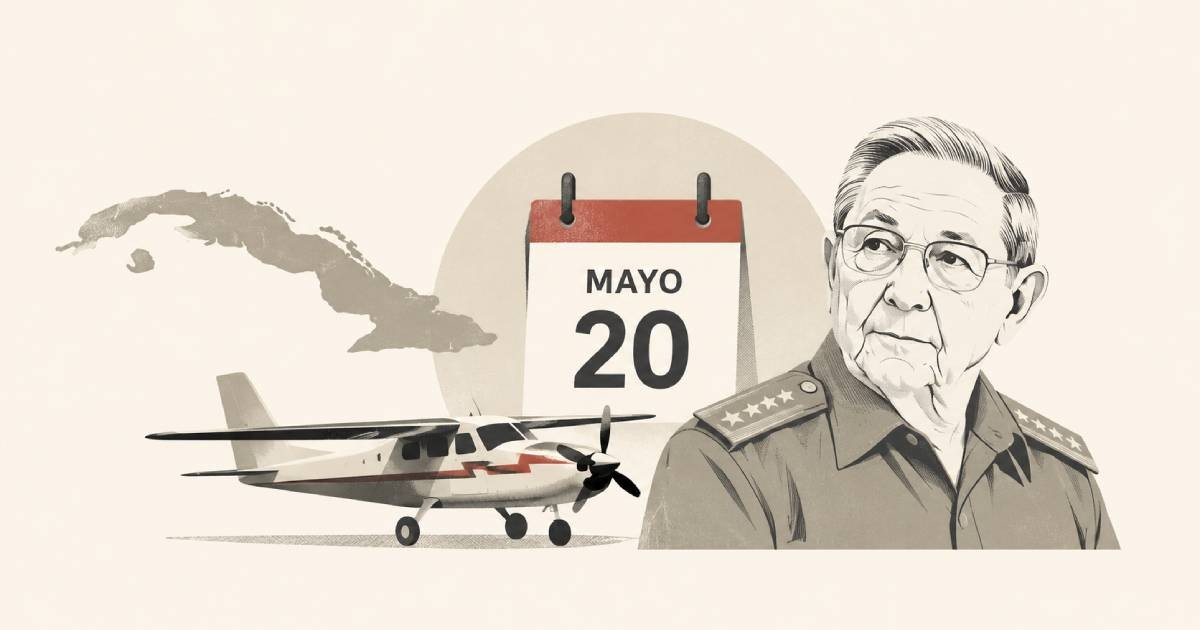
In a significant escalation of pressure from Washington, the U.S. Department of Justice has filed federal criminal charges against former Cuban leader Raúl Castro, aged 94. This move, confirmed by a senior Trump administration official to Reuters, marks a historic step in the ongoing tension between the U.S. and the Cuban regime.
The announcement will take place at Miami's Freedom Tower at 1:00 p.m. on May 20, recognized as Cuba's Independence Day. The event will honor the victims of the attack, nearly three decades after the tragic incident.
The charges are linked to the February 24, 1996, downing of two civilian aircraft belonging to Brothers to the Rescue. On that day, Cuban Revolutionary Air Force MiG-29 fighters shot down two unarmed Cessna 337 Skymasters over international waters in the Florida Straits.
The four individuals who lost their lives were Armando Alejandre Jr., Carlos Costa, Mario de la Peña, and Pablo Morales. Tragically, their remains were never recovered.
A third plane, piloted by José Basulto, the founder of the organization, managed to evade the attack.
Event Participants and Evidence
The acting Attorney General Todd Blanche, federal prosecutor Jason A. Reding Quiñones, FBI Deputy Director Christopher G. Raia, Senator Ashley Moody, and Florida Attorney General James Uthmeier are expected to attend the event.
A critical piece of evidence in the charges is an audio recording from June 1996, where Raúl Castro, then the Minister of the Revolutionary Armed Forces, is heard giving the order: "I said to try to bring them down over the territory, but they entered Havana and left... Well, bring them down at sea when they appear; and do not consult those who have the faculties."
The authenticity of the recording was confirmed by experts and Alcibíades Hidalgo, Castro's former personal secretary.
Additional Revelations and Reactions
Declassified FBI documents, totaling over 10,000 pages, unveil a "Venice Operation" planned since February 13, 1996, indicating premeditation of the attack.
José Basulto expressed his emotions upon hearing the charges: "I have longed for this for so long. I have longed for justice to be served, for justice to become a reality."
This accusation aligns with the Trump administration's policy of maximum pressure against the Cuban government. Just a day prior, the U.S. imposed sanctions on 11 Cuban officials and three governmental entities linked to the security apparatus, including the DGI/G2, MININT, and PNR.
Secretary of State Marco Rubio also offered $100 million in humanitarian aid to Cuba, to be distributed through the Catholic Church and independent non-governmental organizations—a proposal that Havana rejected.
Cuban President Miguel Díaz-Canel denounced the sanctions as "immoral, illegal, and criminal," while the Cuban Embassy in the U.S. called the case a "deception," citing over 25 airspace violations by Brothers to the Rescue between 1994 and 1996.
Symbolic Impact and Historical Context
Despite the historical weight of the announcement, the charges are largely symbolic. Raúl Castro has never set foot on U.S. soil, and no extradition treaty exists between the U.S. and Cuba.
There have been recent precedents for this process. In February, Congressman Mario Díaz-Balart formally requested the Department of Justice to prosecute Castro for murder, arguing that the charge does not have a statute of limitations. Additionally, Florida's Attorney General reopened a criminal investigation into the shootdown in March 2026.
Frequently Asked Questions About the Raúl Castro Charges
What are the charges against Raúl Castro?
Raúl Castro has been charged with federal criminal charges related to the 1996 shootdown of two civilian aircraft belonging to Brothers to the Rescue, resulting in the death of four individuals.
Why is the indictment considered symbolic?
The indictment is seen as symbolic because Raúl Castro has never visited the U.S., and there is no extradition agreement between the U.S. and Cuba, making it unlikely that he would face trial in the United States.
How has the Cuban government responded to these charges?
The Cuban government, led by President Miguel Díaz-Canel, has condemned the charges and related sanctions as "immoral, illegal, and criminal," and characterized the case against Raúl Castro as a "deception."