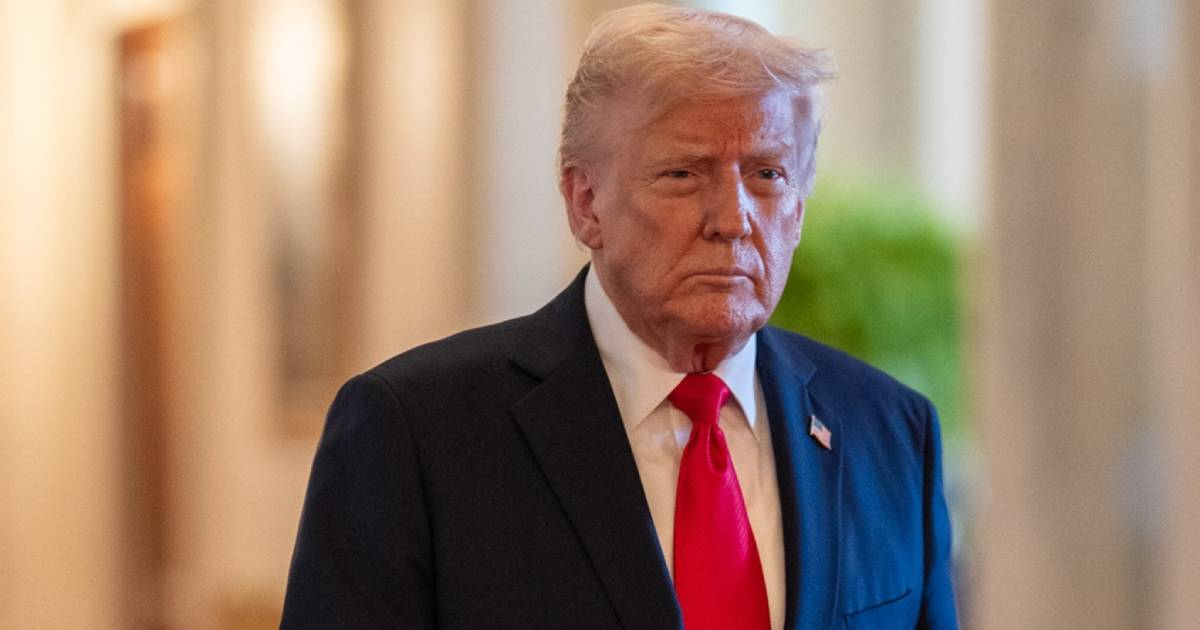
On Wednesday, U.S. President Donald Trump delivered a forceful statement on the occasion of the 124th anniversary of Cuba's Independence Day, condemning the regime in Havana as a "rogue state." He issued one of his most powerful warnings yet against the island's communist government.
"The United States will not tolerate a rogue state hosting foreign military, intelligence, and terrorist operations just 90 miles from our shores, and we will not rest until the people of Cuba reclaim the freedom their forebears bravely fought to establish over a century ago," Trump declared from the White House.
The president accused the Cuban regime of being a "direct betrayal of the nation for which its founders fought and died," highlighting that for nearly seven decades, the communist government has dismantled political freedom, denied fair elections, silenced dissent, and "strangled the Cuban economy to the point of collapse."
Trump described the ruling elite as "kleptocratic" and accused its military leaders of focusing solely on maintaining power and violently exporting "communism and despotism abroad," showing no interest in the Cuban people's prosperity.
Additionally, Trump referenced the capture and extradition of Nicolás Maduro in January 2026, calling it "one of the boldest and most impressive special operations of recent generations."
"The indictment and removal of Maduro sent a clear message to his socialist allies in Havana: this is our hemisphere, and those who destabilize it and threaten the United States will face consequences," the president warned.
Increased Pressure on Havana
This statement is part of a sustained escalation of pressure on Havana. On May 18, the Treasury Department sanctioned nine high-ranking Cuban officials and three entities, including the Directorate of Intelligence (DGI/G2).
On May 1, Trump signed a new executive order against the dictatorship, expanding sanctions on individuals linked to the security apparatus and human rights violations.
On May 7, Secretary of State Marco Rubio announced sanctions against GAESA—described as "the heart of Cuba's kleptocratic communist system"—and its CEO, Ania Guillermina Lastres Morera, with assets estimated between $18 billion and $20 billion abroad.
This same Wednesday, Rubio addressed the Cuban people in Spanish, offering "a new relationship" directly with Cubans—not with GAESA—and promising $100 million in humanitarian aid.
Cuban Regime's Immediate Response
The regime's reaction was swift. Miguel Díaz-Canel denounced May 20 as a symbol of "intervention and interference," while Foreign Minister Bruno Rodríguez criticized Rubio, accusing him of exploiting the date to blame the regime.
On Tuesday, Díaz-Canel responded to the sanctions against 11 officials, claiming Washington "doesn't even have evidence" and describing the measures as a "total economic war," "immoral, illegal, and criminal."
This comes after Trump declared a national emergency regarding Cuba on January 29, labeling the regime as an "unusual and extraordinary threat" to U.S. national security and accusing Havana of hosting the largest Russian signals intelligence facility outside of Russia.
Trump's statement concluded with a promise of solidarity with the Cuban people and the millions of Cuban-Americans, looking "confidently toward a new Golden Age for the island and its citizens."
Frequently Asked Questions About Trump's Stance on Cuba
What did Trump say about the Cuban regime in his statement?
Trump condemned the Cuban regime as a "rogue state" and accused it of dismantling political freedom, denying fair elections, and strangling the Cuban economy.
What actions has the U.S. taken against Cuban officials recently?
The U.S. has sanctioned nine high-ranking Cuban officials and three entities, expanded sanctions on individuals linked to the security apparatus, and targeted GAESA and its CEO with financial penalties.
How did the Cuban government respond to Trump's actions?
Cuban officials, including Miguel Díaz-Canel and Bruno Rodríguez, criticized the U.S. measures as interventionist and a "total economic war," claiming they are unfounded and illegal.