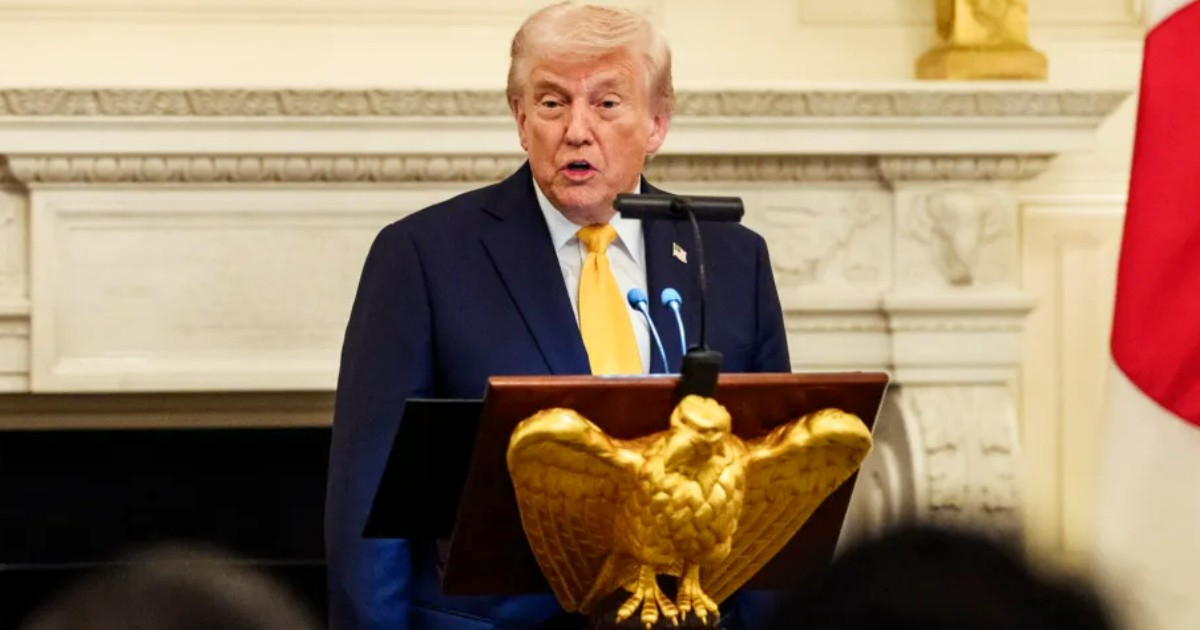
On Wednesday, President Donald Trump issued a presidential message in honor of the 124th anniversary of Cuba's Independence Day, pledging that the United States "will not rest until the Cuban people regain the freedom their ancestors so bravely fought to establish over a century ago."
In the statement released from the White House, Trump criticized the Havana regime as "a direct betrayal of the nation for which its founding patriots bled and died," and he described its elites as a kleptocracy hoarding the island's resources while the populace suffers.
Trump asserted that his commitment is "unwavering," declaring, "America will not tolerate a rogue state that hosts hostile military, intelligence, and terrorist operations just ninety miles from U.S. soil."
The president recalled the January 2026 U.S. Armed Forces operation, which he called "one of the most daring and impressive special operations in generations": the capture and extradition of Venezuelan narcoterrorist Nicolás Maduro.
He emphasized that this operation sent "a clear message to his socialist allies in Havana: this is our hemisphere, and those who destabilize it and threaten the United States will face consequences."
Following Maduro's capture, Trump noted the imposition of "powerful new sanctions" targeting Cuba's military and intelligence apparatus, as well as those providing them with material and financial support, thereby depriving the regime of resources and preventing its elites from profiting off the people's suffering.
Simultaneously, Secretary of State Marco Rubio released a video in Spanish directed at the Cuban people, marking the first such message since assuming office. He offered $100 million in food and medicine through the Catholic Church or other trusted charitable organizations, explicitly excluding the military-business conglomerate GAESA.
Rubio blamed GAESA for the island's electricity, fuel, and food crises, asserting that those in control have "plundered billions of dollars." He clarified that Trump's proposal is "directly with the Cuban people and not with GAESA."
This offer is part of a sustained pressure campaign involving over 240 new sanctions against Cuba since January 2026, the re-designation of the island as a state sponsor of terrorism, and specific sanctions against GAESA and its executive president, Ania Guillermina Lastres Morera, with a deadline of June 5, 2026, for foreign companies to sever ties with the conglomerate.
Trump's message came a day after he declared at the White House that he could "fix" Cuba "whether or not the regime changes," describing the island's situation harshly: "They can't turn on the lights, they can't eat."
He concluded his message with a promise for the future: "We look forward with confidence to a new Golden Age for the island and its people."
FAQs About Trump's Policies on Cuba
What did Trump promise to the Cuban people?
Trump promised that the United States would not rest until Cubans regain the freedom their ancestors fought for over a century ago.
What actions did Trump take against the Cuban regime?
Trump imposed over 240 new sanctions, re-designated Cuba as a state sponsor of terrorism, and targeted the military-business conglomerate GAESA and its leadership with specific sanctions.
What is Marco Rubio's role in Trump's Cuba policy?
Marco Rubio, as Secretary of State, released a video message offering $100 million in aid directly to the Cuban people, excluding GAESA, and blamed GAESA for the island's crises.