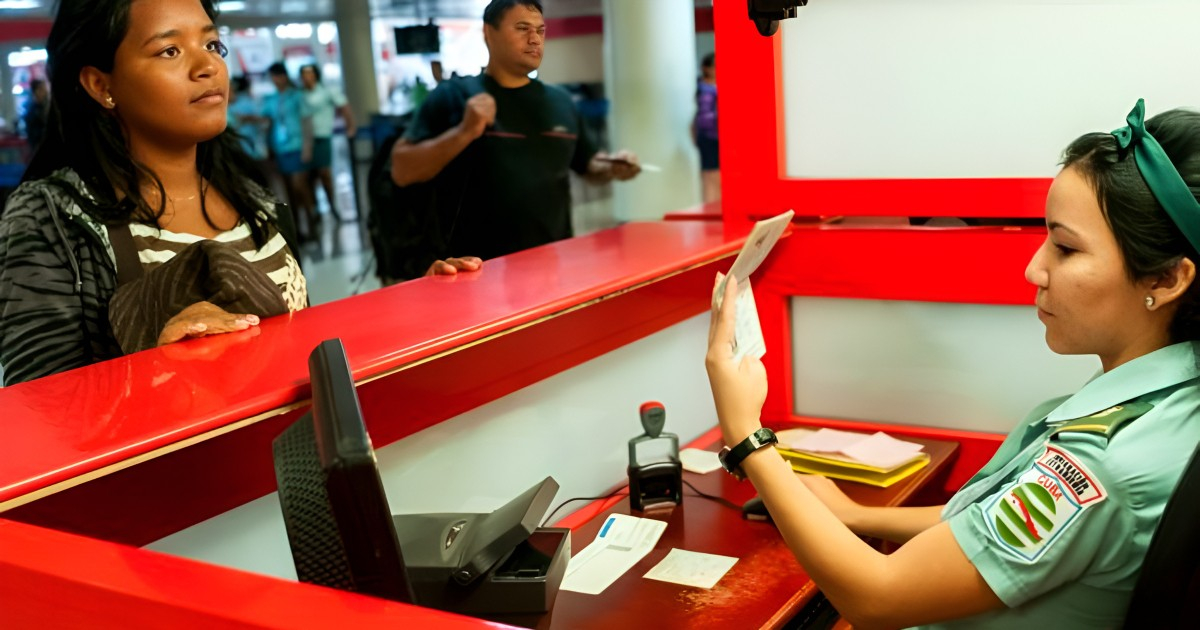
The human rights organization Cubalex has issued a warning, condemning the three new immigration laws introduced by the Cuban regime in May 2026. According to Cubalex, these laws reinforce a discretionary and securitized system of control over the movement and fundamental rights of Cubans, both within the country and overseas.
The laws in question—Migration Law 171, Citizenship Law 172, and Foreigners Law 173—were published on May 5 in the Official Gazette No. 39 Ordinary 2026, nearly two years after being approved by the National Assembly on July 19, 2024. These laws are set to take effect 180 days post-publication, around November 2026.
One of the most contentious changes is the introduction of the "effective migratory residence" category, which replaces the previous objective criterion of a 24-month stay abroad. Under the new framework, residency requires spending more than 180 days in Cuba during the previous year or proving "roots," a term undefined by the law and subject to the discretion of the Ministry of the Interior through the Directorate of Immigration and Foreigners (DIMEC).
Cubalex cautions that residency now shifts from being an objective status to one determined by discretionary and political criteria.
Restrictive Entry Measures
Equally concerning is the formalization of entry restrictions for Cuban citizens based on vague grounds such as "national security," "public order," or "public interest."
The regulation also introduces the concept of re-embarkation: a national can be turned away at the border by administrative decision of the Migration Authority, without prior judicial oversight or due process guarantees. According to Cubalex, this measure "legalizes territorial exclusion practices long denounced by activists, independent journalists, and human rights defenders."
Establishment of Migration Police
The Migration Law 171 formally creates the Migration Police as a specialized body with national jurisdiction, empowered to detain individuals, take statements, and hold citizens. Cubalex points out that these bodies "centralize powers within the Ministry of the Interior to investigate, sanction, deport, and restrict movements without the intervention of an independent judiciary."
Citizenship and Nationality Concerns
Regarding Citizenship Law 172, it retains the State's ability to strip nationality from Cubans abroad who engage in activities deemed contrary to the State's "high political, economic, and social interests." The organization warns that this policy "turns nationality into a tool of punishment against political dissent abroad," making citizenship contingent on ideological loyalty and political fidelity.
The law also introduces "effective citizenship": Cubans with dual nationality can only use their Cuban citizenship within Cuba. For the first time, renouncement of Cuban citizenship is regulated, although final approval rests with the State, and recovery is allowed only once, up to five years after losing it.
Economic Implications for Expatriates
In the economic domain, the new "resident investor abroad" category fails to grant full rights. Cubalex indicates that "the State seeks to harness diaspora resources without dismantling the structural prohibitions that prevent non-resident Cubans from freely engaging in entrepreneurship in their own country, maintaining economic activity as a power-granted concession rather than a guaranteed right."
Finally, Cubalex urges the international community and United Nations treaty bodies to recognize what it describes as a "regulatory regression that, under the guise of openness, deepens legal differentiation among citizens and reinforces the use of the migration system as a tool for political reprisal and social control."
Understanding the Impact of New Cuban Immigration Laws
What are the key changes introduced by the new Cuban immigration laws?
The new laws introduce a category called "effective migratory residence," redefine residency criteria, formalize entry restrictions based on vague grounds, and establish the Migration Police, among other changes.
How do the new laws affect Cubans with dual nationality?
Cubans with dual nationality can only use their Cuban citizenship within Cuba. The laws also regulate the renouncement and recovery of Cuban citizenship, imposing specific conditions.
What is the role of the newly established Migration Police?
The Migration Police is a specialized body with national jurisdiction, authorized to detain individuals, take statements, and hold citizens, centralizing powers within the Ministry of the Interior.