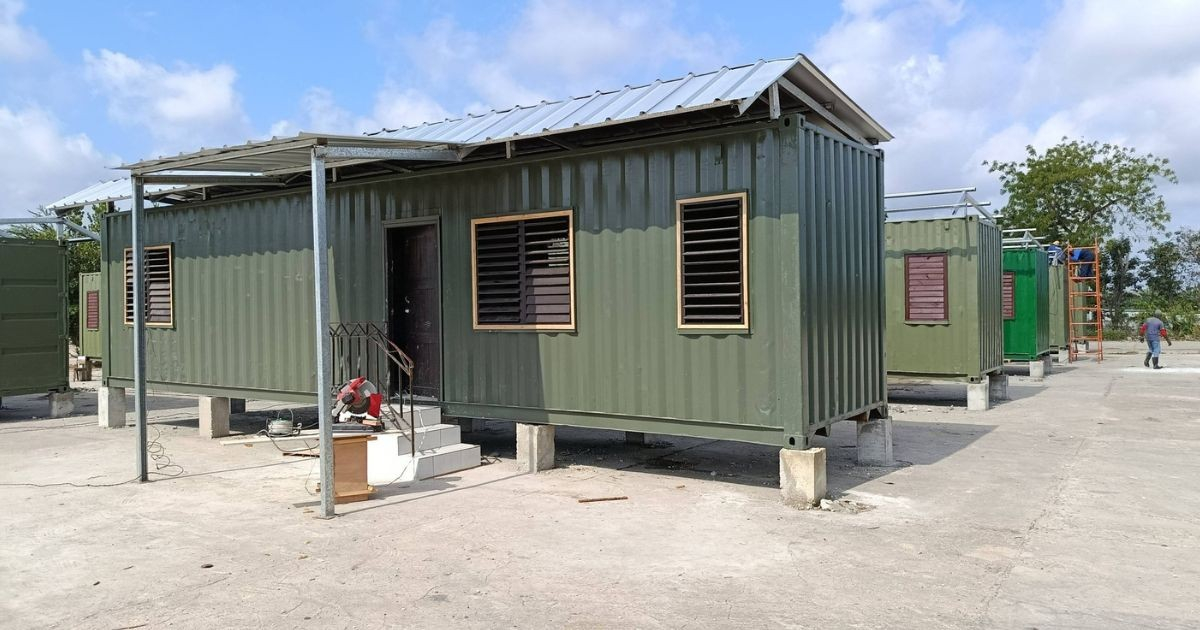
The National Office of Statistics and Information (ONEI) in Cuba has released the official construction data for the previous year, underscoring the severe downturn in the sector. Throughout 2025, a mere 5,493 homes were completed across the nation, with Isla de la Juventud recording the lowest performance, finishing only 39 homes over the entire year.
The report titled "Construction in Cuba: Selected Indicators, 2025" highlights a significant decline, with the national total experiencing a 26% drop compared to 7,427 homes completed in 2024. This marks a drastic 83% decrease from the recent peak of 32,874 units finished in 2021.
Regional Disparities in Housing Completion
Among the provinces, Holguín led with 891 homes completed, while Havana followed with 677. Both Pinar del Río and Santiago de Cuba each saw 403 homes finished. Conversely, trailing Isla de la Juventud's dismal output, Guantánamo concluded 176 homes, Ciego de Ávila 243, and Mayabeque 244.
State vs. Self-Construction Efforts
The ONEI pointed out an intriguing detail: Havana was the sole province to report an increase in housing completions, with 223 more homes finalized in 2025 compared to the previous year. Elsewhere, figures either stagnated or declined.
The breakdown by construction method paints an even bleaker picture. State-led construction plummeted by 35%, from 2,756 homes in 2024 to just 1,791 in 2025. Similarly, self-construction projects fell by 21%, dropping from 4,671 to 3,702 units.
The Impact of Economic and Material Shortages
An additional statistic highlights the sector's paralysis: out of 110,647 homes under construction in 2025, 40,191 were stalled, all within the self-construction category.
The government's plan for 2025 aimed to complete 10,795 homes. However, with only 5,493 units finished, the country achieved a mere 51% of its target, perpetuating a trend seen in previous years—only 55% of the annual goal was met in 2024.
This persistent failure occurs against a backdrop of a severe housing deficit, which the Ministry of Construction (MICONS) acknowledged before the National Assembly in July 2025: a shortfall of 805,583 homes, including those needing new construction from scratch and those requiring urgent rehabilitation.
Of the approximately 4.1 million homes in Cuba, 35% are in fair or poor condition, equating to roughly 1.4 million deteriorating structures, a number that continues to rise as construction efforts wane.
Structural factors contributing to this crisis include a critical shortage of materials—cement production operated at merely 10% of installed capacity in 2024—frequent power outages halting construction, and the overarching economic turmoil caused by six decades of dictatorship.
At the 2025 construction pace, addressing just the new housing component of the official deficit would take over 74 years, without accounting for the ongoing deterioration of the existing housing stock.
Understanding Cuba's Housing Crisis
What factors are contributing to the housing crisis in Cuba?
The housing crisis in Cuba is primarily driven by a shortage of construction materials, frequent power outages, and the economic impact of decades under a dictatorial regime.
How many homes were completed in Cuba in 2025?
In 2025, only 5,493 homes were completed across Cuba, with Isla de la Juventud finishing a mere 39 homes during the entire year.
Which province in Cuba showed the best performance in housing construction in 2025?
Holguín province had the best performance in 2025, with 891 homes completed, followed by Havana with 677.