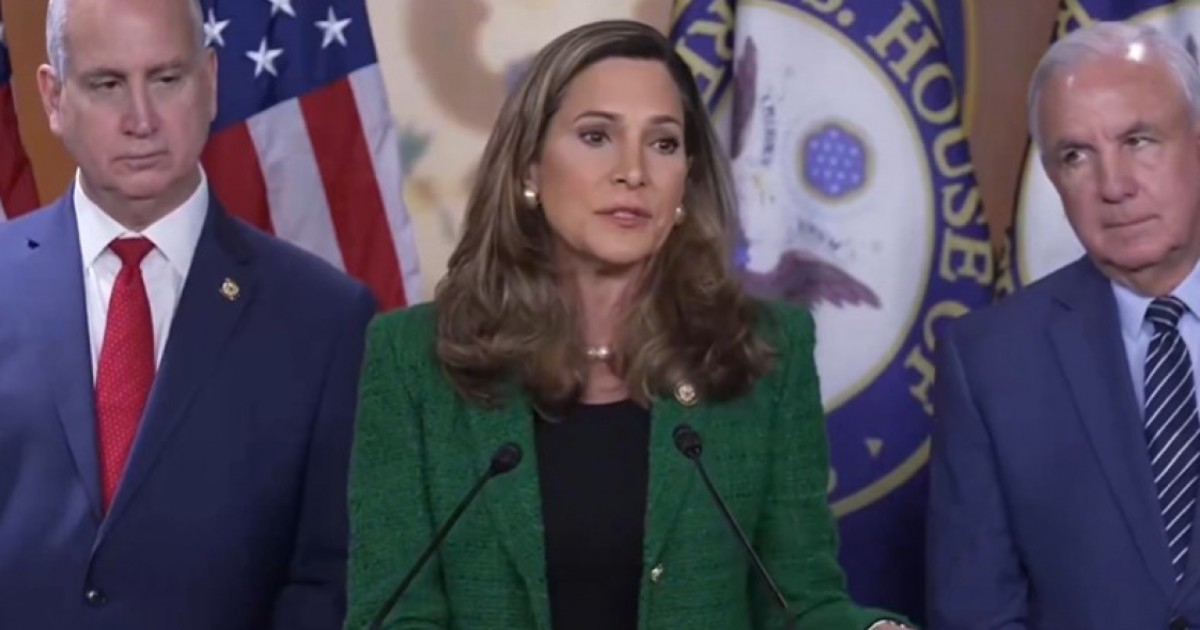
Republican Congresswoman Maria Elvira Salazar has issued a blunt warning to the Cuban regime regarding the more than 300 military drones that, according to classified intelligence, Havana has reportedly acquired from Russia and Iran since 2023. "Let the Cubans understand not to use them, because if they do, they are not as smart as they think," she declared emphatically.
Salazar downplayed the tactical capability of this arsenal by labeling it a "paper tiger," yet she made it clear that the regime is fully aware of the consequences of deploying such weaponry against American interests.
Her comments come during a week of heightened pressure from the Trump administration on Havana.
On May 17, Axios reported that Cuba had obtained over 300 attack drones from Russia and Iran, strategically stored across the island with plans discussed to use them against the Guantanamo naval base, U.S. military vessels, and potentially Key West, just 90 miles from Havana.
Defense Secretary Pete Hegseth corroborated before Congress that Cuba poses a national security threat.
U.S. officials also estimate that up to 5,000 Cuban soldiers have fought for Russia in Ukraine, with Moscow paying about $25,000 for each, and some have reportedly shared drone warfare expertise with military commanders in Havana.
The Cuban regime responded with defensive rhetoric. The Cuban Foreign Ministry stated that "if Cuba is attacked, it will exercise its right to legitimate defense," without ever denying the existence of the drones.
Salazar also addressed the federal indictment announced this Wednesday against Raúl Castro for ordering the downing of two Brothers to the Rescue planes on February 24, 1996, which resulted in the deaths of four Cuban-Americans: Armando Alejandre Jr., Carlos Costa, Mario de la Peña, and Pablo Morales.
"It's long overdue for him to face American justice, but now with Donald Trump in the White House, their time has come," the congresswoman stated.
Although she doubted that the dictator would end up behind bars—"they are much smarter than Maduro"—Salazar urged the Castros to heed the White House's signals and relinquish power voluntarily.
"They should leave for another country where they have no significance to the future of Cuba, and let all Cubans together transform Cuba into the next Hong Kong, Singapore, and Taiwan," she said.
On the previous day, Secretary of State Marco Rubio announced sanctions against 11 regime elites and three organizations—the DGI/G2, the MININT, and the National Revolutionary Police—under Executive Order 14404 signed on May 1, 2026. Since January of that year, the U.S. has imposed over 240 sanctions against the regime.
Salazar concluded her statements with a call for uncompromising justice: "There is no peace without justice. Nuremberg trials for all those at Villa Marista and everyone who has oppressed that poor nation for so many years."
Key Concerns About Cuban Military Drones
What are the implications of Cuba acquiring military drones from Russia and Iran?
The acquisition poses a potential threat to U.S. national security, with concerns that these drones could be used against American interests, such as the Guantanamo Bay naval base and other strategic locations.
How has the U.S. government responded to Cuba's drone acquisition?
The U.S. government, under the Trump administration, has increased pressure on Cuba, including imposing sanctions and expressing concerns over the potential use of drones against U.S. interests.
What is the significance of the indictment against Raúl Castro?
The indictment is significant as it seeks to hold Raúl Castro accountable for the 1996 downing of Brothers to the Rescue planes, highlighting ongoing efforts to bring Cuban leaders to justice for past actions.