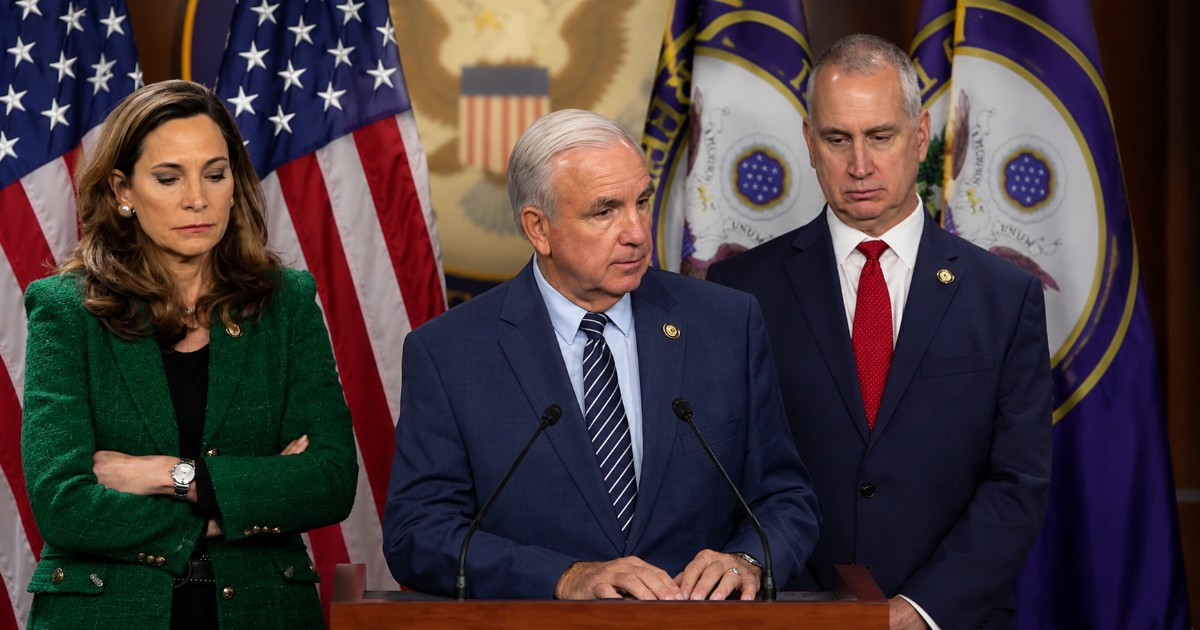
On Wednesday, a group of four Cuban-American lawmakers gathered for a press conference at the U.S. Capitol in Washington D.C., urging formal legal action against former Cuban dictator Raúl Castro. They are holding him accountable for the downing of two civilian planes operated by Brothers to the Rescue on February 24, 1996. This tragic event resulted in the deaths of four Cuban-Americans over international waters.
Representatives Carlos Giménez, Mario Díaz-Balart, María Elvira Salazar, and Nicole Malliotakis stood on the platform displaying photos of the four victims, with the words "Murdered Feb. 24th, 1996 by order of Raul Castro" inscribed beneath. They were accompanied by banners bearing the slogans #SOSCuba and Cuba Libre.
Parallel Developments in Miami
Coinciding with the Capitol event was a landmark announcement from the Department of Justice in Miami. Acting Attorney General Todd Blanche, U.S. Attorney Jason A. Reding Quiñones, FBI Deputy Director Christopher G. Raia, Senator Ashley Moody, and Florida Attorney General James Uthmeier revealed a federal criminal indictment against Castro at the Freedom Tower.
Federal sources confirmed to NBC News that a grand jury had been reviewing evidence and that formal charges had been filed prior to the public announcement.
A Day of Symbolic Significance
The timing of the announcement was deliberate: May 20 marks Cuban Independence Day, adding a layer of political symbolism to the proceedings.
The four individuals who lost their lives in the attack were Armando Alejandre Jr., Carlos Costa, Mario de la Peña, and Pablo Morales.
The incident occurred when Cuban Revolutionary Air Force MiG-29 fighters destroyed two unarmed Cessna 337 Skymaster planes in international waters, approximately nine to ten nautical miles outside Cuban airspace. The International Civil Aviation Organization determined that the attack violated international law.
Key Evidence and Historical Context
A pivotal piece of evidence in the case is a 1996 audio recording, released by journalist Wilfredo Cancio in 2006 through El Nuevo Herald, where Castro is heard giving the order to shoot down the planes. "I said to try to bring them down over our territory, but they were entering Havana and leaving... Well, bring them down at sea when they appear," Castro is recorded saying.
Additionally, declassified FBI documents—over 10,000 pages—reveal a planned "Operation Venice" dating back to February 13, 1996, indicating the premeditated nature of the attack.
Back in November 2025, the Department of Justice had already arrested former Cuban pilot Luis Raúl González-Pardo Rodríguez, a retired colonel aged 64, charged with immigration fraud for concealing his involvement in the shootdown.
On May 15, aboard Air Force One, Trump refrained from confirming or denying the charges, stating, "I'll let the Department of Justice speak on that."
Limitations and Reactions
Despite the significance of the charges, their impact remains largely symbolic. Raúl Castro, now 94, has never set foot on U.S. soil, and there is no extradition agreement between Cuba and the United States.
José Basulto, the founder of Brothers to the Rescue, whose plane managed to evade the attack that day, expressed a sentiment shared by many: "I have longed for this for a long time. I have longed for justice to be served, for justice to become a reality."
Key Questions about the Charges Against Raúl Castro
What are the charges against Raúl Castro related to?
The charges against Raúl Castro are related to the downing of two civilian planes operated by Brothers to the Rescue on February 24, 1996, which resulted in the deaths of four Cuban-Americans over international waters.
Why is the indictment against Raúl Castro considered symbolic?
The indictment is largely symbolic because Raúl Castro, at 94 years old, has never visited the United States, and there is no extradition treaty between Cuba and the U.S.