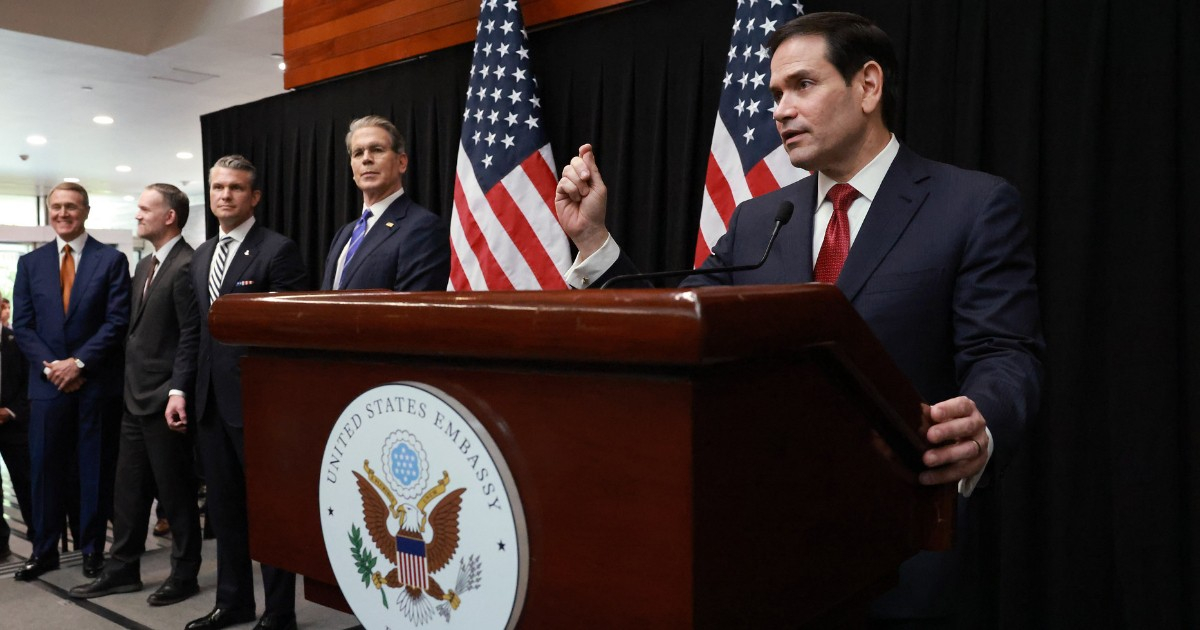
On the occasion of Cuba’s Independence Day, celebrated this Wednesday, Secretary of State Marco Rubio took the opportunity to address the Cuban people directly. In a video message delivered in Spanish, Rubio placed the blame for the island's "unimaginable hardships" squarely on the shoulders of its communist leadership.
According to an exclusive report by the American outlet Axios, this marks the first time Rubio has directly spoken to the Cuban population in his role as Secretary of State and in Spanish. It represents a key element of the Trump administration's multifaceted pressure campaign against Havana.
“The real reason you lack electricity, fuel, and food is because those in power have looted billions of dollars with no intention of aiding the people,” Rubio declared during his address.
Criticism of GAESA's Control Over Cuba
The message specifically targets GAESA (Grupo de Administración Empresarial S.A.), a military-business conglomerate founded by Raúl Castro, which is estimated to hold assets worth $18 billion and controls about 70% of Cuba's economy through hotels, banks, stores, and remittance flows.
"Cuba is not governed by any 'revolution.' Cuba is controlled by GAESA," Rubio asserted, contrasting the wealth of the elites managing the conglomerate with the poverty experienced by ordinary Cubans.
“The so-called 'government's' only role is to demand further 'sacrifices' from you and to suppress anyone who dares to voice complaints,” he added.
Cuba's Energy and Economic Crisis
Rubio's speech comes amid one of the worst energy and economic crises Cuba has faced in decades. In some areas, electricity is available for only two hours a day, fuel is scarce, and the Cuban Minister of Energy admitted that the country has run out of oil and diesel.
This Wednesday, the Department of Justice is expected to formally indict Raúl Castro for ordering the downing of two aircraft belonging to the Brothers to the Rescue organization on February 24, 1996, an incident that resulted in the deaths of four people over international waters.
Legal and Diplomatic Maneuvers
The indictment, initially pushed by Rubio and other Cuban Americans from Miami in 2018 during Trump’s first term, signals that negotiations with the regime for a peaceful transition are not progressing significantly.
State Department officials and CIA Director John Ratcliffe have traveled to Cuba and met with regime leaders, including Raulito Castro, Raúl's grandson, who also had discussions with Rubio.
This pressure is part of Executive Order 14404 signed by Trump, which expanded the sanctions regime against Cuba and introduced the risk of secondary sanctions for non-U.S. entities trading with blocked individuals.
Offer of a New Relationship
Rubio extended an offer to the Cuban people—not to GAESA—of a "new relationship" with the United States, including $100 million in food and medicine, provided they are distributed by the Catholic Church or other trusted organizations.
The Secretary of State also reminded Cubans that on May 20, 1902, the Republic of Cuba was proclaimed, a date removed from the official calendar by Fidel Castro’s regime after the 1959 revolution.
“Today, from media to entertainment, from the private sector to politics, and from music to sports, Cubans have reached the pinnacle of virtually EVERY industry, in every country, except one... Cuba,” Rubio remarked.
“This is not impossible. All of this exists in the Bahamas, the Dominican Republic, Jamaica, and even just 90 miles away, in Florida. If owning a business and having the right to vote is possible around Cuba, why is it not possible for you in Cuba?” Rubio concluded, hinting at upcoming indictments against Cuban officials and new sanction announcements in the coming days.
Understanding the Current Situation in Cuba
What did Marco Rubio say about GAESA's influence in Cuba?
Marco Rubio criticized GAESA for controlling approximately 70% of the Cuban economy and highlighted that the organization is behind the country's economic struggles, contrasting the wealth of the elites with the poverty of ordinary citizens.
Why is the indictment against Raúl Castro significant?
The indictment against Raúl Castro is significant as it underscores the ongoing efforts by the U.S. to hold Cuban leaders accountable for past actions, such as the 1996 downing of Brothers to the Rescue aircraft, signaling a lack of progress in peaceful negotiations.