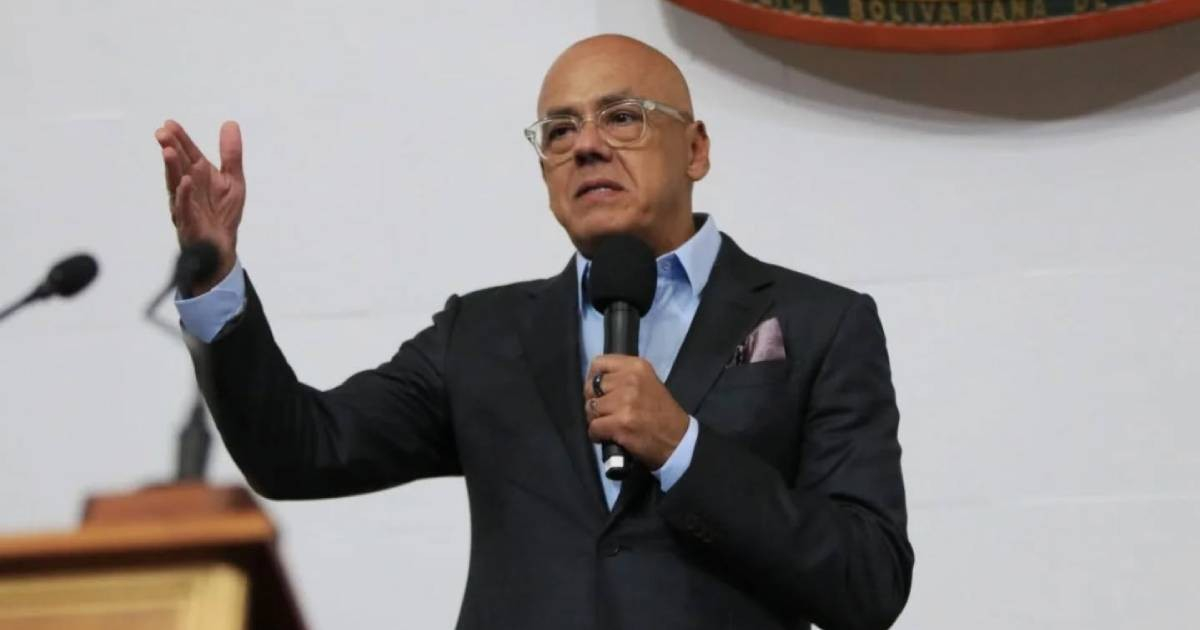
Jorge Rodríguez, the president of Venezuela's National Assembly, revealed on Tuesday that a total of 300 individuals will be released between Monday and this coming Friday. This move, portrayed by Nicolás Maduro's regime as a humanitarian gesture, is criticized by human rights groups for being inadequate and lacking transparency.
Rodríguez explained during a regular legislative session, "Between yesterday (Monday) and this Friday, 300 individuals will be granted freedom. Some have been involved in proven offenses but due to being minors, over 70 years old, or suffering from health conditions, they are being released in a process that extends beyond the amnesty law to offer them benefits."
Among the initial releases is 16-year-old Samanta Sofía Hernández Castillo, who was freed after nearly six months of detention at the Antímano Care Facility in Caracas. She had been held there since November 2025 following a raid at her grandparents' home. Journalist Luis Carlos Díaz described her as "the last underage political prisoner remaining in Venezuela."
Merys Torres de Sequea, aged 71, was also released. She is the mother of Captain Antonio Sequea, who was sentenced to 24 years in prison for his alleged involvement in Operation Gedeón, a failed maritime attack against Maduro's government in May 2020.
Additionally, former police officers Erasmo Bolívar, Héctor Rovaín, and Luis Molina, who were sentenced to the maximum of 30 years for attempted aggravated homicide during the events of April 11, 2002, will also be freed. At least 19 people died in the clashes at Puente Llaguno, located in downtown Caracas.
This announcement comes a week after U.S. President Donald Trump declared that his administration would ensure the release of all political prisoners in Venezuela, stating, "We will get them all out."
The decision is set against a grim backdrop: on May 7, the Venezuelan government acknowledged the death of political prisoner Víctor Hugo Quero Navas while in custody. He passed away on July 24, 2025, yet his demise was concealed from his family for over nine months. His mother, Carmen Teresa Navas, who searched for him for 16 months, passed away last Monday without seeing justice.
NGOs and opposition parties are calling for an independent investigation with international support into this case, which has sparked a public relations crisis for the regime.
The releases are part of the Amnesty Law for Democratic Coexistence, unanimously approved by the National Assembly in February and enacted that same night by Delcy Rodríguez. However, Human Rights Watch cautioned on May 13 that the law's implementation is unjust and opaque, pointing out that many arbitrarily detained individuals were excluded and that courts are exceeding legal deadlines.
Juanita Goebertus Estrada, HRW's Director for the Americas, was unequivocal: the law "falls far short of ensuring the release of those arbitrarily detained for political reasons."
The discrepancy between official figures and verified numbers is staggering: while the government claims over 8,600 individuals have benefited from the law, the Penal Forum has only verified 768 real releases since January 8, and estimated that between 454 and 477 political prisoners remained detained at the end of April.
Key Questions About Venezuela's Political Prisoner Releases
Who announced the release of political prisoners in Venezuela?
Jorge Rodríguez, the president of Venezuela's National Assembly, announced the release.
Why are some prisoners being released under this new process?
Prisoners are being released due to factors such as their age, health conditions, or being minors, extending beyond the scope of the amnesty law.
What criticisms have been raised regarding the releases?
Human rights groups have criticized the releases as insufficient and lacking transparency, with concerns that many arbitrarily detained individuals were excluded.