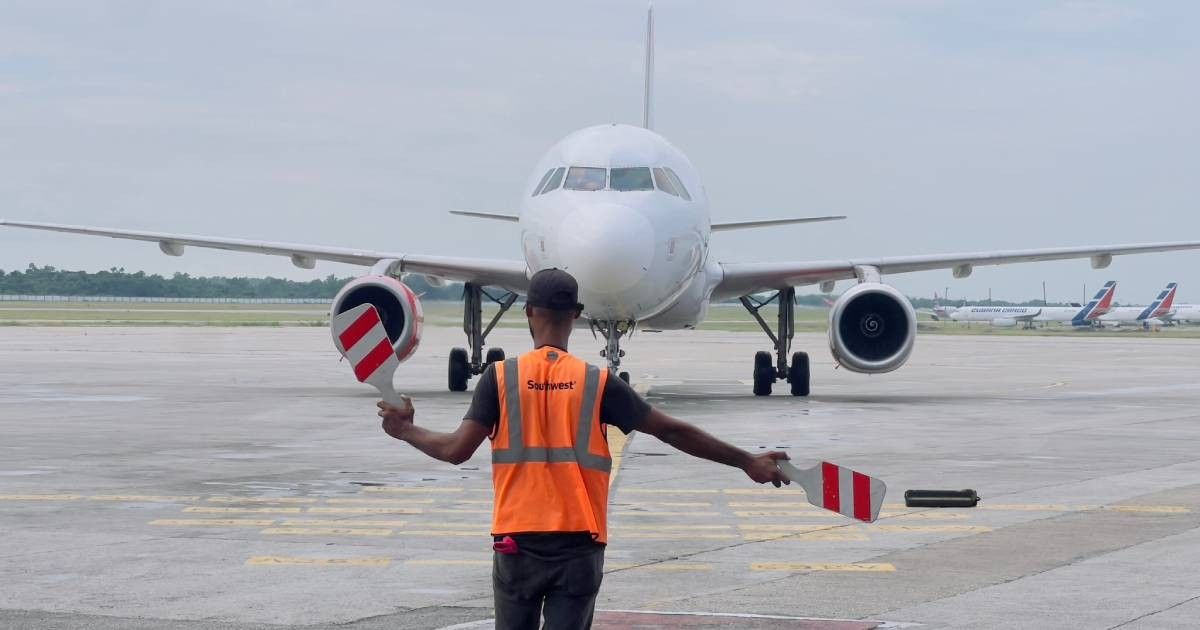
The air travel link between Spain and Cuba has reached a critical juncture following a series of service suspensions. According to an analysis by Hosteltur, Air Europa remains the sole Spanish airline offering direct flights to the island.
In a matter of weeks, three carriers have ceased their operations on this route. Iberia announced on April 13 that it would temporarily halt its Madrid–Havana service from June 1 until October 24, 2026, with a potential restart in November, contingent on favorable conditions.
Iberia's exit was phased: three flights per week in April, reduced to two in May, and none starting June. Despite this, the airline's offices in Havana remain open, providing passengers with alternative routes via Panama through Copa Airlines.
On May 12, Cubana de Aviación abruptly canceled its sole weekly route from Madrid to Santiago de Cuba to Havana, previously operated by Plus Ultra under lease. The Cuban state airline cited Plus Ultra's withdrawal due to "risks stemming from the U.S. executive order dated May 1, 2026," which they termed a force majeure event.
The most recent blow came from World2Fly, which suspended all flights to Cuba, with the final service operated today, and no set return date. The airline had already cut back its schedule in March, eliminating one of its two weekly flights. Full refunds will be issued for all affected tickets.
Airlines Still Connecting Spain and Cuba
Following these withdrawals, only two significant direct connections remain between Madrid and Havana. Air Europa operates three weekly round-trips on Tuesdays, Thursdays, and Sundays. These include a technical refueling stop in Santo Domingo on the return journey, a measure implemented since February due to a shortage of Jet A-1 fuel at Cuban airports.
The second direct option, albeit not a Spanish one, is Air China, which began offering two weekly flights on the Beijing–Madrid–Havana route starting May 17, with a stopover in Spain's capital.
The Energy Crisis Behind Airline Withdrawals
The backdrop to these decisions is Cuba's ongoing energy crisis. On February 9, Cuban aviation authorities issued a notice warning that at least nine international airports in the country, including Havana's José Martí, had run out of Jet A-1 fuel. The regime blamed U.S. oil sanctions, though the scarcity is largely due to decades of economic mismanagement by the dictatorship.
In total, at least eleven airlines have either suspended or reduced flights to Cuba in 2026: Air Canada, WestJet, Sunwing, Air Transat, LATAM Peru, Magnicharters, Air France, Iberia, Rossiya, Nordwind, and Turkish Airlines, now joined by World2Fly and Cubana de Aviación.
The impact on tourism is profound. Cuba welcomed just 298,057 international visitors between January and March 2026, a 48% decrease from the same period the previous year. Spanish visitors dropped by 40.4%, totaling only 5,851 arrivals in that quarter.
For Spain's tourism sector, which manages significant hotel chains on the island, the situation is particularly challenging. As Hosteltur warns, "The cancellation of air routes further jeopardizes the Cuban tourism industry, complicates the operations of Spanish hotel chains in the country, and benefits Caribbean competitors."
Should the fuel supply stabilize, Iberia might resume flights in November. If it doesn't, Cuba faces a summer with fewer seats, more layovers, and increased reliance on a limited number of airlines.
FAQs About Flights from Spain to Cuba
Which Spanish airline still flies directly to Cuba?
Air Europa is currently the only Spanish airline maintaining direct flights to Cuba.
What caused the recent suspension of flights to Cuba?
The suspensions are largely due to Cuba's energy crisis and a lack of Jet A-1 fuel, exacerbated by decades of economic mismanagement and U.S. sanctions.
How has the flight suspension affected Cuban tourism?
The suspension has severely impacted Cuban tourism, with a 48% decline in international visitors in early 2026 compared to the previous year.