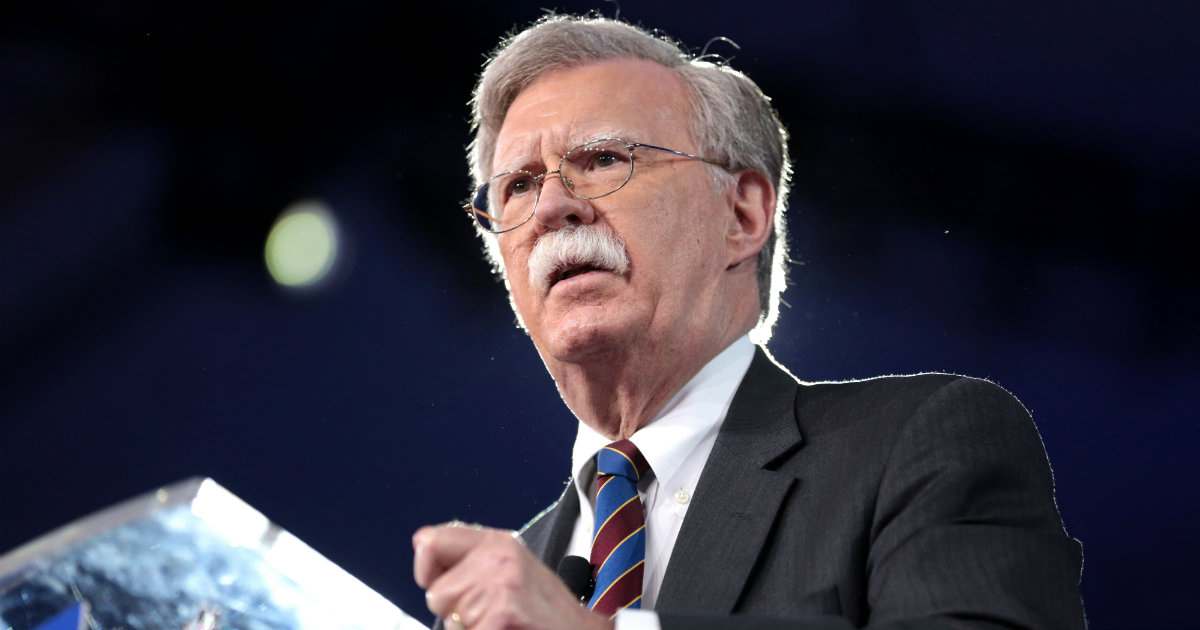
During a stopover in Madrid, John Bolton, former National Security Advisor to Donald Trump, speculated on Tuesday that the Cuban government might crumble "within months." He shared his insights in an interview with the program Hora América on Radio Exterior de España.
Bolton highlighted that Cuba is enduring its most fragile period in decades, plagued by an unprecedented energy crisis, a rapidly declining economy, and the loss of Venezuelan oil supply following Nicolás Maduro's capture in January of this year.
"The Cuban government has essentially run out of oil," Bolton declared, noting the widespread blackouts across the nation. He suggested that if Cuban youth are willing to voice their discontent, the regime's downfall could occur swiftly.
Comparing Cuba with Other Regimes
Emphasizing differences, Bolton stated, "Cuba is not Venezuela. It is not Iran. It is not Afghanistan," pointing out the island's proximity—90 miles from Florida—and its unique historical impact on U.S. foreign policy.
"I believe we could be nearing the regime's collapse," Bolton speculated, denouncing the continuation of a "Castro regime remnant," such as Raúl Castro's grandson, as "unacceptable."
U.S. Political Dynamics and Cuban Exile Influence
Bolton credited Secretary of State Marco Rubio as the key figure focused on ending the Castro regime, linking this determination to Rubio's Cuban heritage and the political influence of the Cuban exile community in Florida.
These assertions come amid heightened tensions between Washington and Havana.
As reported by Politico on Monday, the Trump administration is considering military options against Cuba, ranging from targeted airstrikes to ground invasion, following the failure of economic pressure to compel reforms. The Southern Command has convened planning meetings on the matter.
Recent Developments and Historical Context
Adding to this is CIA Director John Ratcliffe's visit to Havana last Wednesday—the highest-level direct contact since 2016—and the Justice Department's preparation of criminal charges against Raúl Castro for the 1996 downing of Brothers to the Rescue planes.
The energy crisis Bolton described is genuine and well-documented: Cuba's energy minister admitted this month that the nation is "out of fuel" to generate electricity, facing generation deficits exceeding 1,955 MW during peak hours and experiencing blackouts lasting up to 24 hours daily in several provinces.
Bolton also issued a caution against Trump potentially repeating, with Cuba, what he perceives as a misstep in Venezuela.
In April, Bolton penned that "Havana will be more than willing to appease Trump in the short term to gain any aid or support it can from Washington," a warning he reiterated publicly weeks ago.
On Monday, Díaz-Canel responded on social media, asserting that a U.S. military aggression would "provoke a bloodbath of incalculable consequences," while Rubio told Fox News, "I don't think we can change Cuba's trajectory while these people are in charge."
Insights on the Cuban Crisis
What are the main factors contributing to the potential collapse of the Cuban regime?
The Cuban regime is facing an unprecedented energy crisis, a rapidly deteriorating economy, and the loss of Venezuelan oil supply, making its situation more precarious than in decades.
How is the U.S. administration responding to the Cuban crisis?
The Trump administration is exploring military options against Cuba, including targeted airstrikes and a possible ground invasion, after economic pressures failed to force reforms.
What is the significance of Marco Rubio's role in U.S. policy towards Cuba?
Marco Rubio, due to his Cuban heritage and the influential Cuban exile community in Florida, is considered a central figure in efforts to dismantle the Castro regime.