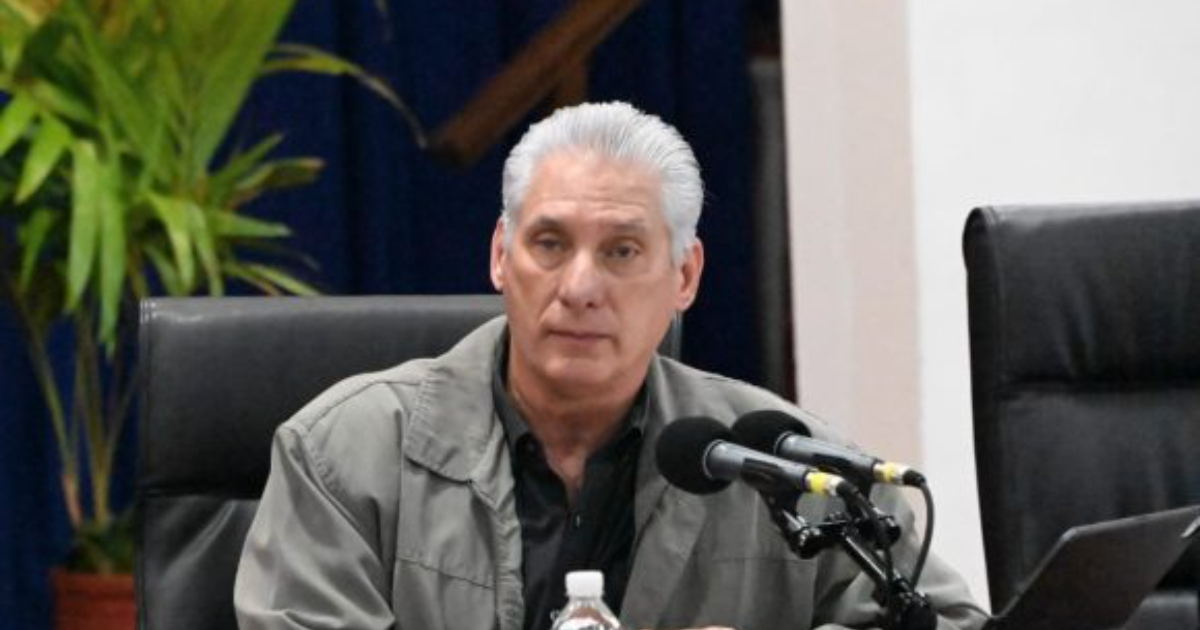
In a recent Facebook post, Miguel Díaz-Canel expressed his disapproval of the new U.S. sanctions, only to be met with a torrent of criticism from Cubans frustrated with power outages, hunger, and political rhetoric. Comments ranged from ticking clock warnings like "Time's running out for you" to demands for his resignation.
The uproar followed an announcement by Secretary of State Marco Rubio on Monday, introducing a fresh wave of sanctions targeting 11 regime officials and three governmental organizations—namely the Directorate of Intelligence (DGI/G2), the MININT, and the National Revolutionary Police—under Executive Order 14404 signed by Donald Trump in May.
In response, Díaz-Canel took to social media, declaring that "no one in our Party, State, Government, or military institutions has assets or property protected under U.S. jurisdiction," labeling the executive order as "immoral, illegal, and criminal."
He further accused the U.S. government of knowing this well, claiming there's no evidence to present, and described the situation as an "act of genocide."
Public Outcry on Social Media
His Facebook post quickly became a platform for citizens to vent their grievances. Dozens of Cubans seized the opportunity to voice their dissatisfaction over power outages, hunger, and the repetitive official narrative.
Comments like "Time's running out for you," "Resign now," and "Leave and let Cuba live" reflected the public's sentiment. "I've been without power for hours, and you're just giving us rhetoric," one user lamented. Another urged, "Get creative and solve the power issue."
Many comments challenged the regime's long-standing narrative blaming the embargo. "67 years of blaming the enemy," one person wrote. "The problem isn't the embargo; it's poor management," another pointed out. Some even mocked the leader's statements: "Not under U.S. jurisdiction... and in Spain?"
Ongoing Energy Crisis
These exchanges reveal a growing disillusionment with the official story and an emerging political awareness among Cubans. Phrases like "Cuban people have awoken," "Homeland and Life," and "No one believes you anymore" were frequently echoed.
The pattern is clear: every time Díaz-Canel attributes issues to the embargo, Cubans demand tangible solutions to food and electricity shortages.
On May 8, after sanctions against GAESA, a user remarked, "The measures aren't against the people; they're against GAESA, which not even you have access to. Stop creating smoke screens. Let go of power already."
The context is a deeply troubled Cuba facing severe energy shortages: blackouts in Havana exceed 19 hours daily in May, and on May 13, 65% of the country experienced simultaneous power cuts.
Increased Sanctions Pressure
Washington has introduced two sanction packages in less than two weeks: on May 7, GAESA and Moa Nickel S.A. were already sanctioned under the same executive order.
Among the officials named on Monday are Roberto Morales Ojeda, Secretary of the PCC Organization; Juan Esteban Lazo Hernández, President of the National Assembly; and ministers Mayra Arevich Marín (Communications), Vicente de la O Levy (Energy and Mines), and Rosabel Gamón Verde (Justice), along with several generals of the FAR.
Rubio warned that "more sanctions will follow" in the coming days and weeks, as part of a cumulative pressure campaign that has added over 240 measures since January 2026 by the Trump administration against the regime.
"The Cuban people have awoken," concluded one of the comments on the leader's social media page.
Understanding U.S. Sanctions on Cuba
Why did the U.S. impose new sanctions on Cuba?
The new sanctions are part of ongoing efforts to pressure the Cuban government by targeting regime officials and organizations accused of human rights abuses and other violations.
What is Executive Order 14404?
Executive Order 14404, signed by Donald Trump, allows the U.S. to impose sanctions on individuals and entities involved in malicious activities, including human rights abuses and corruption.
How have Cubans reacted to Díaz-Canel's responses to the sanctions?
Many Cubans have expressed frustration and skepticism towards Díaz-Canel's responses, criticizing the government's handling of the country's economic and energy crises.