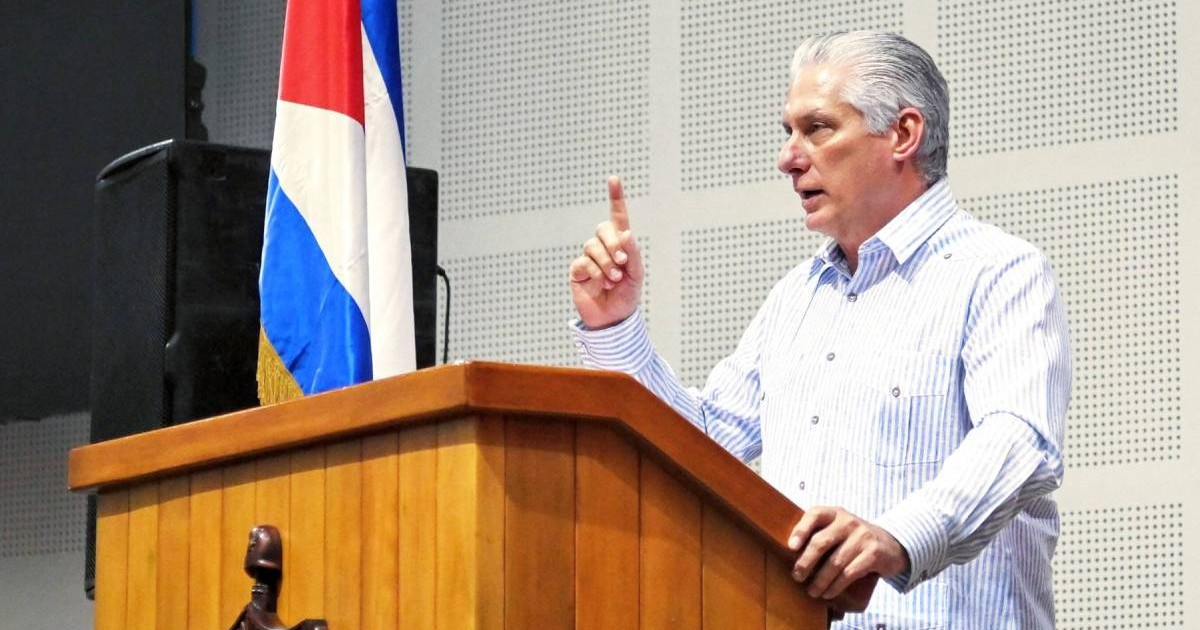
On Monday, Miguel Díaz-Canel expressed his appreciation towards Mexico and Uruguay for their support, following the arrival of the cargo ship, Asian Katra, at the port of Havana. The vessel delivered 1,700 tons of essential supplies, including rice, beans, and milk, during one of Cuba's most severe economic and energy crises in decades.
“On behalf of the Cuban people, we extend our deepest gratitude for the generous aid from Mexico and Uruguay, two countries with whom we share a profound bond,” stated the Cuban leader on the social media platform X.
The shipment, which departed from Asipona Pajaritos in Coatzacoalcos, Veracruz, included approximately 20 tons of powdered milk contributed by Uruguay and logistically coordinated from Mexico.
Alberto López, Cuba's Minister of the Food Industry, welcomed the ship and expressed "sincere thanks to each crew member and authority involved in this noble mission."
Allegations and Concerns Over Aid Distribution
In his message, Díaz-Canel attributed the ongoing crisis to the U.S. embargo, describing it as having a "direct and multifaceted impact" on the daily life of the Cuban populace. He also thanked Mexican President Claudia Sheinbaum for her “leadership and steadfast commitment.”
This shipment is the latest in a series of Mexican aid deliveries that began in February 2026, after Mexico halted its oil shipments to Cuba due to Trump’s Executive Order 14380, which imposed secondary sanctions on countries supplying oil to the island.
Sheinbaum decided not to resume oil shipments, citing that Cuba is "receiving oil from Russia," and shifted the focus of support towards food, medicine, and hygiene products. Since then, Mexico has sent over 3,125 tons of humanitarian aid to the island.
Challenges in Economic and Energy Sectors
The Mexican ambassador to Cuba, Miguel Ignacio Díaz Reynoso, noted this as the eighth aid delivery from Mexico. However, AFP recorded it as the fifth due to differing counting methods. Uruguay joined the initiative in late March, with its foreign minister, Mario Lubetkin, referring to the shipment of powdered milk as "a gesture of solidarity."
Nonetheless, the Uruguayan government has made a second shipment of 17 tons conditional on proof of effective distribution amid concerns about the final destination of the aid.
These concerns are not unfounded: a TV Azteca report in March showed Mexican-origin "Bienestar" beans—allegedly donated—being sold in TRD Caribe stores linked to the military conglomerate GAESA, which was further sanctioned by the U.S. Treasury Department on May 7, 2026.
Energy Crisis and Humanitarian Concerns
This aid comes as Cuba experiences power outages lasting up to 24 hours daily in over 55% of its territory, with power generation deficits exceeding 1,900 MW during peak hours. Energy Minister Vicente de la O Levy admitted last Monday that Cuba had "absolutely no fuel, diesel, only accompanying gas."
More than 117,000 children are not receiving their daily milk ration, and nearly 96,000 patients are waiting for surgery on the island, highlighting that while the aid is welcome, it is insufficient against the structural collapse caused by 67 years of communist dictatorship.
The only significant energy relief in 2026 came from Russia in March, with a donation of 100,000 metric tons of crude. However, Russian Foreign Minister Sergey Lavrov warned in April that “this aid will probably last a couple of months,” with no new shipments confirmed.
Key Questions Surrounding Cuba's International Aid and Crisis
What is the current economic situation in Cuba?
Cuba is facing one of its most severe economic and energy crises in decades, with significant shortages in food, medicine, and fuel, leading to power outages and inadequate resources for essential services.
How has international aid been distributed in Cuba?
International aid, including shipments from Mexico and Uruguay, has been directed towards addressing food and healthcare shortages. However, there are concerns about the effective distribution of this aid, with reports of donated items being sold in stores linked to military entities.
What role does the U.S. embargo play in Cuba's crisis?
The Cuban government attributes the crisis largely to the U.S. embargo, claiming it has a direct and multifaceted impact on everyday life in Cuba. This embargo restricts trade and financial transactions with the island, exacerbating shortages and economic difficulties.