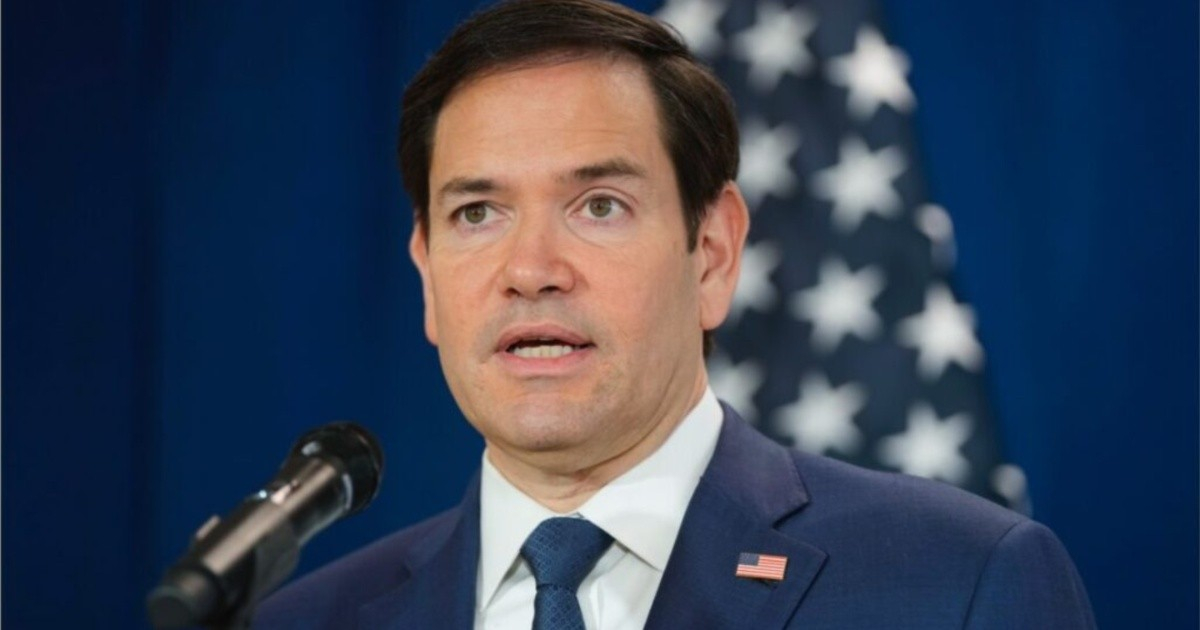
On Monday, Secretary of State Marco Rubio announced a fresh round of sanctions aimed at the Cuban regime. This move targets 11 elite individuals and three government organizations under Executive Order 14404, signed by President Donald Trump on May 1, 2026. Rubio cautioned that further actions are anticipated in the coming days and weeks.
"Those aligned with the regime, like today's designees, are accountable for the Cuban people's suffering, the collapse of Cuba's economy, and the exploitation of the nation for foreign intelligence, military, and terrorist operations," Rubio stated in the official release.
Key Figures and Organizations Sanctioned
The sanctions list includes both high-ranking civilian officials and military leaders. Politically, the sanctions affect Roberto Morales Ojeda, Secretary of Organization for the Communist Party of Cuba's Central Committee; Esteban Lazo Hernández, President of the National Assembly of People's Power; Mayra Arevich Marín, Minister of Communications; Vicente De la O Levy, Minister of Energy and Mines; and Rosabel Gamon Verde, Minister of Justice.
On the military front, four generals are targeted: Joaquín Quintas Sola, Deputy Minister of the Revolutionary Armed Forces; José Miguel Gómez del Vallín, Head of Military Counterintelligence; Eugenio Armando Rabilero Aguilera, Head of the Eastern Army; and Raúl Villar Kessell, Head of the Central Army.
Significance of Institutional Sanctions
Among organizations, the most prominent designation is the Cuban Intelligence Directorate (DGI/G2), the state’s primary foreign espionage service founded in 1961. Its assets within U.S. jurisdiction are now frozen. Additionally, the Office of Foreign Assets Control (OFAC) revised entries for the Ministry of the Interior and the National Revolutionary Police to include them under the Executive Order 14404 program.
Escalating Economic and Diplomatic Tensions
This marks the second wave of individual sanctions in less than two weeks. Previously, on May 7, Rubio had targeted the regime's economic core by sanctioning GAESA and Moa Nickel S.A., a military conglomerate controlling a significant portion of Cuba's formal economy.
As a result, shipping companies Hapag-Lloyd and CMA CGM halted cargo bookings to and from Cuba, and Canadian mining company Sherritt International suspended its direct operations on the island.
The diplomatic landscape adds further tension; just three days before being sanctioned, Morales Ojeda boasted about the Cuban regime's "transparency" following a high-level meeting between CIA Director John Ratcliffe and Ministry of the Interior representatives in Havana on May 14.
Sanctions imposed on May 18 underscore that coercive pressure continues alongside any diplomatic dialogue. Foreign companies have until June 5, 2026, to sever ties with GAESA-affiliated sanctioned entities or face secondary sanctions affecting non-U.S. individuals and financial institutions.
Rubio was unequivocal: "Additional sanction measures are expected in the coming days and weeks."
Understanding the Impact of U.S. Sanctions on Cuba
What are the main targets of the new U.S. sanctions against Cuba?
The new U.S. sanctions target 11 elite individuals and three government organizations associated with the Cuban regime under Executive Order 14404.
How might these sanctions affect foreign companies doing business with Cuba?
Foreign companies have until June 5, 2026, to cut ties with sanctioned entities linked to GAESA, risking secondary sanctions if they fail to comply.
Why has Rubio emphasized further sanctions in the coming weeks?
Rubio highlighted the continued accountability of regime-aligned actors for the suffering of the Cuban people and the broader geopolitical implications of Cuba's alliances.