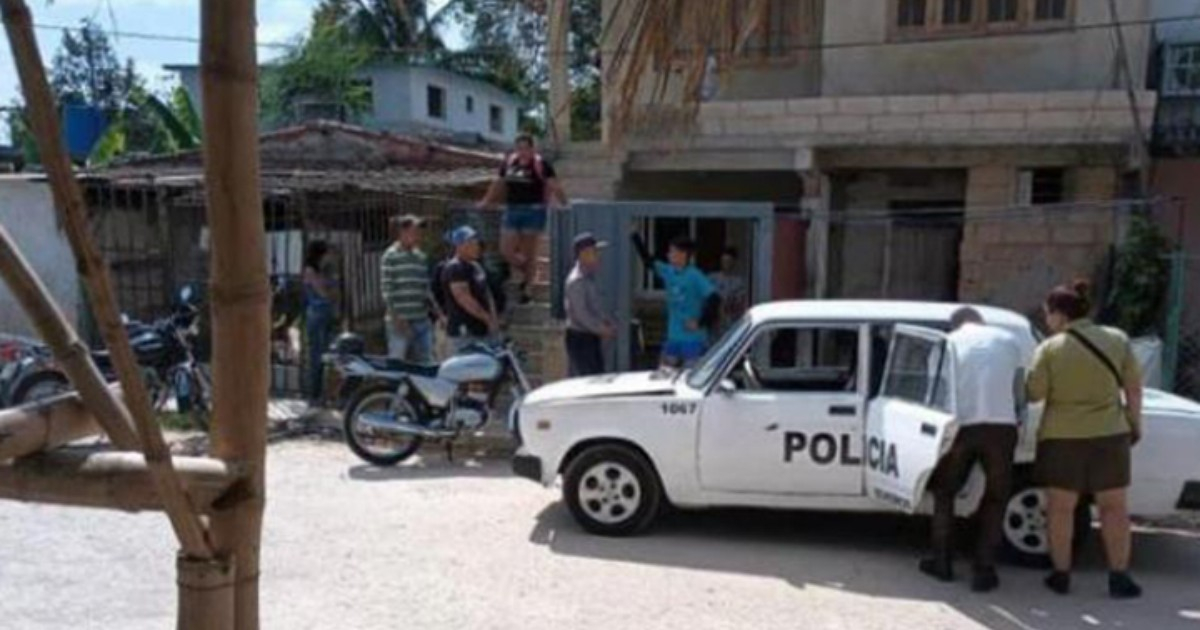
This Monday, the Cuban government launched the Fifth National Exercise for the Prevention and Confrontation of Crime, Corruption, Drugs, Illegal Activities, and Social Indiscipline. Orchestrated by the Communist Party of Cuba (PCC), this operation comes in the wake of a significant week of protests that erupted across Havana and other cities in the nation.
These demonstrations, which took place between May 13th and 17th in at least 12 municipalities of Havana, have been described as the most extensive since the July 11, 2021 protests. Protesters voiced their discontent with chants such as "Electricity and food!" and "Down with the dictatorship!"
The Cuban News Agency (ACN) and Granma newspaper have portrayed the exercise as a response to the "tightening of the economic, commercial, and financial blockade" and the so-called "petroleum siege," blaming external pressures from the United States for the crisis.
Nevertheless, the official rhetoric suggests a more immediate aim: the documentation emphasizes that the exercise "includes actions against vandalism and social indiscipline, which are sometimes encouraged with subversive intentions, leading to material damage and posing risks to people's lives and integrity."
Human rights organizations interpret this language as a direct criminalization of social protest, aligning with the use of Cuban Penal Code figures—such as "disobedience"—to target those whom the authorities label as dissidents.
The exercise takes place amid Cuba's worst energy crisis in decades. On May 13, the electrical grid recorded a historic deficit of 2,153 MW, resulting in power outages lasting up to 22 hours per day in Havana. Energy and Mines Minister, Vicente de la O Levy, openly acknowledged that Cuba had "absolutely no fuel, no diesel, only accompanying gas."
This severe shortage triggered the wave of protests that the government is now addressing with this operation. During the protests, the government responded with police deployments, internet shutdowns, and arrests, with at least 14 people detained in Havana.
The stated priorities of the exercise include protecting the National Electro-Energetic System and fuel supplies, ensuring food production and distribution, and preventing drug trafficking and corruption.
Miguel Díaz-Canel participated in the previous exercise, emphasizing that these events "provide an opportunity to ensure citizen tranquility, respect for internal order, social discipline, and involvement in the country's main tasks."
This marks the fifth operation of its kind in under two years, with prior editions in December 2024, March 2025, June 2025, and September 2025. The first edition saw over 3,300 arrests and trials in less than a week, with 83% resulting in pretrial detention.
The Cuban Conflict Observatory (OCC) recorded 1,133 protests in April 2026, a 29.5% increase compared to the same month in 2025, while Cubalex documented 229 demonstrations in March 2026, the highest monthly figure since July 11, 2021.
Understanding the Cuban Government's Response to Protests
What is the purpose of the Cuban government's national exercise?
The national exercise aims to address crime, corruption, drug issues, illegal activities, and social indiscipline. It is seen as a direct response to recent protests and aims to maintain order and discipline in the country.
How have human rights organizations reacted to the exercise?
Human rights organizations view the exercise as a criminalization of social protest, consistent with the government's use of legal measures to silence dissidents.
What sparked the recent wave of protests in Cuba?
The severe energy crisis, with unprecedented power outages and fuel shortages, triggered the recent protests across Havana and other cities.