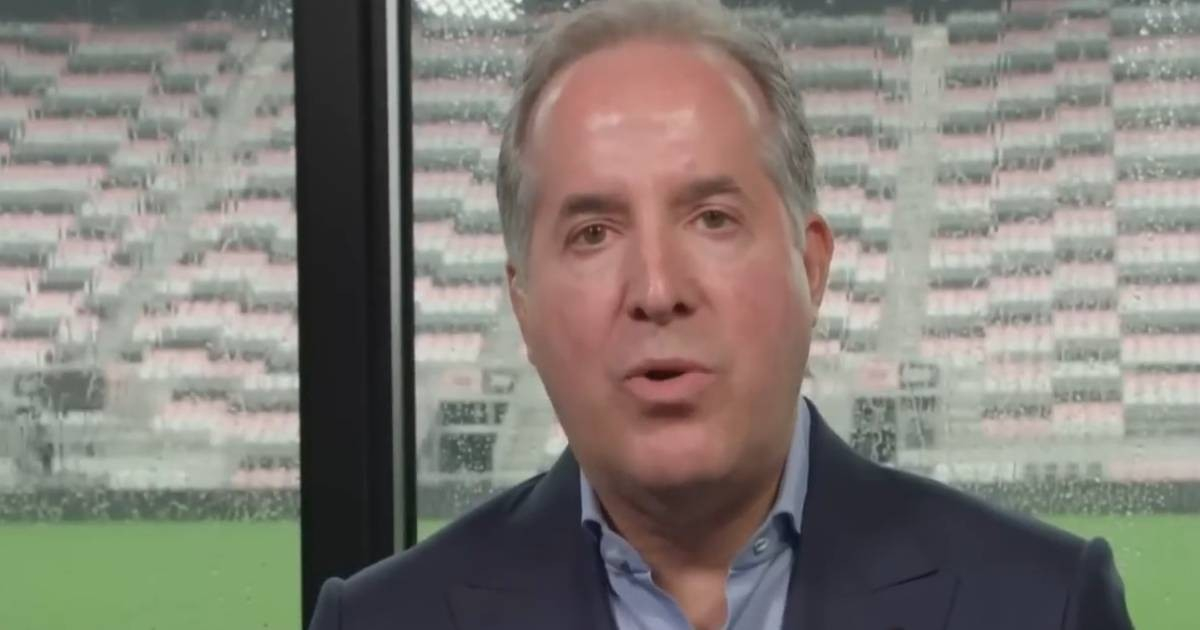
Jorge Mas Santos, the head of the Cuban American National Foundation, shared his comprehensive vision for Cuba's reconstruction post-Castro in an interview with El País. He confidently predicted that transformative change could occur "before the end of summer" 2026, or possibly "within weeks."
The interview followed a visit by CIA Director John Ratcliffe to Havana last Thursday, which Mas interpreted as "a clear strategy by President Donald Trump and Secretary of State Marco Rubio."
Mas was unequivocal about the starting point: "We essentially have to begin from scratch because the current political system and structure are ineffective." However, he saw this as an opportunity rather than a barrier, stating, "I view the economic rebuilding of Cuba not just as easy, but exceedingly easy."
To support this vision, the foundation has prepared two key documents. The first is a roadmap for a prosperous, democratic, and free-market Cuba. It suggests modernizing the banking system, eliminating income tax, and offering tax breaks to businesses with at least 10% national capital. The second document, created with the Cuban American Bar Association, is a "Fundamental Law Project for Democratic Transition," consisting of 28 pages, a preamble, 115 articles, and nine transitional provisions.
Regarding funding, Mas was straightforward: "If we need 40, 50, 60, 70, or 80 billion dollars, whatever the amount, it won't be an issue." He emphasized that Cuban exiles and international investment funds would supply the capital, provided there is a legal framework to protect these investments.
Mas dismissed the idea of Cuba following the model used in Venezuela: "What Trump did with Venezuela suited them, but it won't work for Cuba because Cuba is a failed state." He explained that the island lacks functioning institutional structures, making it impossible for a transition under the current regime's figures.
He also ruled out reverting to the pre-Castro dictatorship model: "There's no point in returning to that; it's a different world." Instead, he advocated for "Cuba's economic miracle," envisioning it as a technologically advanced country with an open economy, a multiparty democratic system, and a strong commercial partnership with the United States.
Discussing potential military intervention, Mas left all options open: "Nothing can be ruled out regarding what might be done in Cuba." When asked if Cuba could become the 51st state of the United States, he replied, "That's premature. I'm not dismissing it, but the future must be decided by Cubans at the ballot box."
Mas also anticipated the imminent legal charges against Raúl Castro, 94, for the 1996 shootdown of the Brothers to the Rescue planes, which resulted in the deaths of four Cuban Americans. "I expect an announcement on the indictment on Wednesday," he said, referring to May 20. The leader of Brothers to the Rescue remained skeptical until a formal indictment is issued.
The businessman, who met with Trump at the White House in March during the Inter Miami MLS championship reception, highlighted the coordination among exiles: "Never has there been such a close, coordinated relationship as there is today."
When asked if he had ever seen change as imminent, Mas responded confidently: "Never, thanks to President Trump's conviction and leadership, along with Secretary Rubio. They have committed to delivering on their promises."
FAQ on Jorge Mas's Vision for Cuba's Future
What is Jorge Mas Santos's plan for Cuba post-Castro?
Jorge Mas Santos envisions a complete overhaul of Cuba's political and economic systems, starting from scratch, to transform it into a prosperous, democratic, and technologically advanced nation with a free-market economy.
How does Jorge Mas propose to fund Cuba's reconstruction?
Mas suggests that Cuban exiles and international investment funds will provide the necessary capital, contingent upon the establishment of a legal framework that safeguards investments.
Why does Mas reject the Venezuelan model for Cuba?
He believes that Cuba, as a failed state, lacks the institutional structures that would support a transition under the current regime's figures, making the Venezuelan approach unsuitable.
What potential future does Mas see for Cuba's relationship with the United States?
Mas envisions a strong commercial partnership and does not rule out the possibility of Cuba becoming a U.S. state, though he emphasizes that such decisions should be made by Cubans through democratic means.