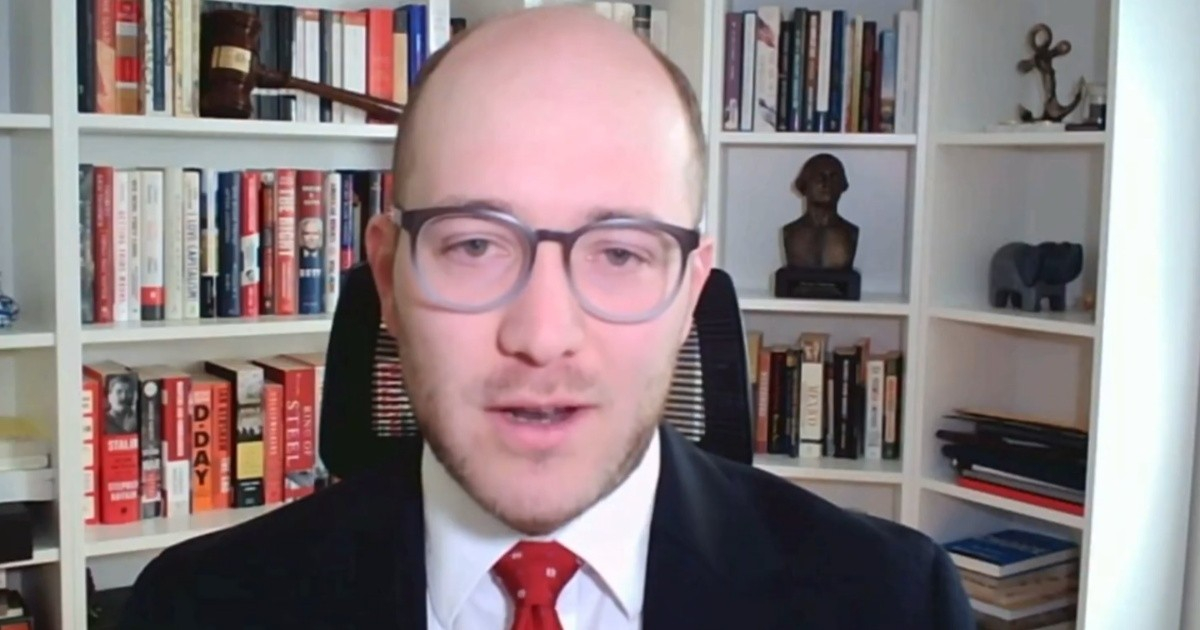
Connor Pfeiffer, Senior Director of Government Relations at FDD Action, stated on CBS News this Monday that the Cuban regime is experiencing its greatest vulnerability since the 1959 Revolution. This comes after losing its last external supporter following the capture of Nicolás Maduro on January 3, 2026.
Pfeiffer, who has advised Senate and House leaders on foreign policy and national security issues, detailed how the Trump administration's economic pressure campaign intensified at that pivotal moment. When Washington took control of Venezuelan oil exports, it effectively cut off the supply to Cuba.
"The capture of Nicolás Maduro by the U.S. on January 3 and the subsequent control over Venezuela's oil exports left Cuba abruptly without its external benefactor," the strategist remarked.
According to Pfeiffer, Venezuela not only supplied fuel to the island; Cuba was selling approximately half of that oil to China and other countries to earn hard currency. "They used Venezuelan aid not just to sustain the economy but also to line the regime's pockets," he noted.
The Historical Dependence on External Support
The analyst emphasized that since 1959, the Cuban regime has only survived due to external patrons: first the Soviet Union—which led to the Missile Crisis—and then Hugo Chávez and Maduro with Venezuelan oil. Without that support, he argued, "The U.S. now has a unique opportunity to push for long-overdue political and economic change on the island."
The interview took place amid an unprecedented escalation of pressure on Cuba. On May 1, Trump signed an executive order imposing sanctions against GAESA—the military conglomerate that controls a large part of the Cuban economy—and other companies and joint ventures. The administration has levied over 240 sanctions against Cuba since January.
Secretary of State Marco Rubio warned on May 7 that the sanctions would persist until the regime implements reforms, setting a deadline of June 5 for foreign companies to sever ties with GAESA.
Cuban Threats to U.S. National Security
Pfeiffer also commented on Axios's report regarding Cuban military drones—more than 300 acquired since 2023 with Russian and Iranian support—and discussions of potential attacks on Guantanamo Bay Naval Base and Key West. He cited this as evidence that "the Cuban regime poses a clear threat to U.S. national security."
The energy impact of the sanctions is devastating. Cuban Energy Minister Vicente de la O Levy admitted on May 14 that Cuba had "absolutely no fuel, no diesel." Power outages now affect more than 55% of the territory for up to 25 hours a day, with generation deficits exceeding 2,000 MW in May.
Adding to this dire situation is the pending federal criminal indictment against 94-year-old Raúl Castro for the downing of two Brothers to the Rescue planes on February 24, 1996, which could be filed this week according to reports.
The Economist Intelligence Unit projects a 7.2% contraction in Cuba's GDP for 2026, reinforcing Pfeiffer's assessment: without an external patron and under maximum pressure, the regime faces its most challenging situation in over six decades.
Understanding the Cuban Crisis
What led to the Cuban regime's current weakness?
The Cuban regime's current weakness is attributed to losing its last external supporter after the capture of Nicolás Maduro, which resulted in the U.S. controlling Venezuelan oil exports and cutting off supplies to Cuba.
How have U.S. sanctions affected Cuba?
U.S. sanctions have severely impacted Cuba by targeting key economic entities like GAESA, contributing to energy shortages and significant power outages across the island.
Why is the Cuban regime considered a threat to U.S. national security?
The Cuban regime is considered a threat due to its acquisition of military drones with Russian and Iranian support, and the potential for attacks on U.S. facilities like Guantanamo Bay Naval Base.