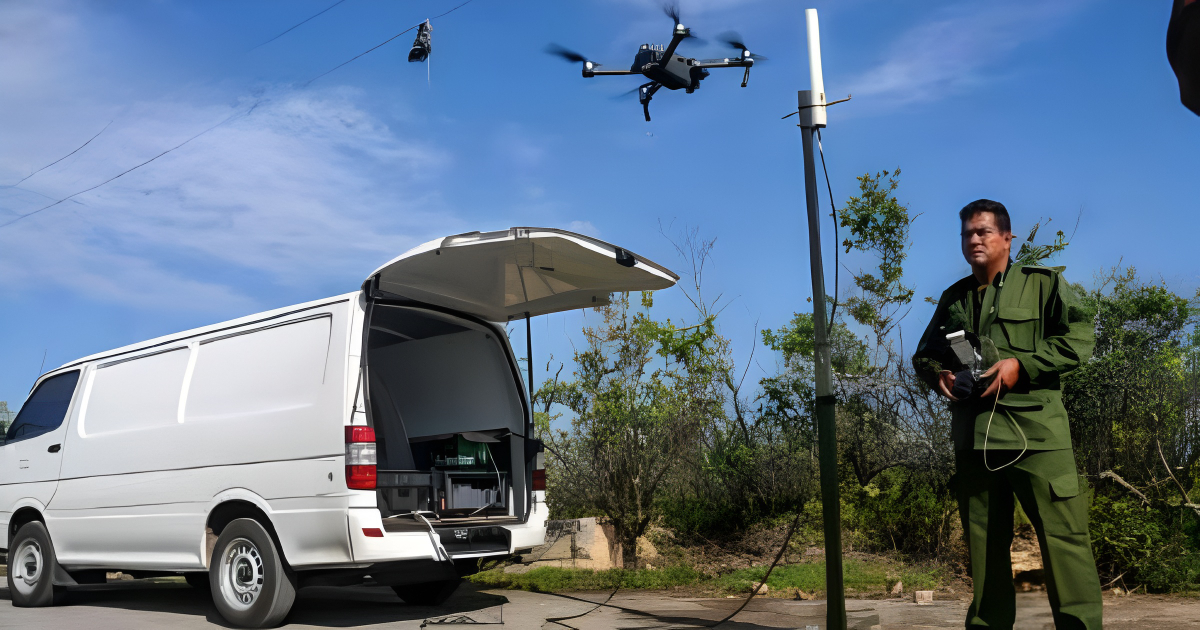
A recent report from Axios, drawing on U.S. intelligence, suggests that since 2023, the Cuban regime has procured over 300 military drones from Russia and Iran. These drones are allegedly intended for potential deployment against the Guantánamo Bay Naval Base, U.S. vessels, and even Key West, Florida.
While specifics about the drones remain undisclosed, analysts speculate that they may be similar to the Iranian Shahed-136, which has been used by Russia in Ukraine and by Iran in the Middle East. Alternatively, they could be the Russian-developed version, the Geran.
For nations with constrained resources, these drones present an attractive option: they are significantly less expensive than acquiring modern fighter jets or advanced missile systems. Experts estimate that the export price of a Shahed drone ranges from $20,000 to $50,000 each. Thus, a fleet of 300 drones could cost between $6 million and $15 million.
The Cost of Military Prioritization
In the context of close political cooperation between Iran and Cuba, the cost might be reduced even further through discounts, soft financing, or strategic deals. Some estimates suggest the total expenditure could be between $3 million and $10.5 million.
This expenditure is particularly contentious given the severe crisis plaguing the island. With just $3 million, Cuba could import thousands of tons of chicken, powdered milk, or rice to partially alleviate the food shortages affecting its citizens.
Moreover, such an amount could translate into millions of hours of power generation through fuel for thermoelectric plants, in a country where daily blackouts often last over 20, and sometimes even 30, hours in certain provinces.
Healthcare and Infrastructure in Decline
Experts point out that Cuban hospitals are also plagued by a chronic shortage of antibiotics, basic supplies, and medical equipment. Meanwhile, the deterioration of the electrical infrastructure worsens. The Electric Union consistently acknowledges severe generation deficits and constant breakdowns in outdated thermoelectric stations.
Nevertheless, the regime seems to prioritize sectors linked to security, internal control, and military cooperation with strategic allies like Russia and Iran.
Military analysts are also intrigued by the logistical ease of transporting such drones. Technical estimates suggest that 300 disassembled drones could fit into just a few standard shipping containers, a modest load for a modern cargo ship.
The challenge is not logistical but political: concealing or justifying a military transfer of this magnitude to Cuba on the international stage.
While Washington maintains that it does not view Cuba as an immediate military threat, reports of investments in drones reignite debates about the regime's true priorities as the Cuban populace grapples with an ever-deepening economic crisis.
Understanding Cuba's Military Investments
Why is Cuba investing in military drones?
Cuba is investing in military drones to strengthen its security apparatus and maintain military cooperation with strategic allies like Russia and Iran, despite the country's ongoing economic hardships.
How much do these drones cost Cuba?
The estimated cost for acquiring 300 drones ranges from $6 million to $15 million, though strategic agreements with Iran might reduce this to between $3 million and $10.5 million.
What are the potential uses of these drones?
The drones are reportedly considered for potential use against the Guantánamo Bay Naval Base, U.S. vessels, and possibly Key West, Florida.