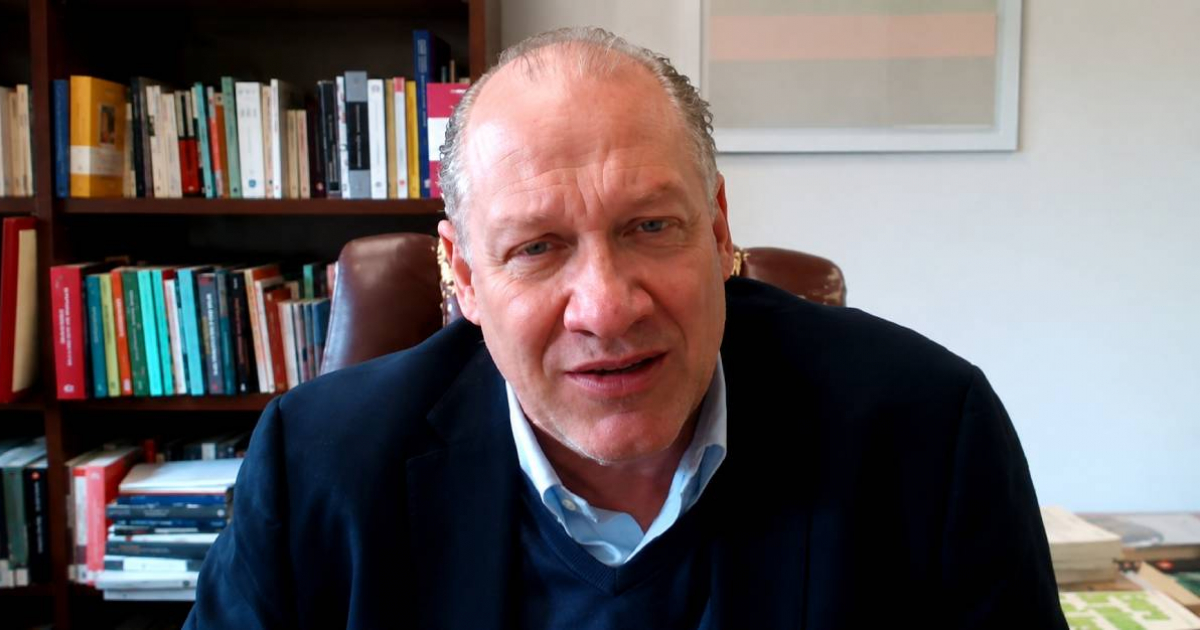
Cuban historian and essayist Rafael Rojas has cautioned that an "uncontrollable social upheaval or external intervention" might be necessary for the collapse of Miguel Díaz-Canel's regime, a scenario he believes could be imminent.
In a comprehensive analysis in El País, Rojas outlines three potential paths for Cuba's near future.
Potential Outcomes for Cuba's Future
One possibility involves a reduction in U.S. pressure, perhaps due to shifts within Washington or because allies like Russia or China manage to alleviate the island's energy blockade.
Another scenario envisions a successful deal between Havana and Washington, leading to lifted sanctions and providing the regime with economic relief.
The third, which Rojas considers the most dangerous and costly, is a violent resolution to the crisis triggered by worsening living conditions and rising social discontent.
Increasing Dissatisfaction and Social Tension
Rojas warns, "If dissatisfaction continues to grow, especially with an impending summer likely to worsen daily life on the island, the most costly scenario—a violent crisis resolution—could occur: an uncontrollable social upheaval or even a U.S. military intervention."
The historian describes how the Cuban government is juggling two contradictory strategies: resisting and negotiating with the United States simultaneously.
This is happening against the backdrop of a dual crisis—both structural and circumstantial—that has led experts to view collapse not as a future possibility but as a current reality.
Escalating Economic and Social Challenges
Frequent power outages lasting up to 20 hours, fuel shortages, transportation breakdowns, and inflation have exacerbated public dissatisfaction throughout Cuba. In May, protests broke out in Havana neighborhoods like Guanabacoa, Santos Suárez, Luyanó, and Marianao, with residents banging pots and blocking streets over prolonged power cuts, acknowledged by Energy Minister Vicente de la O Levy.
The Cuban Conflict Observatory reported 1,133 protests in April 2026, a 29.5% increase from the previous year. Meanwhile, Cubalex documented 229 demonstrations in March, the highest monthly number since the July 11 protests in 2021.
Economic decline has also deepened. According to economists Carmelo Mesa-Lago and Pedro Monreal, Cuba's GDP has been in a downturn, potentially shrinking by 9% to 15% between 2025 and 2026. The ECLAC lists Cuba among the worst-hit Latin American economies and warns of a humanitarian crisis.
Tourism, a major revenue source, plummeted by over 50% from 2018 to 2024, dropping from nearly five million annual visitors to under two million, as noted by economist Omar Everleny Pérez Villanueva.
Additionally, demographer Juan Carlos Albizu-Campos estimates that Cuba's population has fallen to just over eight million due to an unprecedented wave of emigration.
In response, Díaz-Canel has agreed to discuss a U.S. humanitarian aid offer worth 100 million dollars, comprising fuel, food, and medicine, provided it is channeled through the Catholic Church without state mediation.
Foreign Minister Bruno Rodríguez recently stated that Cuba is "willing to listen" to the proposal's specifics.
However, Rojas maintains that Cuba's fate remains undecided. "If the Cuban government can reclaim a reformist initiative and negotiate realistically, it may not only survive but emerge stronger," he asserted, likening the current austerity measures to the "Zero Option" strategy of the 1990s Special Period.
Frequently Asked Questions about Cuba's Current Crisis
What are the potential scenarios for Cuba's future according to Rafael Rojas?
Rojas outlines three scenarios: a reduction in U.S. pressure, a successful negotiation between Havana and Washington, or a violent resolution to the crisis.
What factors are contributing to the social tension in Cuba?
Social tension in Cuba is fueled by severe power outages, fuel shortages, transportation issues, and rising inflation.
How has the Cuban economy been affected in recent years?
Cuba's economy has been severely impacted, with GDP potentially decreasing by 9% to 15%, and tourism declining by over 50% between 2018 and 2024.