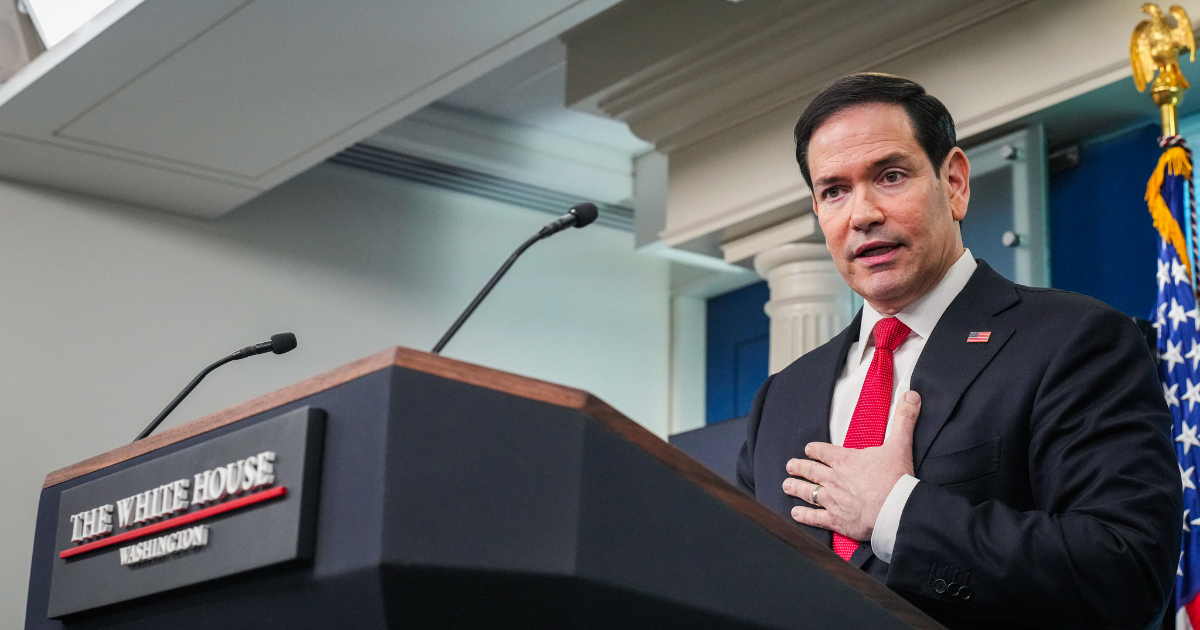
The statement made by Jeremy Lewin—"the regime must return these resources to the Cuban people"—opens up a discussion that, until recently, seemed confined to theoretical scenarios: could GAESA's international assets someday serve as the financial foundation for a Cuban transition?
This question holds significant weight. Contemporary political transitions often grapple with an immediate issue: how to economically sustain the basic functions of the state while reorganizing institutions, stabilizing internal security, and preventing administrative collapse.
In several nations, the initial survival of transitional governments has relied on extraordinary funds, international aid, or assets reclaimed from former power structures.
Building Financial Foundations for a New Beginning
This backdrop explains why analysts believe that current pressures on GAESA might carry an additional component: laying the financial groundwork for a potential "day after" in Cuba.
If such a scenario materializes, a primary concern would be ensuring a minimum level of institutional continuity. This includes paying salaries for public officials, healthcare workers, electrical technicians, civil administrators, and covering urgent imports of food and fuel.
Without immediate liquidity, even a politically successful transition could swiftly devolve into administrative chaos.
The Challenge of Internal Security
However, perhaps the most sensitive challenge would be maintaining internal security.
Every transition faces the dilemma of what to do with the coercive apparatus of the former regime. In Cuba's case, this would inevitably involve structures linked to the MININT, intelligence agencies, and military sectors associated with GAESA.
International experiences show that abruptly dismantling these apparatuses can lead to severe instability risks. Therefore, numerous transitions have opted for intermediate solutions: gradual reforms, partial integration of personnel not involved in severe violations, and state-funded retirement or demobilization programs.
Countries like South Africa, some Eastern European nations, and post-dictatorial Latin American processes have used similar mechanisms to avert violent fractures.
Utilizing Recovered Assets for Stability
In a hypothetical Cuban scenario, part of the recovered assets could be allocated to fund early retirements, mandatory retirements, or compensations for officers and officials not directly implicated in violent repression or blood crimes.
The objective behind these measures is not to reward repressive structures but to diminish incentives for destabilizing internal resistance.
Another potential use for these resources would be the establishment of new professionalized police and security forces. Any transitional government would need to swiftly develop structures capable of maintaining public order, border control, and institutional security without replicating the repressive methods of the previous regime.
This would require training, competitive salaries, supervision, technological modernization, and possibly international cooperation.
Addressing Reparations and Justice
Additionally, the issue of reparations would inevitably arise.
One of the significant debates in contemporary transitional justice involves how to compensate victims of political persecution, confiscations, imprisonment, or state violence.
Countries such as Chile, Argentina, and post-reunification Germany developed economic compensation programs and institutional recognition for sectors affected by repression.
In Cuba, such a scenario might include political prisoners, relatives of victims, individuals affected by confiscations, exiles, people with physical or psychological scars from repression, and victims of events like the July 11 protests.
The challenge lies in the potentially vast needs and likely limited resources, even in the best-case scenario, given Cuba's accumulated economic deterioration.
Managing Transition Funds
Another central difficulty is determining who would manage these funds.
International experience shows that the legitimacy of the process is as crucial as the asset recovery itself.
A fund controlled solely from abroad might face internal backlash. Conversely, an entirely improvised administration within Cuba would risk corruption, political capture, or power struggles.
Therefore, some international models have resorted to mixed mechanisms: international oversight, external audits, trust funds, and participation from multilateral organizations. None of this would be simple in Cuba's case.
Furthermore, there would be significant legal challenges. Foreign banks, creditors, associated companies, and third parties involved might dispute the ownership of assets linked to GAESA for years.
A substantial portion of the funds could remain frozen in international litigation before reaching any Cuban administration.
Nonetheless, the discussion appears to have evolved.
For decades, the international debate on Cuba focused on sanctions, embargoes, and diplomatic pressure. Lewin's statement introduces another dimension: the idea that the wealth accumulated by the Cuban military conglomerate might one day serve as an instrument for national reconstruction.
This doesn't imply a defined plan or an imminent transition. However, it does suggest something politically significant: Washington is beginning to discuss not just punishing the regime, but how the country could be financially supported in a post-regime era.
Perhaps here lies the true significance of the phrase "return the resources to the Cuban people": not merely in economically punishing a military elite, but in the potential to transform these resources into the financial backbone of a future restructuring of the Cuban state.
Key Questions About Cuba's Potential Transition
What role could GAESA's assets play in Cuba's transition?
GAESA's assets could potentially serve as a financial foundation for a transitioning Cuban government, helping to sustain basic state functions and stabilize the nation's institutions.
How might Cuba handle the transition of security forces?
Cuba might implement gradual reforms and integrate non-implicated personnel while funding retirement or demobilization programs to manage the transition of its security forces safely.
What are potential challenges in managing recovered assets?
Challenges include ensuring the legitimacy of fund management, potential legal disputes over asset ownership, and preventing corruption or political capture.