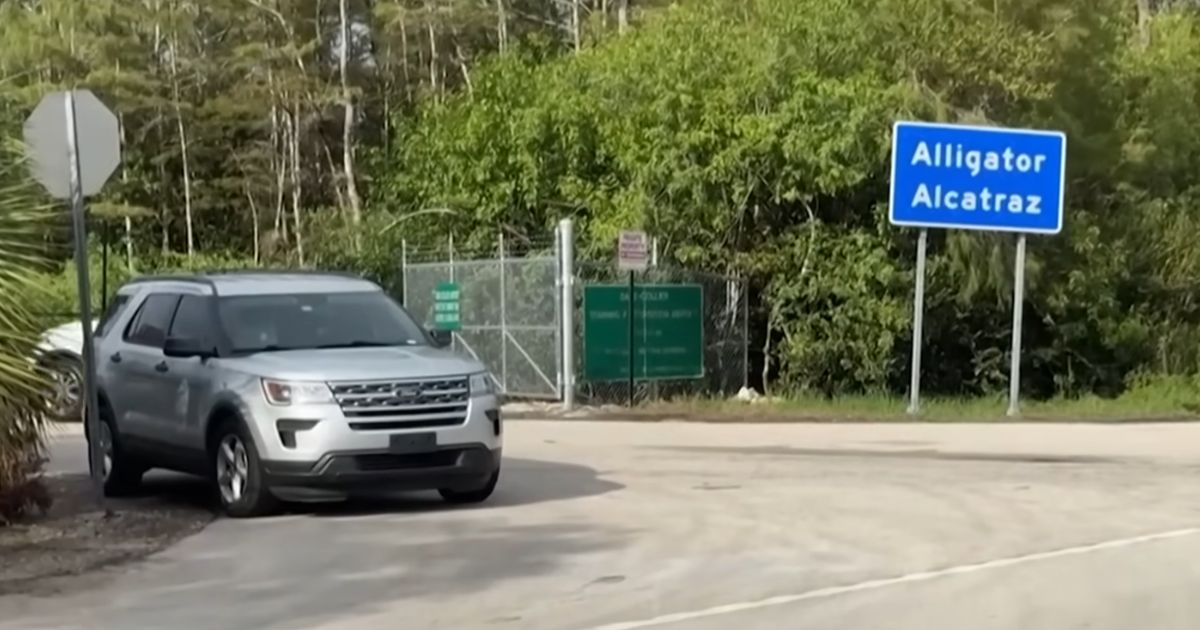
Kevin Guthrie, the head of Florida's Division of Emergency Management, announced on Sunday that there are no immediate plans to shut down the migrant detention center known as "Alligator Alcatraz." He emphasized that state authorities have been instructed to keep the facility operational for incoming migrants.
Guthrie's statements directly contradict a recent report by The New York Times, which claimed Florida and the Trump administration were discussing the early closure of the facility. The report suggested that the transfer of approximately 1,400 detainees was slated for June, with dismantling of the structures to follow in subsequent weeks.
In an interview with Local 10 News, Guthrie clarified, "We haven't been told to close the facility. We've been instructed to continue to await individuals."
The official noted that the center incurs operating costs exceeding one million dollars per day. He expressed optimism that the federal government will reimburse Florida for these expenses.
"There's an initial check on its way, though I'm unsure of the amount," Guthrie stated. "We requested around 90 million dollars, followed by an additional 300 million."
The financial context is dire: Florida's Division of Emergency Management spent 458.5 million dollars from state emergency funds on immigration control operations in the last fiscal year. Some private contractors have gone over 200 days without payment, potentially jeopardizing hurricane response efforts as the season begins on June 1st.
Meanwhile, protesters assembled again outside the center on Sunday, marking their 42nd consecutive week of demonstration.
The demonstrators, who had hoped for the closure report from the New York Times to be true, condemned the facility as immoral and inhumane. They pledged to persist in their weekly protests until the center is permanently shut down.
"We hope to have made a difference," stated Reverend Tony Fisher of the Unitarian Universalist Congregation of Naples. "I believe we've likely generated enough attention."
Noelle Damico from The Workers Circle was more forceful: "We must end this, and that's why you see hundreds gathering here week after week. When that day comes and the facility closes, it will be one of the greatest human rights victories."
Alligator Alcatraz was inaugurated on July 1, 2025, by President Donald Trump and Governor Ron DeSantis on an abandoned airstrip within the Big Cypress National Preserve in Florida's Everglades. It was constructed in just eight days using state emergency powers.
Since its opening, the center has faced accusations of inhumane conditions, including overcrowding, food shortages, inadequate medical care, extreme temperatures, non-potable water, and lack of legal access.
Of the 1,400 migrants currently detained, between 700 and 800 are Cubans, with 70% lacking final deportation orders, according to data from Immigration and Customs Enforcement (ICE).
On May 8, Governor DeSantis acknowledged the center was "always intended to be temporary" and might close if detainee arrivals ceased. However, he warned that abandoning deportation efforts would pose "a significant political problem."
Key Questions about Alligator Alcatraz and Its Future
What is the current status of Alligator Alcatraz?
Alligator Alcatraz remains operational and is awaiting new detainees, as confirmed by Florida's Division of Emergency Management Director, Kevin Guthrie.
How much does it cost to operate Alligator Alcatraz daily?
The facility incurs a daily operating cost of over one million dollars.
Why are protesters against Alligator Alcatraz?
Protesters condemn the facility as immoral and inhumane, citing issues like overcrowding, inadequate resources, and poor living conditions.