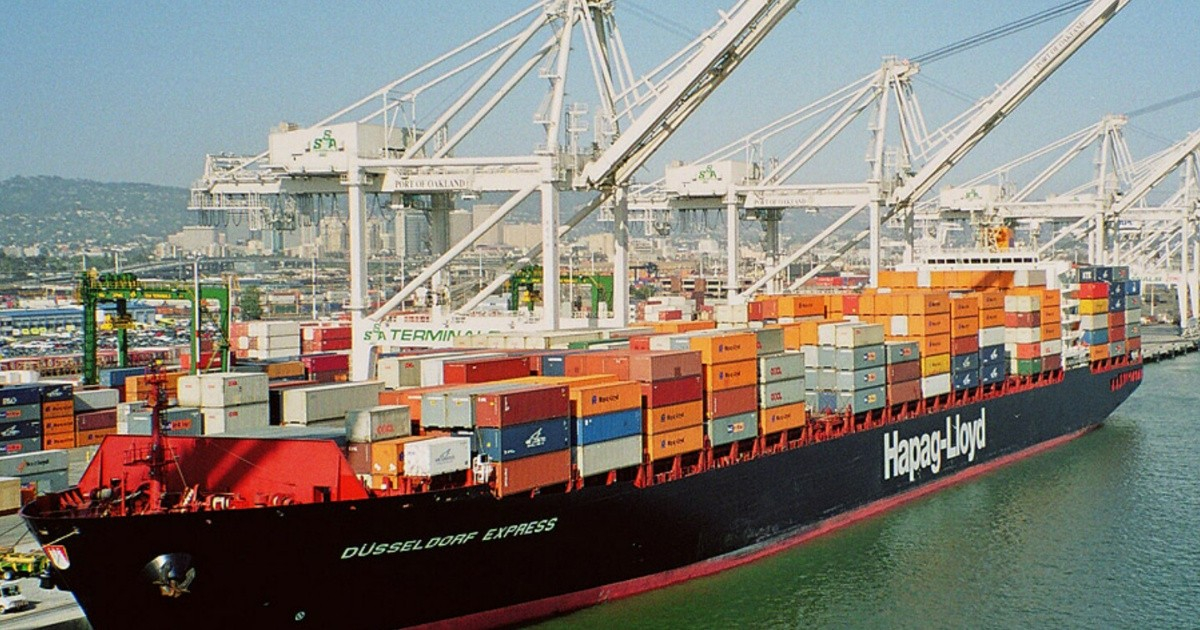
Two major players in the global shipping industry, Hapag-Lloyd and CMA CGM, have confirmed that they are halting all bookings to and from Cuba "until further notice." This decision, reported by Reuters on Sunday, is reportedly a direct response to recent policy changes by the United States.
The suspension comes in light of Executive Order 14404, signed by President Donald Trump on May 1, 2026. This order allows for secondary sanctions on non-U.S. individuals and companies engaging with key sectors of Cuba's economy.
CMA CGM explained to Reuters that it is temporarily ceasing shipments to or from Cuba while keeping an eye on the situation to align its operations with applicable regulations.
Meanwhile, Hapag-Lloyd cited "compliance risks" related to the same executive order as the reason behind their decision to pause operations.
Impact on Cuban Maritime Traffic
According to sources familiar with the situation, the suspension by these shipping companies could impact up to 60% of Cuba's maritime traffic by volume. The official confirmation on Sunday extends what had already been a halt in operations since the previous Wednesday, when both companies informed their Cuban agencies of a "STOP BOOKING" for all services.
The Role of GAESA in Sanctions
The immediate trigger for the shipping halt was the sanctions package announced on May 7 by Secretary of State Marco Rubio. This package, under Executive Order 14404, designated GAESA—the Business Administration Group S.A., which is controlled by the Cuban Revolutionary Armed Forces—as a blocked entity.
These sanctions freeze all GAESA's assets under U.S. jurisdiction and prohibit any dealings with U.S. entities. The Office of Foreign Assets Control (OFAC) has given foreign companies until June 5, 2026, to terminate all operations with GAESA and its subsidiaries, under threat of secondary sanctions.
Broader Economic Repercussions
The structural issue for shipping companies is that GAESA controls around 40% or more of Cuba's economy, including ports, maritime terminals, and the Mariel Special Development Zone through its subsidiary AUSA. This makes it nearly impossible to operate in Cuba without engaging with the conglomerate.
The State Department has described GAESA as the "core of Cuba's kleptocratic communist system," accusing it of managing revenues that "likely triple the state's budget" and controlling up to $20 billion in illicit assets abroad.
This shipping halt is part of a wider trend of companies withdrawing from Cuba in response to the sanctions. For instance, Canadian mining company Sherritt International suspended all direct operations in Cuba on May 7, citing the executive order as making it "materially impossible" to maintain normal operations, amid claims of $277 million owed by the regime.
Since January 2026, the Trump administration has imposed over 240 sanctions on the Cuban regime and intercepted at least seven oil tankers, cutting the island's energy imports by 80% to 90%.
Power outages are now affecting over 55% of the territory for up to 25 hours daily, and the suspension of maritime transport by two of the world's largest shipping firms further cripples the import capacity of an island heavily reliant on maritime trade for essential supplies.
Rubio warned on May 7 that "further sanctions are expected in the coming days and weeks," a warning that carries even more weight as the OFAC's June 5 deadline approaches for foreign companies to sever ties with GAESA.
Understanding the Impact of U.S. Sanctions on Cuba's Maritime Industry
What is the reason behind the suspension of shipping operations to Cuba?
The suspension is due to Executive Order 14404 signed by President Trump, which imposes secondary sanctions on entities operating in significant sectors of Cuba's economy, leading shipping companies to halt operations to avoid compliance risks.
How does GAESA affect foreign companies operating in Cuba?
GAESA controls a significant portion of Cuba's economy, including critical infrastructure like ports and maritime terminals. This control makes it challenging for foreign companies to operate in Cuba without engaging with GAESA, which is now under U.S. sanctions.