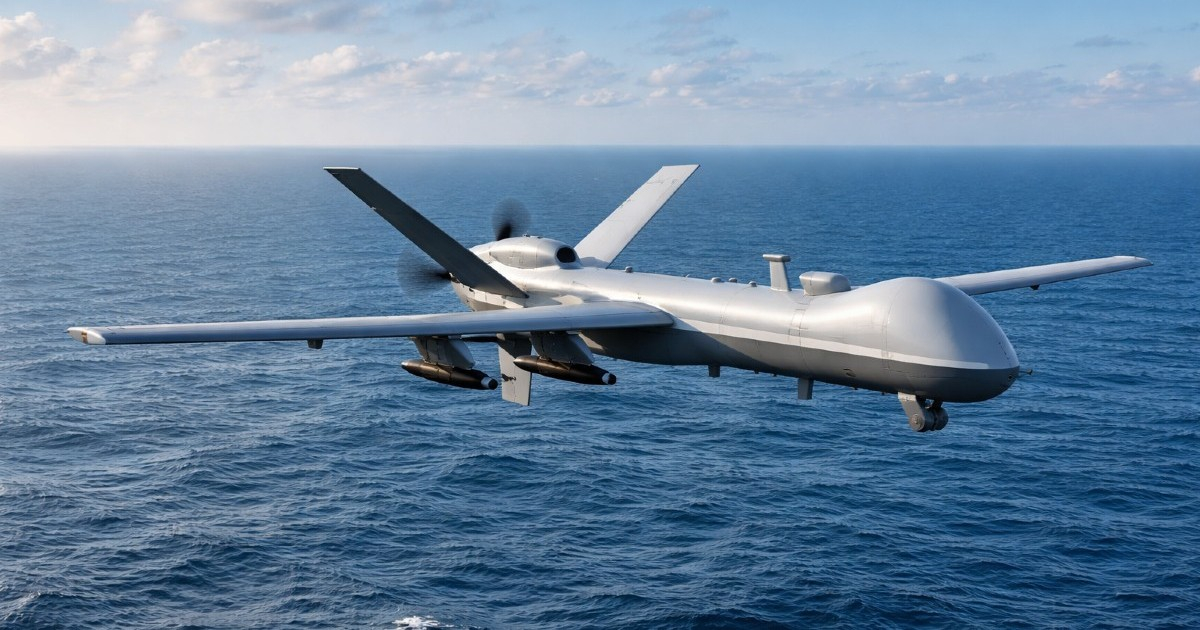
Daniel DePetris, an international affairs columnist for the Chicago Tribune, shared a strategic analysis this Sunday on X, offering a fresh perspective on Cuba's acquisition of military drones. Contrary to popular belief, he suggests this move is driven by defensive rather than offensive motives.
DePetris, also a writer for Newsweek and contributor to The Spectator, directly addresses a recent exclusive report by Axios regarding Cuban drones. The report disclosed that since 2023, Cuba has acquired over 300 military drones from Russia and Iran, with regime officials allegedly discussing their potential use against the Guantánamo Naval Base, U.S. Navy ships, and possibly Key West, Florida.
According to DePetris, the rationale is straightforward: Cuba's conventional military capabilities are outdated. "The Cuban Air Force belongs in a museum," he remarked, emphasizing that acquiring drones "makes complete sense from a purely military standpoint, especially when you have an adversary 90 miles away hinting cryptically at invading the island."
Dispelling Alarmist Views
Despite growing concerns, DePetris urged caution against alarmist interpretations. "Cuba's increase in drones does not imply plans to use them for preemptive strikes against U.S. assets in Guantánamo or Florida," he stated on X.
He described such scenarios as "highly improbable, if not entirely irrational," arguing that a Cuban attack would provide Trump "the perfect justification to launch the military operation Cuban officials are desperate to avoid."
His conclusion was clear: "Cuba requires some defensive capability to withstand a potential U.S. military contingency or at least make any invasion more costly for Americans. Havana opts for drones instead of manned aircraft, which are significantly more expensive to acquire and maintain. Cuba is preparing defenses, not planning offensive actions."
Growing Tensions Between Washington and Havana
This analysis emerges amid escalating tensions between Washington and Havana. On May 13, Defense Secretary Pete Hegseth confirmed before Congress that Cuba poses a threat to national security. Additionally, CIA Director John Ratcliffe traveled to Havana on May 14—marking the first visit by a CIA director in over a decade—to warn the regime directly against hostile actions.
U.S. officials also estimate that up to 5,000 Cuban soldiers have fought for Russia in Ukraine, with Moscow paying the regime approximately $25,000 per deployed soldier. Some have gained drone warfare experience, which they later shared with military leaders in Havana.
The debate among American analysts and influencers on social media reveals divided opinions. Republican Congressman Mario Díaz-Balart highlighted the proximity of the drones, "90 miles from our shores and near critical infrastructure," while Democratic Senator Rubén Gallego dismissed the Axios report as "propaganda to build a case for an invasion of Cuba."
An unnamed senior U.S. official quoted by Axios captured the paradox succinctly: "No one is worried about Cuban fighter jets. It's not even clear they have one that can fly. But it's worth noting how close they are: 90 miles."
Key Questions on Cuba's Military Drone Acquisition
Why is Cuba acquiring military drones?
Cuba is acquiring drones as part of a defensive strategy to bolster its outdated military capabilities. The move is seen as a means to prepare defenses against potential U.S. military threats.
What are the implications of Cuba's drone acquisition for U.S. national security?
The acquisition has increased concerns about regional security due to the proximity of these drones to the United States. However, analysts like DePetris argue that an offensive strike is unlikely.
How has the U.S. responded to Cuba's military developments?
The U.S. has expressed security concerns, with top officials visiting Cuba to address potential threats. Additionally, there's ongoing debate among American lawmakers about the implications of Cuba's actions.