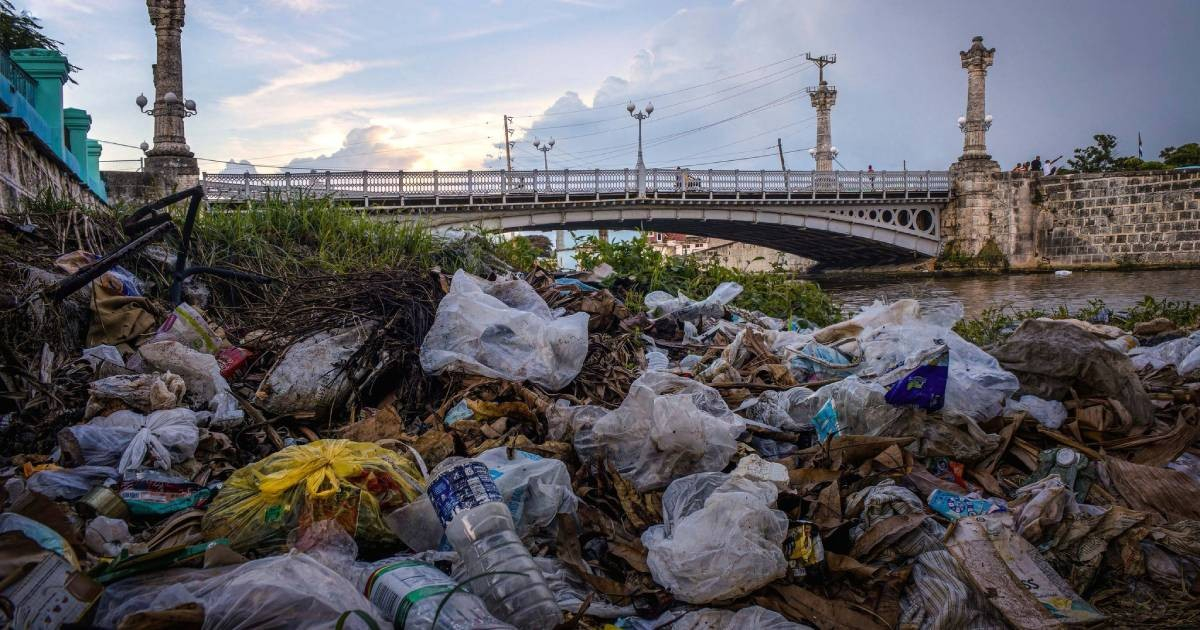
During a broadcast of the TV Yumurí program "Con Voz de Pueblo" last Wednesday, Michel León Rodríguez, the municipal mayor of Matanzas, openly acknowledged that the city is facing a significant backlog in waste collection, particularly in street cleaning.
The official's remarks confirmed what residents have been complaining about for months: the streets are littered with bags, papers, and cardboard, while small dumpsites proliferate under the watchful eyes of the authorities themselves.
León Rodríguez admitted that the Municipal Company of Comunales should have around 1,525 employees, but only 918 positions are filled, revealing a staffing shortage exceeding 39%.
The mayor also pointed out that the company operates at a financial loss and is unable to pay out profits.
The most diligent workers earn between 9,000 and 11,000 pesos monthly, a wage the official himself described as inadequate.
In terms of equipment, the municipality manages a fleet of 17 vehicles each day, including those from Comunales, contracted forces from the Ministry of Construction (Micons), and support from the Military Construction Company, along with two front loaders.
However, this fleet is insufficient to cover all routes, especially those requiring deep cleaning, which need an extra 60 to 200 liters of fuel daily—a resource not always available.
“Sometimes we face fuel shortages, and it's no secret what we're experiencing in this country today," admitted León Rodríguez. He noted that when diesel supply is disrupted, the trash that has accumulated for months becomes exponentially harder to remove.
Systemic Challenges and Potential Solutions
The crisis is not only logistical but also structural, as the mayor did not shy away from acknowledging. The company has failed to efficiently manage, sort, or sell the raw materials collected, which prevents it from generating its own revenue.
León Rodríguez estimated that engaging with the non-state sector—which includes over 1,487 self-employed workers and 185 active microbusinesses in the area—could bring in about 30 million pesos for Comunales, potentially transforming it from a deficit-ridden entity into a profitable one.
He also admitted to existing debts concerning worker protection: "We still owe on shoes, clothing... we have debts regarding raw materials and their classification."
Public Health Concerns and Environmental Impact
This situation is not new. Residents of Embarcadero Street reported entire blocks obstructed by garbage, accompanied by rats and foul odors, just steps away from Comunales' facilities.
The outbreak of hepatitis A confirmed in the Versalles neighborhood—with 18 active cases as of May 4—illustrates the direct health consequences of the collapse, in an elevated area of the city where accumulated trash is washed into the river by rains.
The mayor warned that the onset of the rainy season will worsen the situation: "When it rains, this garbage is carried through streets to the riverbanks."
The program host summed up the severity of the issue with a statement difficult for the regime to dispute: "Solid waste collection in Matanzas can no longer tolerate excuses."
Frequently Asked Questions About Matanzas Waste Management Crisis
What is causing the waste management crisis in Matanzas?
The crisis is due to a combination of staffing shortages, insufficient equipment, fuel scarcity, and structural issues within the municipal waste management company.
How is the waste management issue affecting public health in Matanzas?
The accumulation of trash has led to outbreaks of diseases such as hepatitis A, as well as the proliferation of pests like rats, creating significant public health concerns.
What solutions have been proposed to address the waste issue?
Engaging the non-state sector and improving raw material management and classification are proposed solutions to make the waste management company profitable and more efficient.