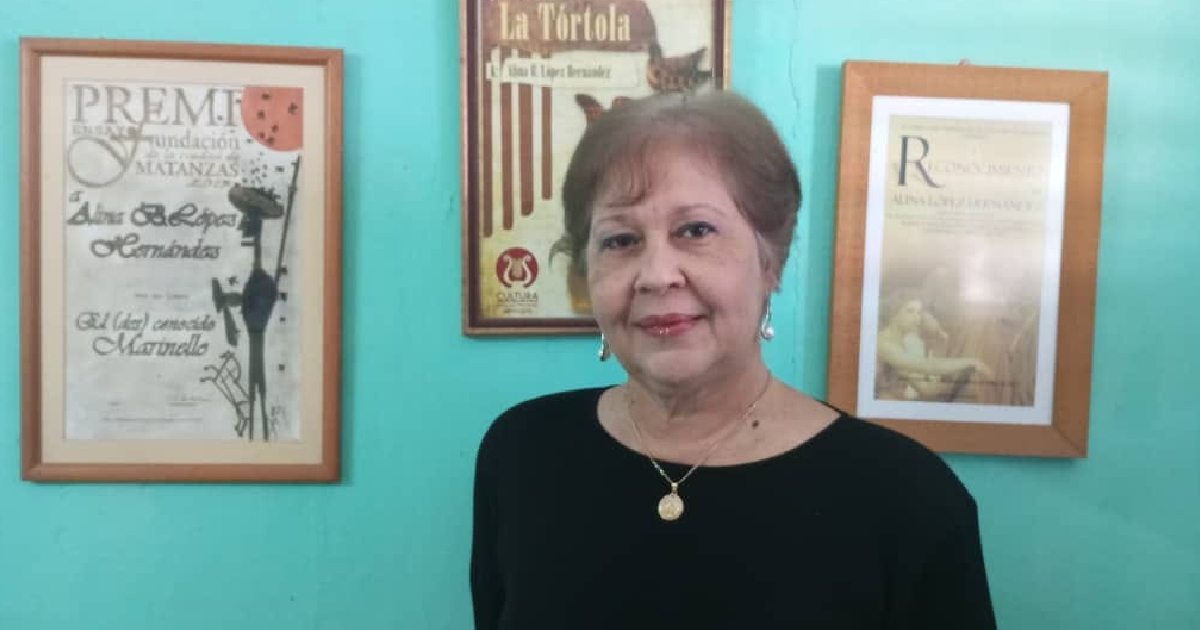
Historian and activist Alina Bárbara López Hernández recently shared a segment of her interview with journalist Daniel Lozano for the Spanish newspaper El Mundo on Facebook. In this interview, she critically analyzes the Cuban regime's stance following intelligence reports about its acquisition of over 300 military drones.
López describes the official response to former President Donald Trump's ultimatum as "completely erratic," both in military and political terms. She argues that the regime is unmistakably signaling a willingness to engage in warfare.
"Their response to Trump's ultimatum is absolutely erratic. Militarily, they reference the 'War of All the People' doctrine to counter a 2.0 army equipped with drones and smart weaponry that Cuba lacks," wrote the activist from Matanzas.
López dismantles this doctrine by highlighting its reliance on popular support and rural backing, which she claims the government itself has eroded: "Today, it is utterly impossible: a guerrilla group would perish from hunger. Which farmers would provide food when state policies have left Cuban agriculture to fend for itself?"
Political Critique and Social Decay
From a political perspective, López's evaluation is even more severe: "The regime is sending a message that we will resist under any condition. Essentially, they are inviting war, stating they are ready for it, when a true leader should seek intelligent strategies to prevent aggression against the country."
The intellectual further questions who the regime plans to resist with: "Our young military servicemen, some of whom are resorting to suicide in alarming numbers because they don't want to be in military units?"
This is a significant point: according to Cubalex, at least 19 young men died during Mandatory Military Service in 2025, while Archivo Cuba historically records 27 such deaths as part of the service's fatal causes.
López also highlights the accumulated social decay: "A people abandoned to their fate, turned away from by dismantling policies once considered revolutionary achievements, particularly since Raúl Castro came to power in 2008."
Her conclusion is stark: "The Cuban people are being used as a sort of human shield."
Cuba's Drone Acquisition and International Tensions
López's comments came shortly after Axios released a report based on classified intelligence, indicating that Cuba has procured over 300 military drones from Russia and Iran since 2023, with discussions on using them against the Guantanamo Bay Naval Base, military ships, and possibly Key West.
In response to the report, neither Deputy Minister Carlos Fernández de Cossío nor Foreign Minister Bruno Rodríguez Parrilla denied the acquisition. Instead, they cited legitimate defense and accused Washington of fabricating pretexts.
Fernández de Cossío did not refute the drone claims and tweeted, "The U.S. is the aggressor. Cuba, the victim, is protected by the principle of legitimate defense."
Rodríguez avoided addressing the report directly and accused the press of "promoting slander and leaking insinuations from the U.S. government itself."
This omission—failing to deny the facts—is precisely what López critiques: a regime that, instead of pursuing diplomatic solutions, signals readiness to drag the Cuban people into a conflict for which they lack both the means and the popular support.
Insights into Cuba's Military and Political Strategy
Why does Alina Bárbara López criticize the Cuban regime's response?
López criticizes the Cuban regime for its erratic response to Trump's ultimatum and for signaling a willingness to engage in war rather than seeking diplomatic solutions.
What does López say about the 'War of All the People' doctrine?
López argues that the 'War of All the People' doctrine is unfeasible today because it relies on popular and rural support, which she claims the government has undermined.
How does López view the social situation in Cuba?
López views the social situation as deteriorated, with the government turning its back on policies once seen as revolutionary achievements, leaving the people to fend for themselves.